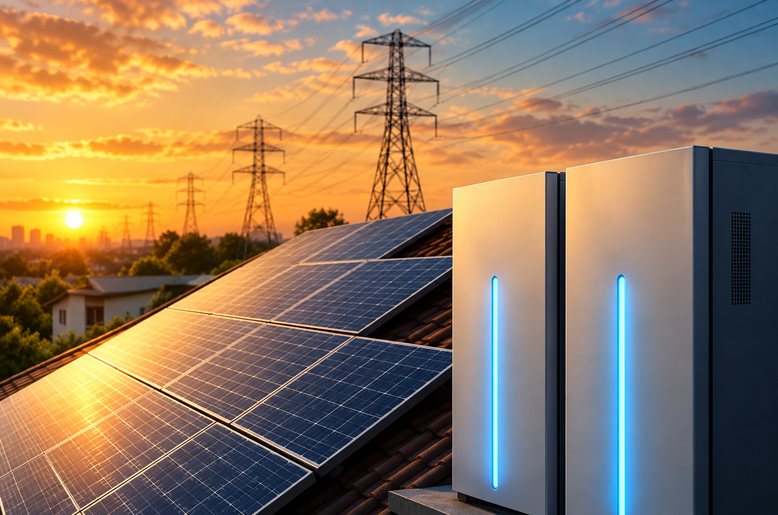
Lithium battery prices used in solar systems have fallen in Pakistan, providing some relief to households and businesses planning to install battery storage.
According to market reports, prices of several lithium battery capacities have dropped by around Rs20,000 to Rs100,000, depending on the size, brand and specifications of the battery.
The decline comes as Pakistan’s solar market continues to expand and more consumers look towards battery storage to reduce their dependence on grid electricity.
Lithium battery prices
- Price of a 5kWh lithium battery has fallen from around Rs250,000 to approximately Rs230,000
- A larger 16kWh lithium battery, previously selling for around Rs750,000 dropped to approximately Rs650,000
- Many 5kWh-class batteries roughly cost between Rs195,000 and Rs350,000
- 16kWh models are available for approximately Rs575,000 to Rs680,000
Solar battery demand continues to grow
The fall in lithium battery prices comes after solar panels also became cheaper, making complete solar systems more accessible to consumers.
Battery storage is becoming increasingly necessary as households seek to store electricity generated by solar panels during the daytime and use it later when solar generation falls.
Pakistan imported around 4.6 GWh of lithium-ion battery energy storage systems in 2025, representing a 220 per cent increase compared with the previous year. Residential systems between 5kWh and 10kWh have emerged as a major part of the market.
Why battery prices are falling?
Availability of imported equipment and declining international battery costs have contributed to lower prices. Earlier this year, local dealers also reported price reductions after additional taxes on solar equipment were not introduced in the 2026–27 federal budget.
For consumers, cheaper batteries reduce the upfront cost of adding energy storage to a solar installation.
However, battery capacity, usable energy, cycle life, warranty, battery management system and compatibility with the solar inverter can all affect long-term performance.