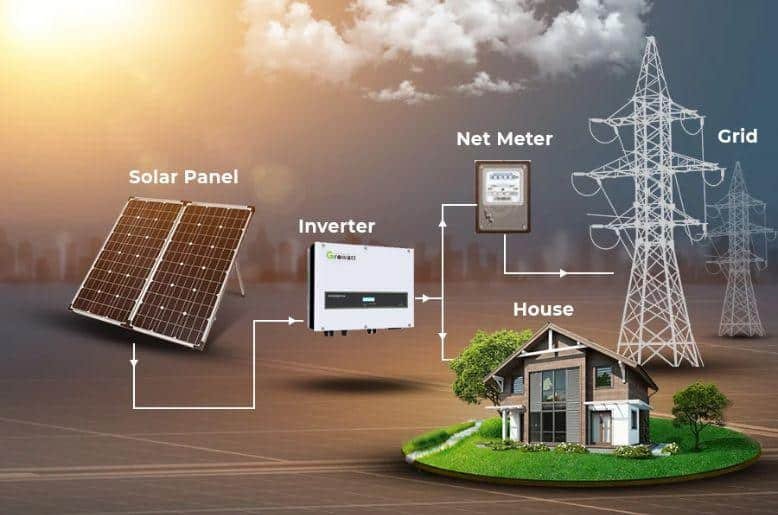
Solar energy offers a bright path for many households. You install panels on your roof. The sun hits the panels and makes electricity. Sometimes, your panels make more power than your house needs. Solar net metering solves this exact problem. It takes your extra power and sends it to the national grid.
The government then gives you credit for this power. This process lowers your monthly electricity bills. Pakistan recently updated these rules. We will look at how these April 2026 changes affect your wallet. We will also share ways to keep your energy bills low under the new system.
What is solar net metering?
Solar net metering is a simple system for solar panel owners. Your home stays connected to the main electricity grid. During the day, your panels produce a lot of power. You might not use all of it. The extra power flows back into the national grid. Your electricity meter spins backward.
At night, your solar panels stop making power. Your house then pulls electricity from the grid. At the end of the month, the power company checks your meter. They see how much power you gave them. They also see how much power you took from them. And they subtract the power you gave from the power you used. You only pay for the net difference. This creates massive savings for homeowners.
The big Change: moving to meet billing in Pakistan
In April 2026, Pakistan changed its energy policy. The country moved away from traditional solar net metering. The government introduced a new system called net billing. This new model changes how the government pays you for your extra power.
The national grid faced major financial problems. Too many people sent extra power to the grid. The government paid high rates for this power. This puts a heavy burden on the national system. The government needed to protect the grid.
They also needed to protect citizens who do not own solar panels. The new net billing system aims to balance these costs. It lowers the financial impact of solar exports on the entire energy network.
Understanding the shift from one to one trading
The old system used a simple trade method. It offered a one-on-one unit of trade. If you gave the grid one unit of power, you got one unit of power back for free. This trade made solar panels incredibly profitable. You could easily wipe out your entire electricity bill.
The new net billing system stops this equal trade. The power company now charges you the full retail price for the electricity you pull from the grid at night. When you send your extra solar power to the grid during the day, the company buys it at a much lower wholesale price. You no longer swap units equally.
You buy high and sell low. My analysis shows that this change requires new solar owners to change their habits. You must use most of your solar power during the day to get the best value.
The financial impact of reduced buyback rates
The most painful change for new solar owners is the new buyback rate. Under the old rules, the government paid a great price for your extra power. Homeowners earned roughly Rs 22 to Rs 27 for every extra unit they sent to the grid. This high rate helped families pay off their solar panels very quickly.
The April 2026 rules cut this payment by more than half. The new buyback rate sits around Rs 10 to Rs 11 per unit. This massive drop changes math for solar investments. If you export a lot of power, you earn much less money than before. The system no longer rewards massive residential solar farms. Instead, the government wants you to install just enough panels to cover your own daily needs.
Protection for existing solar users
Many people are worried about their current solar investments. They spent millions of rupees on solar setups based on the old rules. Thankfully, the National Electric Power Regulatory Authority provided a safety net. They ruled that existing solar users will keep their current benefits.
If you already have an approved solar setup, you will hold a seven-year agreement. The government will honor this contract. You will continue to operate under the old solar net metering rules. You will still receive a high rate of Rs 22 to Rs 27 per unit. And you will also keep your one-on-one unit trading setup. This protection lasts until your seven-year contract expires. This decision maintains public trust. It proves the government will not break its written promises to citizens.
Smart strategies for New Solar owners
New buyers must adapt to the net billing system. You can still save a lot of money with solar panels. You just need a smarter strategy. First, you should buy smaller solar systems. Do not buy extra panels just to sell power to the grid. Calculate your exact daytime power needs. Install only enough panels to meet that specific need.
Second, you must shift your heavy power usage to the daytime. Run your washing machines, water pumps, and air conditioners while the sun shines. Use your own free solar power instead of selling it for cheap. Every unit you use at home saves you the expensive retail rate. This simple habit change maximizes your financial return.
Third, you might want to buy solar batteries. Batteries store your extra daytime power. You can then use this stored power at night. This stops you from buying expensive power from the grid after sunset. Batteries cost extra money upfront. However, the new net billing rules make them a very smart long-term investment.
The future of renewable energy in Pakistan
Pakistan still desperately needs clean energy. The sun provides free and endless power. The shift to net billing does not stop the solar revolution. It simply matures into the market. The government wants a stable power grid for everyone.
We will likely see better battery technology entering the country. As battery prices drop, more families will completely disconnect from the national grid.
They will make and store their own power. Until then, citizens must understand the new rules. Education is your best tool. Knowing exactly how net billing works prevents nasty surprises on your monthly bill. Learn how K-Electric’s proposed electricity price increase could impact Karachi residents , read the full story here
Conclusion
Solar net metering changed how families power their homes. It turned expensive bills into monthly savings. The April 2026 transition to net billing marks a new chapter in Pakistan. The drop in buyback rates from Rs 27 down to Rs 11 demands a new approach.
Existing users can rest easily with their protected contracts. New users must carefully size their systems and shift their energy use to the daytime. Solar power remains a brilliant investment. You just need to plan wisely and use your daytime energy to its maximum potential.
Frequently asked questions
Q1. What is the new solar net billing system?
Net billing is a new rule where the power company buys your extra solar energy at a low wholesale price but sells you grid energy at a high retail price.
Q2. How much does the grid pay for extra solar power now?
As of April 2026, the government pays about Rs 10 to Rs 11 for every extra unit of solar power you send to the grid.
Q3. Will older solar owners lose their current rates?
No. Existing users with approved seven-year agreements will keep their old high rates until their contracts expire.
Q4. Can I still trade units equally with the grid?
New solar users cannot trade units equally. The one-to-one unit of trade only applies to users with older protected contracts.
Q5. How can new users save money under the new rules?
New users should run heavy appliances during the day to use their own free power instead of selling it to the grid for a low price.