
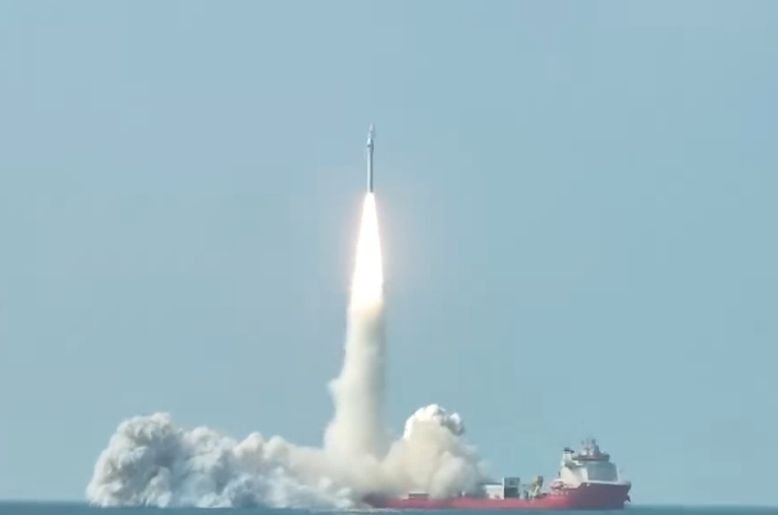
Pakistan’s Space and Upper Atmosphere Research Commission (SUPARCO) has reported the successful launch of the second indigenous Electro-Optical satellite of the country called EO-2.
The satellite was launched from the Yangjiang Seashore Launch Centre (YSLC) in China, which is one more important step forward in the national space programme of Pakistan.
EO-2 was conceptualised, engineered and integrated in Pakistan in SUPARCO’s Satellite Research and Development Centre (SRDC).
Developed by in-house research and systems engineering, the satellite is playing a reflection of Pakistan’s national expertise in satellite design, payload integration, and testing and mission preparedness.
The satellite has been designed to work along with the EO-1 that came before. Working in conjunction with each other, EO-1 and EO-2 will be able to observe the Earth under different illumination conditions.
This will result in better interpretation of surface features and in a more reliable change detection.
The integration of the operation of both the satellites is anticipated to improve the imaging continuity as well as the analytical accuracy for national applications.
With the addition of EO-2, the earth observation fleet of Pakistan becomes stronger and the data availability will be improved for planning, governance and resource management.
SUPARCO said the mission emphasises on its continuing attention to applied research, human resource development and systematic growth of indigenous space infrastructure.
The development falls into line with Pakistan’s goal of developing dependable, home-engineered space systems as well.
In another development SUPARCO has completed the second phase in selecting Pakistan’s astronauts. After some initial screening in Pakistan, two candidates were short-listed.
The candidates went through a thorough psychological, medical and aptitude examinations at the Astronaut Centre of China (ACC), following the international standards for human spaceflight.
The short-listed list will now undergo six months of intensive training as an astronaut at the ACC.
After successful completion, one candidate will be selected to participate in a space mission on the Chinese Space Station (CSS), currently scheduled to be in October or November in this year.
Also read: SUPARCO hits key milestone in space program


