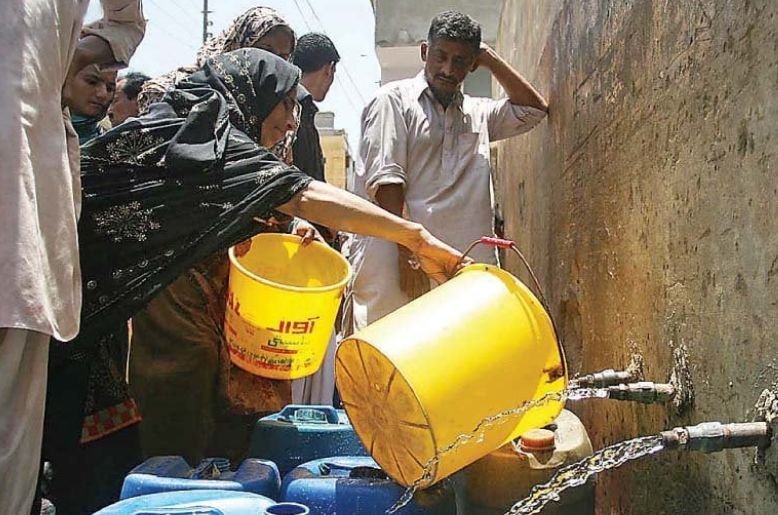
Tharparkar, where water remains the biggest problem for people even today. For the people of Thar, who are facing drought-like conditions due to a lack of rainfall, access to clean drinking water is not merely a facility but a matter of life and death.
In such circumstances, when the government launched a solar tube well project at a cost of Rs526.525 million, it raised hopes that water would reach the thirsty settlements of Thar. However, an audit report has now revealed findings that have raised serious questions about the entire planning of the project.
According to the audit report, approval was granted for the installation of a total of 104 solar tube wells across seven tehsils of Tharparkar. However, in practice, changes were made to the locations and number of tube wells mentioned in the approved PC-I. As a result, one tehsil did not receive even a single tube well from its approved allocation, while another saw twice the approved number of installations.
The important point here is that 27 solar tube wells had been approved for Tehsil Kaloi, but not a single tube well could be installed there. In contrast, 38 tube wells were installed in Nagarparkar instead of the 19 that had been approved, meaning that twice the approved number of installations was carried out.
In Diplo, 50 tube wells were installed instead of 42, while in Chachro, 11 were installed instead of the approved five. Meanwhile, in Mithi, only two out of five were installed, in Islamkot, two out of four, and in Dahli, only one out of the two approved tube wells was installed.
In this way, the total number of tube wells under the project remained 104, but their geographical distribution was changed. In other words, the total number was fulfilled, but the question is: who received the water, and who was left deprived?
In a drought-affected region like Thar, where several villages struggle to access drinking water, such changes in the locations of tube wells cannot be treated as a minor administrative matter. Every tube well represents hope for water for a settlement, and shifting that hope from one place to another directly affects people’s lives.
According to audit officials, if changes to the locations mentioned in the approved PC-I or the scope of the project were necessary, obtaining revised administrative approval and a new PC-I under the relevant rules was mandatory. Audit officials have raised serious objections to changing the original distribution of the project without obtaining such approval.
The matter is not limited to changes in the locations of tube wells. Audit officials raised objections in August 2025, but the administration did not provide any response. Despite writing six letters to the Public Accounts Officer between October 15 and December 9, 2025, a meeting of the Departmental Accounts Committee could also not be held.
Now, several fundamental questions regarding this project, worth more than Rs520 million, remain unanswered: Where did the 27 tube wells approved for Kaloi go? Who authorised the installation of twice the approved number of tube wells in Nagarparkar? Were the changes to the project’s PC-I approved in accordance with the legal procedure? And, most importantly, on what basis was the distribution of tube wells changed instead of prioritising the severe need for water in Thar?
The audit report has recommended regularising the changes made to the project in accordance with the rules, revising the PC-I, and establishing an effective monitoring system within the department. However, recommendations alone are not enough for the people of Thar. They have the right to know which areas actually received the water project approved in their name and who will account for the water that was meant for them.