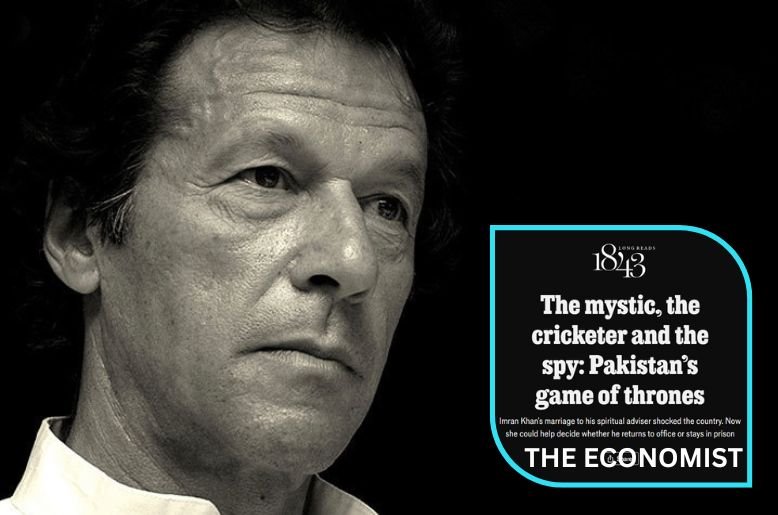
Pakistan’s former Prime Minister Imran Khan has faced intense scrutiny over his marriage to spiritual adviser Bushra Bibi.
The Economist reports that her influence may now play a role in determining whether Khan returns to office or remains in prison.
The Economist
The article says Khan has often sought power through mysticism, not just politics. It portrays him at a political low, turning to Bushra Bibi for spiritual guidance and worldly success.
The Economist suggests his ambition is wrapped in piety rather than genuine reform.
Former staff describe rituals at Khan’s home. They recall demands for beef, black animal heads, and livers.
Meat was sometimes circled around Khan’s head to remove “evil spirits” linked to his ex-wife. These accounts depict superstition around a national leader.
A cabinet member told The Economist that Bushra’s interference in government was “absolute.” She directly undermined PTI’s promise of merit-based governance. Household staff said access to Khan, flight timings, and even plane departures required her approval.
Everyone was warned about Bushra Bibi using black magic, reports The Economist
In the article, the magazine wrote, “The family of Bushra’s first husband, Khawar Manika, also issued warnings about her.”
It also reported that Jahangir Tareen was informed that Bushra Bibi was involved in black magic.
The Economist also highlights Khan’s rise in 2018. It says his victory was widely seen as supported by the army and ISI, which contradicts PTI’s image of an outsider leader.
The report adds that ISI may have used ‘pir networks’ connected to Bushra to influence Khan.
Khan’s sacking of Lt Gen Asim Munir is described as self-protective. The article notes it came after reports about alleged corruption linked to Bushra. Khan’s economic promises, including housing and jobs, largely went unfulfilled.
The piece also cites corruption cases involving expensive state gifts and the Al-Qadir-style trust. These cases, along with prison sentences for Khan and Bushra, clash with his anti-corruption image.
The article describes PTI as revolving around Khan and his wife rather than strong party institutions.
Decisions were reportedly based on personal preferences and spiritual advice. After Khan’s arrest, PTI supporters attacked military sites and historic symbols, showing the movement’s willingness to cross red lines.
Finally, the article notes that Bushra wields political influence despite being unelected. Friends call Khan naïve and blind to her political baggage.
The Economist says he is a leader easily influenced by spiritual and institutional actors despite projecting strongman authority.