
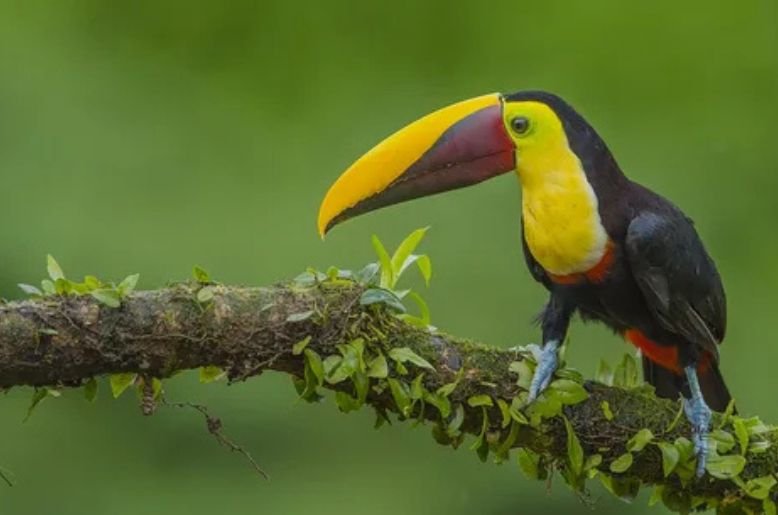
It’s hard not to stop and stare when a toucan appears. That vibrant beak, those striking feathers, and the playful gleam in its eyes, everything about this tropical bird feels like nature showing off. But beneath that burst of color lies fascinating science. The beauty of the Toucan Ramphastidae isn’t just luck or design; it’s evolution, biology, and adaptation working together in harmony.
Let’s explore how science shapes one of the most visually stunning birds on the planet.
A Tropical Icon: Meet the Toucan Ramphastidae
The Toucan Ramphastidae belongs to a family of birds native to Central and South America. Found in lush rainforests, these birds thrive in the canopy where sunlight filters through the trees. Their bold appearance isn’t just for show; it helps them blend into their colorful surroundings while signaling health and vitality to others of their kind.
Their name “Ramphastidae” comes from the Greek word rhamphos, meaning “curved beak.” And indeed, that beak is their signature feature, large, hollow, and brilliantly colored.
The Marvel of the Toucan’s Beak
The toucan’s beak is one of nature’s most extraordinary structures. Despite its size, it’s incredibly lightweight, made from keratin (the same protein found in human hair and nails) and supported by a spongy, honeycomb-like structure inside.
This design keeps it strong but not heavy, perfect for a bird that needs balance while perching high on thin branches.
Scientists have also discovered that the beak helps regulate the bird’s body temperature. Blood flows through the beak and releases heat, much like how elephants use their ears to stay cool. So, when a toucan rests with its beak tucked under its wings, it’s not just sleeping, it’s controlling its body temperature.
Why Are Toucans So Colorful?
Few creatures can compete with the toucan’s dazzling palette. Their feathers and beak feature bursts of orange, yellow, red, and blue. These colors come from carotenoid pigments found in their diet of fruits, insects, and small reptiles.
These pigments are broken down and stored in the feathers and beak, resulting in the radiant shades we see. But there’s more; color plays a role in communication. Bright hues help toucans recognize mates, mark territory, and warn others to stay away.
In many ways, their colors are their language. A healthy, brightly colored beak signals a strong immune system, making it a natural advertisement for fitness and vitality.
Inside the Toucan’s World: Diet and Adaptation
Toucans are mostly frugivores, which means fruit makes up most of their diet. Their long, curved beaks allow them to reach and pluck fruit from branches that might otherwise be out of reach. But they aren’t picky eaters. Occasionally, they enjoy insects, eggs, and even small lizards.
Their digestive system is efficient, quickly breaking down sugary fruits while storing enough energy for long flights across the forest canopy. This feeding habit also helps the rainforest. By dispersing seeds through their droppings, toucans help grow new trees, making them key players in maintaining the ecosystem.
Behavior and Communication
If you ever visit a rainforest, you might hear a toucan before you see it. Their calls range from croaks and yelps to rattling sounds. These calls serve as alerts or as ways to connect with their flock.
Toucans are social birds. They live in small groups and often engage in playful beak duels, which look fierce but are usually friendly. Such behavior builds social bonds and strengthens coordination among members.
Their communication style is unique, vocal calls paired with visual cues like beak gestures. It’s an evolved system that helps them survive in dense, noisy jungles where visibility is often low.
Flight, Balance, and Energy
Unlike many other birds, toucans aren’t built for long flights. Their wings are short, and they mostly hop between branches. But their agility is unmatched in the treetops. The lightweight beak and compact body allow them to move quickly and balance easily while reaching for fruit.
Their small size relative to their beak also helps them conserve energy. Instead of traveling far, they live within specific territories filled with enough food to sustain them year-round.
Toucans and the Environment
Toucans are more than just beautiful creatures; they’re environmental indicators. The health of a rainforest can often be measured by the number of toucans living there. When forests shrink due to deforestation, the first thing that disappears is the toucan’s cheerful call.
Protecting them means protecting entire ecosystems. Conservationists often use toucans as symbols of biodiversity and rainforest protection. Their survival tells the story of the balance between nature and human activity.
Comparing Nature’s Masterpieces
In the grand world of wildlife, few creatures rival the toucan’s charm. Yet, like the cheetah and leopard, each species has its unique adaptation and role in nature. The toucan’s striking beauty may seem designed for admiration, but it’s rooted in function, camouflage, attraction, and survival.
Just as every spot on a leopard’s coat tells a story of evolution, every shade on a toucan’s beak reflects millions of years of adaptation.
The Mystery of the Beak’s Heat Map
Recent studies using thermal imaging have revealed something fascinating: a toucan’s beak acts like a thermal window. When the temperature rises, blood vessels inside the beak expand, allowing excess heat to escape. This ability gives toucans an edge in humid, tropical climates.
It’s a perfect example of how nature balances beauty and purpose. What looks like decoration is actually a built-in cooling system, one of evolution’s smartest designs.
Nature’s Living Canvas
The Toucan Ramphastidae is a symbol of how science and beauty can coexist effortlessly. Its radiant colors, oversized beak, and lively spirit remind us that every element in nature has a reason. Behind every bright feather is biology at work, behind every sound is communication, and behind every glance is evolution’s artistry.
Next time you see a picture of a toucan, take a closer look. You’re not just seeing a pretty bird; you’re witnessing millions of years of science wrapped in feathers and color.
Let’s protect these living rainbows and the forests they call home. The world would be quieter, duller, and far less magical without them.


