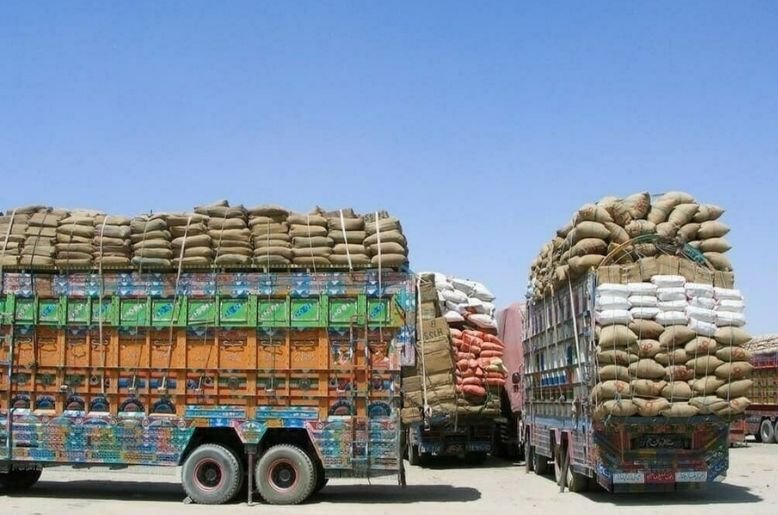
The Pakistan Goods Transport Alliance has announced a 4 percent increase in transport fares following the rise in petroleum product prices.
President of the Pakistan Goods Transport Alliance, Malik Shehzad Awan, said that the increase in diesel prices by the federal government is condemnable.
He stated that due to the hike in petroleum prices, they are announcing a 4 percent increase in freight charges, adding that every Pakistani is affected by the rise in petroleum product prices.
He said that the federal government and the Punjab government want to push transporters against the wall. Malik Shehzad Awan added that during their recent strike, the federal government had assured them of a reduction in petroleum product prices.
Malik Shehzad Awan further said that the agreements made with them by the federal and Punjab governments during the recent strike are not being implemented.
He added that the promise made by Federal Minister for Communications Abdul Aleem Khan is not being accepted by the Motorway Police. According to him, the federal and Punjab governments seem to want transporters to go on another nationwide strike.
The President of the Pakistan Goods Transport Alliance warned that if the agreements made with them are not implemented, they will once again hold a nationwide strike, and the federal government and the Punjab government will be responsible for all resulting losses.
Petrol price unchanged, diesel price increases
It is pertinent to mention that the Petrol price has remained unchanged, according to the official notification.
while The price of High-Speed Diesel has been increased by Rs11.30.
The new price of HSD is Rs268.38.
This decision was notified in a press release issued by the Petroleum Division.
Earlier, the government kept petrol and high-speed diesel prices unchanged at Rs253.17 per litre and Rs257.08 per litre.
Petrol is primarily used in private transport, small vehicles, rickshaws, and two-wheelers, and directly impacts the budgets of the middle and lower-middle classes.
Meanwhile, most of the transport sector runs on HSD. Its price is considered inflationary, as it is mostly used in heavy transport vehicles, trains, and agricultural engines such as trucks, buses, tractors, tube wells, and threshers, and particularly adds to the prices of vegetables and other eatables.