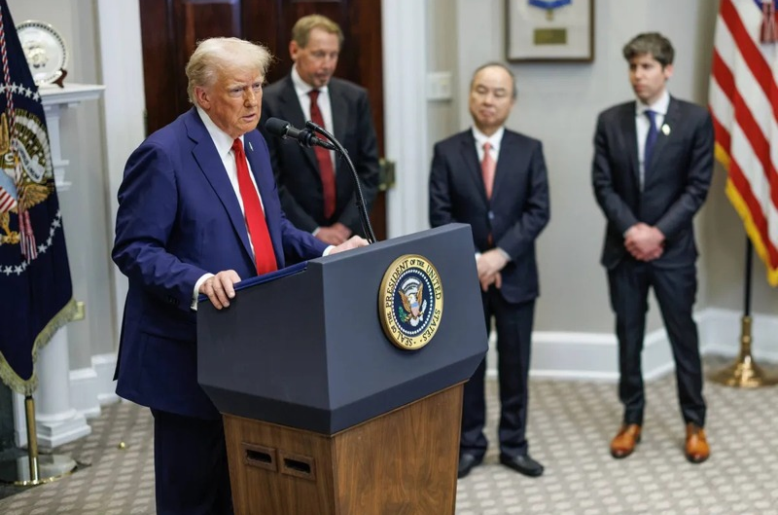
US President Donald Trump has appointed intelligence chief Jay Clayton to lead a new federal artificial intelligence task force. The move puts a senior national security official at the center of the administration’s AI strategy. The administration calls the task force the “Super Intelligence Force,” or SIF. Trump has increasingly used the term “super intelligence” instead of artificial intelligence. He says the initiative will help the United States maintain its position in advanced AI. The announcement means Trump puts intelligence chief in charge of US AI drive as Washington faces growing debate over AI development. The technology has raised both economic hopes and concerns about safety and national security. Clayton currently serves as the Director of National Intelligence. He confirmed the position in July. Before joining the intelligence community, he served as chairman of the Securities and Exchange Commission.
Clayton does not have a technology industry background. His new assignment will bring intelligence and national security experience into the government’s AI policy efforts. The task force will coordinate federal work related to the rapidly developing technology. Trump said the force will work with several groups outside the federal government. These include AI companies, consumers, public interest groups and critical infrastructure providers. Religious organizations will also be involved. Other senior officials will also take part in the task force. They include Federal Trade Commission Chairman Andrew Ferguson. Pentagon technology official Emil Michael will also join the group.
Scott Kupor, director of the Office of Personnel Management, is another member. The group will report directly to Trump and White House Chief of Staff Susie Wiles. The new initiative follows a meeting between Trump and major technology executives. Leaders from several major AI companies recently met with the president at the White House. The companies also agreed to voluntary safety standards. The agreement includes internal evaluations and outside audits of AI systems. Company boards will also review the safety of their AI models.
The administration has presented AI leadership as an important national priority. Trump has repeatedly said the United States must remain competitive in advanced AI. At the same time, researchers and other officials have raised concerns about possible AI risks. These concerns include cybersecurity threats and harmful uses of increasingly powerful systems. The task force is expected to examine both opportunities and risks linked to AI. It will also consider the government’s role in managing the technology. The development shows how AI policy is becoming closely connected with national security. It also places a senior intelligence official in a key role in shaping the federal response. For now, the administration has focused on coordination and industry involvement. The task force will determine how those efforts develop as AI technology continues to advance.
At a time of rapid growth in the sector. The new force will help coordinate the government’s approach to AI and its future challenges.