
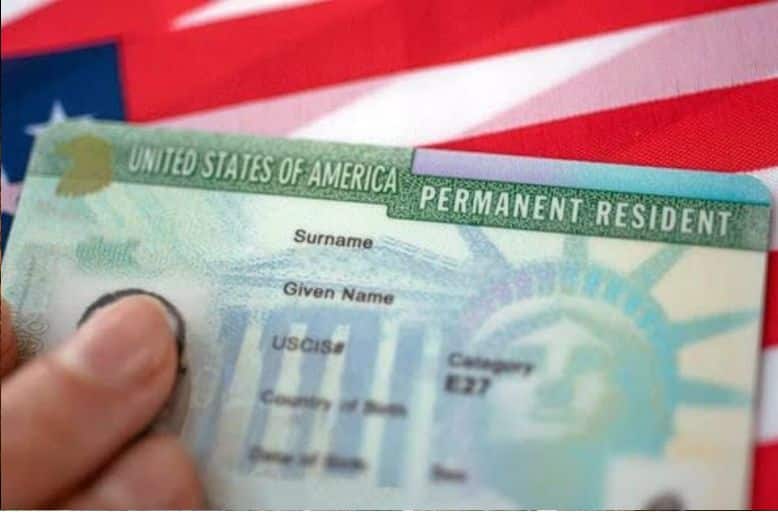
The Trump administration is considering requiring certain green card applicants applying from outside the United States to deposit a bond of up to $100,000 as proof that they can financially support themselves after immigration.
However, the proposed requirement would not apply to every person seeking permanent residence in the United States. It is reportedly being considered for selected applicants who may otherwise be found ineligible for an immigrant visa because US authorities believe they are likely to become dependent on government assistance.
The proposal is still under consideration, and the US government has not formally announced its implementation, eligibility criteria or launch date.
State Department spokesperson Tommy Pigott said the department was working with the Department of Homeland Security to introduce measures aimed at enforcing immigration laws and protecting public-benefit programmes from additional financial pressure.
According to Pigott, the State Department is exploring the use of an existing authority under the Immigration and Nationality Act to require certain applicants considered likely to become a “public charge” to deposit a bond.
The bond would be intended to demonstrate that the applicant or their family has sufficient financial resources to cover living, medical and other expenses in the United States.
Unlike a visa application fee, the proposed bond may be refundable. Reports suggest that applicants’ relatives living in the United States could also be allowed to deposit the money on their behalf. However, it remains unclear when the bond would be returned and what conditions applicants would have to meet.
What does the proposal mean for Pakistanis?
Pakistani citizens applying for US immigrant visas or green cards through consular processing would not automatically be required to pay $100,000 under the proposal.
If introduced, the bond is expected to apply only to selected applicants considered at risk of becoming dependent on public assistance. The State Department may also initially test the policy in a limited number of countries.
No official announcement has so far confirmed that every Pakistani immigrant visa applicant, or Pakistan as a country, would be covered by the proposed bond programme.
Pakistani applicants, however, are already facing a separate restriction. The US State Department paused immigrant-visa issuance for nationals of Pakistan and dozens of other countries from January 21, 2026, as part of a review concerning the possible use of public benefits.
Under the existing instructions, Pakistani applicants may continue submitting immigrant visa applications, providing documents and attending scheduled interviews. However, visas generally cannot be issued while the pause remains in effect.
Dual nationals applying with a passport from a country not included in the restricted list are exempt. Certain adoption cases may also be considered for exceptions.
The pause applies specifically to immigrant visas, including visas leading to permanent residence. Tourist and other temporary visas are not covered by this particular restriction.

