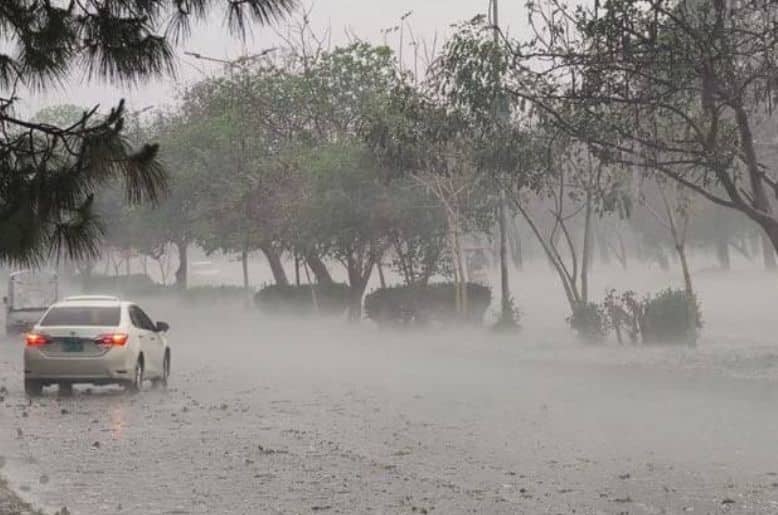
Rain, thunderstorms and hailstorms are expected in several parts of Pakistan until September 30. Authorities warn of heavy rainfall and possible flooding in some areas.
According to the National Disaster Management Authority (NDMA), moisture is entering the region, creating favourable conditions for rain and thunderstorms.
The weather system is expected to affect Islamabad, Punjab, Khyber Pakhtunkhwa, Gilgit-Baltistan and Azad Jammu and Kashmir.
Rain and thunderstorms are expected in Islamabad and Rawalpindi. Several Punjab cities may also receive rain, including Lahore, Gujranwala, Gujrat, Sialkot, Faisalabad, Jhelum, Attock, Chakwal, Sargodha, Sheikhupura, Okara, Sahiwal and Jhang.
Authorities have warned that heavy rainfall could cause water accumulation and urban flooding in vulnerable areas.
The Pakistan Meteorological Department has also warned that strong winds and lightning may damage weak structures. Electric poles, billboards, vehicles and solar panels could also be affected during severe thunderstorms.
In mountainous areas, heavy rain could increase water levels in local streams and nullahs. Landslides may affect roads in vulnerable areas of Murree, Galiyat, upper KP, Kashmir and Gilgit-Baltistan.
Rain also expected across Khyber Pakhtunkhwa
Several parts of Khyber Pakhtunkhwa are also likely to receive rain and thunderstorms, including Peshawar, Swat, Dir, Buner, Malakand, Shangla, Mansehra, Abbottabad, Haripur, Nowshera, Mardan, Swabi, Kohat, Kurram, Hangu and other areas.
The Flood Forecasting Division expects rain and thunderstorms across upper parts of the country through September 29. River flows in the Ravi and Chenab could also rise slightly between September 27 and 29.
Authorities have advised people to avoid crossing flooded roads, and seasonal streams during heavy rain. Travellers and tourists should also check weather conditions before visiting mountainous areas.
Farmers have been advised to plan their activities according to the forecast, while local authorities have been set to remain prepared for possible emergencies.