
Pakistan’s short term inflation recorded a small weekly decline, offering slight relief to households, according to fresh data released by the Pakistan Bureau of Statistics.
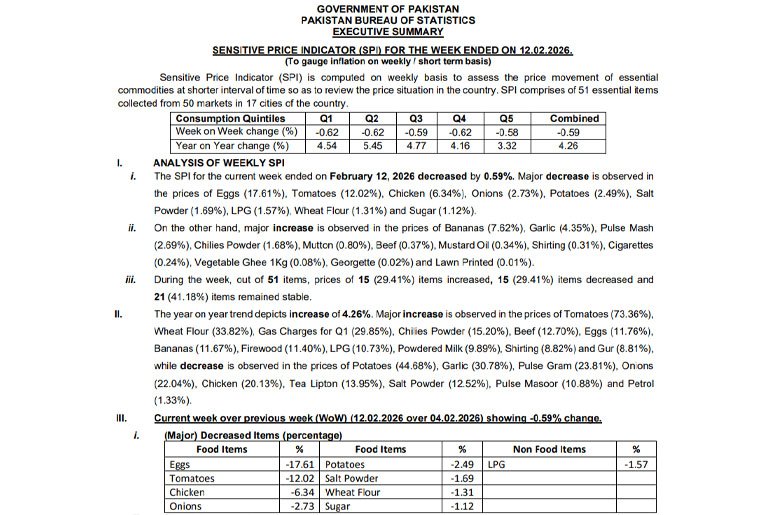
The Sensitive Price Indicator, which tracks the cost of basic goods, fell by 0.59 percent compared with the previous week. The drop came despite noticeable increases in several everyday items, showing mixed price trends in local markets.
Among the products that became more expensive during the week were bananas, garlic, pulse mash and chilli powder. Meat prices also moved up slightly, with mutton and beef posting small gains. Other items that saw modest increases included mustard oil, shirting, cigarettes and vegetable ghee.
Food items show mixed trend
In contrast, many essential food items became cheaper, helping to pull overall inflation down. Egg prices recorded a sharp fall, while tomatoes and chicken also became significantly cheaper. Onions, potatoes, salt powder, LPG, wheat flour and sugar posted smaller declines.
Out of 51 essential items monitored during the week, prices of 15 items increased, 15 decreased and 21 remained unchanged, reflecting a balanced but uncertain price movement across markets.
On a yearly basis, however, short term inflation remained higher. The SPI rose 4.26 percent compared with the same week last year. Tomato prices showed one of the biggest yearly jumps, followed by wheat flour and gas charges. Other items that recorded notable annual increases included chilli powder, beef, eggs, bananas, firewood, LPG and powdered milk.
At the same time, some goods were cheaper than a year earlier. Potatoes, garlic, gram pulse, onions and chicken recorded major yearly declines, while tea, salt powder, masoor pulse and petrol also showed reductions.
Meanwhile, the average price of Sona urea reached Rs4,435 per 50kg bag, slightly higher than last week but lower than last year. Cement prices also rose marginally to Rs1,421 per bag, marking small increases on both weekly and yearly basis.
The Sensitive Price Indicator monitors 51 essential commodities across 50 markets in 17 cities. It is released every week to give a quick picture of price changes and help policymakers track inflation trends closely.
Read next: Weekly inflation in Pakistan dips as potato, onion prices fall


