
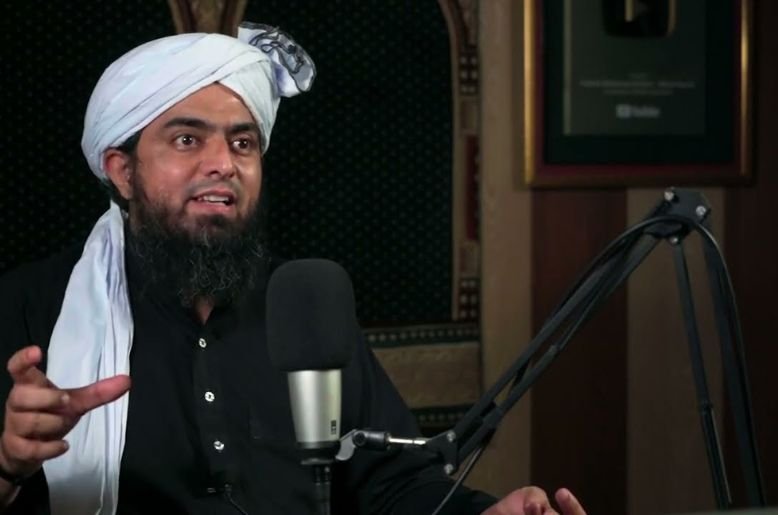
In Pakistan’s religious landscape, few figures are as widely discussed as Engineer Muhammad Ali Mirza. He is a prominent public speaker who gained massive fame through his online lectures. His unique style of discussing complex religious topics has attracted millions of followers. However, his views have also sparked intense debate and controversy among traditional scholars.
Many people know him from short video clips on social media. But who is the man behind these viral videos? This article provides a complete profile of Engineer Muhammad Ali Mirza. We will cover his early life, education, the work of his research academy, and his core beliefs. Understanding his background and approach is key to seeing why he has become such an influential, yet polarizing, figure in modern Islamic discourse.
Early Life and Education
Engineer Muhammad Ali Mirza was born on October 4, 1977, in Jhelum, a city in the Punjab province of Pakistan. He grew up in a relatively ordinary family. His background is not one of traditional religious scholarship, which sets him apart from most other Islamic speakers in the country. He received his early education in Jhelum.
After completing his schooling, he pursued a career in a technical field. He enrolled in the University of Engineering and Technology (UET), Taxila. There, he studied mechanical engineering. He successfully graduated with a Bachelor of Science (BSc) in Mechanical Engineering. This professional title of “Engineer” became a permanent part of his public identity. After graduating, he began a government job as a mechanical engineer in the Ministry of Defence, where he served for many years.
His journey into religious studies was a personal one. He did not attend a traditional Islamic seminary or madrassa. Instead, he dedicated himself to self-study. He claims to have spent over two decades studying the Quran, Hadith, and the works of major Islamic scholars from all schools of thought. This self-taught approach heavily influences his method of teaching and his critical view of sectarian divisions.
The Rise of an Online Preacher
Engineer Muhammad Ali Mirza did not become famous overnight. He started his work quietly in Jhelum. In 2014, he established a small research academy. He began recording his weekly lectures and uploading them to YouTube. His goal was to present what he calls “the true Islam” based directly on the Quran and authentic Hadith.
His lectures quickly found an audience. People were drawn to his direct and often confrontational style. He speaks in simple Urdu, making difficult topics accessible to the average person. He frequently references specific books and hadith numbers to back up his arguments. This evidence-based approach appealed to many young, educated Pakistanis who were tired of traditional sectarian sermons.
His YouTube channel grew exponentially. Today, he has millions of subscribers, and his videos have billions of views. He uses platforms like YouTube, Facebook, and TikTok to spread his message. This effective use of social media allowed him to bypass traditional religious institutions and speak directly to a massive audience, both in Pakistan and abroad.
Quran and Sunnah Research Academy
The base for his activities is the Quran-o-Sunnat Research Academy in Jhelum. This is not a large institution but a center where he prepares and records his lectures. The academy’s stated purpose is to promote non-sectarian Islam. It aims to unite Muslims by encouraging them to follow the primary sources: the Quran and the Sunnah (the teachings and practices of the Prophet Muhammad, PBUH).
Engineer Muhammad Ali Mirza is the primary and sole speaker at the academy. He holds regular sessions where he addresses various theological, social, and political issues from an Islamic perspective. He often criticizes other scholars by name, accusing them of promoting division and misguiding their followers. These critiques are a major reason for the controversies surrounding him. He presents his work as a research-based effort to correct what he sees as centuries of accumulated errors in religious understanding.
Core Beliefs and Teachings
Understanding the teachings of Engineer Muhammad Ali Mirza is crucial to understanding his impact. His core message revolves around rejecting blind following (taqleed) and sectarianism.
Anti-Sectarianism
The central pillar of his message is the rejection of FIRQA-wariyyat (sectarianism). He argues that the labels of Sunni, Shia, Barelvi, Deobandi, and Ahle Hadith have divided the Muslim Ummah. Engineer Muhammad Ali Mirza urges his followers to identify simply as “Muslims.” He quotes verses from the Quran and Hadith that condemn creating divisions in the religion. Muhammad Ali Mirza critiques the leading scholars of all major sects, arguing that they prioritize their sect’s teachings over the clear words of the Quran and authentic Hadith.
Direct Study of Primary Sources
He strongly encourages his followers to study the Quran and Hadith for themselves. He believes that every Muslim has a duty to seek knowledge directly from the sources. This is a departure from the traditional view, which often emphasizes learning from a qualified scholar or school of thought. His lectures are filled with references to Sahih Bukhari, Sahih Muslim, and other major Hadith collections. He wants his audience to verify his claims, which empowers them to engage with the texts directly.
Respect for All Companions and Ahl al-Bayt
Another key aspect of his teaching is his position on important historical figures in Islam. He advocates for respecting all the Sahaba (Companions of the Prophet) as well as the Ahl al-Bayt (the Prophet’s family). This balanced view is his attempt to bridge the gap between Sunni and Shia perspectives. He criticizes extremist views from both sides, whether it involves disrespecting the Ahl al-Bayt or cursing the Companions.
A Modern and Rational Approach
Coming from an engineering background, Engineer Muhammad Ali Mirza often applies logic and reason to religious matters. He addresses modern issues like science, politics, and human rights. This rational approach resonates with a younger generation that seeks answers to contemporary questions. He is not afraid to tackle sensitive topics that many other speakers avoid.
Controversies and Criticisms
The fame of Engineer Muhammad Ali Mirza is matched by the level of controversy he generates. He has faced intense criticism from scholars of all major sects.
Lack of Formal Islamic Education
The most common criticism is his lack of formal education from a recognized Islamic institution. Traditional scholars argue that he is not qualified to issue religious opinions (fatwas) or interpret complex theological texts. They believe his self-study is insufficient and can lead to dangerous misinterpretations. They often refer to him dismissively as just an “engineer.”
Disrespect Towards Scholars
His critics accuse him of being disrespectful towards revered Islamic scholars of the past and present. In his lectures, he often uses harsh language when naming scholars with whom he disagrees. This has angered many who feel he is attacking the foundations of their respective schools of thought. They see his style as arrogant and divisive, despite his claims of promoting unity.
Legal Troubles and Arrests
His confrontational style has also led to legal problems. He has been arrested on multiple occasions. The charges often relate to inciting hatred or making controversial statements about religious figures. His supporters claim these arrests are attempts to silence his voice, while his opponents argue they are necessary to maintain public order.
Conclusion: An Unconventional Influence
Engineer Muhammad Ali Mirza is undeniably one of the most influential religious figures in Pakistan today. His rise shows a major shift in how religious authority is established and consumed in the digital age. He built a massive following without the backing of any religious party or institution. His message of anti-sectarianism and direct engagement with primary texts has challenged the status quo.
For his supporters, he is a brave reformer speaking truth to power. They see him as a voice of reason who is cleansing Islam of cultural and sectarian baggage. For his critics, he is an unqualified and dangerous figure who is spreading confusion and disrespecting the scholarly tradition. Regardless of one’s opinion, his impact on religious discourse in Pakistan is profound and will likely be felt for years to come.
To learn more about influential figures, read our detailed analysis of other political leaders.
Frequently Asked Questions
1. Who is Engineer Muhammad Ali Mirza?
He is a Pakistani public speaker and self-taught Islamic scholar known for his online lectures that challenge traditional sectarianism.
2. What is his educational background?
He has a BSc in Mechanical Engineering from UET Taxila. He does not have a formal degree from a traditional Islamic seminary.
3. What are his main teachings?
He advocates for rejecting sectarian labels, studying the Quran and Sunnah directly, and respecting all major figures in Islamic history to unite Muslims.
4. Why is Engineer Muhammad Ali Mirza controversial?
He is controversial due to his lack of formal Islamic education, his direct criticism of other scholars, and his confrontational style, which has led to legal issues.
5. Where can I find his lectures?
His lectures are primarily available on his official YouTube channel, “Engineer Muhammad Ali Mirza – Official Channel,” and are shared across other social media platforms.


