
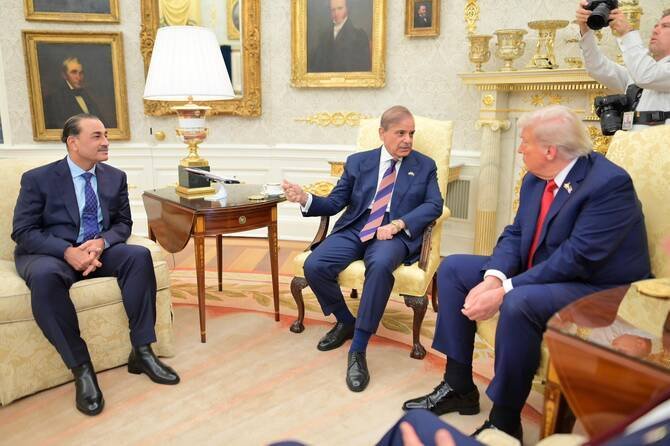
WASHINGTON: 2025 proved a turning point for Pakistan. Despite political and economic stress at home, the country regained global relevance, according to The Diplomat.
Four key developments shaped the year.
First, Pakistan re-emerged on the international stage after May’s four-day military clash with India. The conflict highlighted Pakistan’s air power and military readiness.
Global defence circles noted Pakistan’s ability to counter India despite economic pressure. This restored strategic credibility after years of relative isolation.
Following the clashes, ties with the United States improved, while India’s relations with Washington showed strain. Pakistan also strengthened defence diplomacy in the Middle East. A mutual defence pact with Saudi Arabia and a $4 billion arms deal with Libya stood out. Talks with other countries followed. Counterterrorism cooperation, including with Turkiye, also expanded.
China welcomed battlefield validation of its defence systems used by Pakistan. This helped advance CPEC’s second phase. Pakistan also played a visible role in discussions on Gaza’s stabilization. These moves boosted Pakistan’s diplomatic standing ahead of 2026.
Second, Pakistan adopted a tougher policy toward Afghanistan. Islamabad moved away from accommodation and increased pressure on the Afghan Taliban over TTP sanctuaries. Cross-border strikes and trade restrictions signaled a shift, the publication underlined.
Pakistan raised the issue internationally, involving Qatar, Turkiye, and Saudi Arabia. Over 1,000 Afghan clerics later issued a decree against cross-border attacks. Domestically, Pakistan recorded gains against TTP networks, the publication said in its article.
Third, the economy remained fragile. Foreign investment declined. High energy costs, taxes, and tariffs hurt industry. Poverty levels rose. A major positive development was PIA’s privatisation. It ended decades of losses and marked Pakistan’s first major privatisation in nearly 20 years.
Fourth, political tensions stayed high. PTI’s confrontation with state institutions continued. Protests and governance disputes, especially in Khyber Pakhtunkhwa, raised stability concerns. At the same time, firm action against TLP signaled reduced tolerance for violent extremism.
Globally, 2025 saw rising conflicts and power politics. Wars in Ukraine and the Middle East continued. U.S. trade pressure and support for Israel added uncertainty.
Pakistan now faces a narrow window. Political stability and economic reforms remain crucial to protect gains made during a difficult but defining year, said the publication.


