
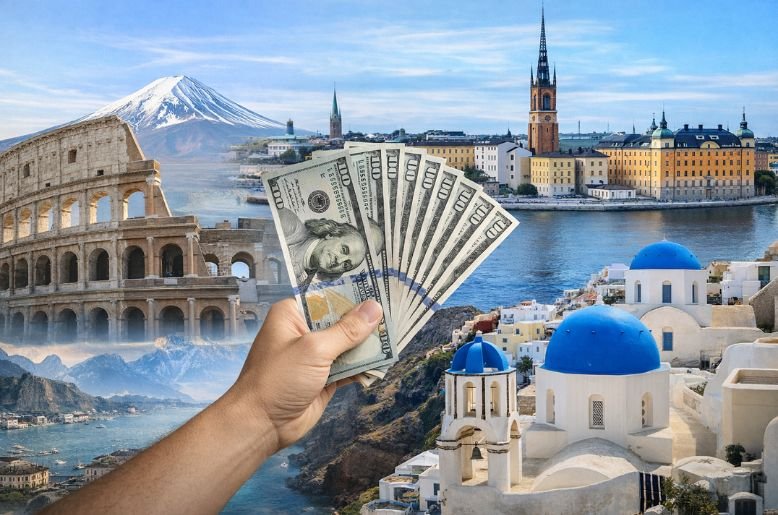
You can now earn without working as well, as 11 countries around the globe are offering direct financial assistance to the visitors.
Governments of these countries have offered various programmes.
These programmes are designed to boost local economies, revive rural areas, and attract long-term visitors such as retirees and remote workers.
Many of these initiatives encourage longer stays, off-season travel, or relocation to less-populated regions.
Governments view visitors not just as tourists but as contributors to local communities.
In return, they may provide help with housing, transport, and even cash payments, giving travellers real financial benefits while they explore new destinations.
Here are 11 countries offering such incentives.
Italy
Italy offers regional programmes to revitalise small towns with declining populations.
Visitors who stay long-term, renovate properties, or work remotely in rural areas may receive cash grants or partial accommodation coverage.
Requirements vary by municipality, with some asking participants to commit to living in a town for a set period.
Italy’s approach combines financial support with engagement in local culture, cuisine, and traditions.
Japan
Several Japanese regions provide cash payments, housing subsidies, or relocation grants to visitors willing to stay in rural areas.
The programmes aim to ease urban overcrowding and support smaller towns.
Participants often include remote workers and entrepreneurs, who must commit to living in designated regions.
Financial support can cover moving costs, rent, and even business startup funding.
Spain
Spain is trying to stop people from leaving its rural areas by offering grants, help with housing, and tax relief to visitors who are willing to stay for a longer time.
The programmes often target younger residents, digital nomads, and entrepreneurs.
Participants must register locally and stay for a minimum period, gaining financial stability and access to public services while enjoying Spain’s lifestyle and climate.
Ireland
Ireland encourages residency on remote islands. Grants help restore vacant homes and support long-term stays.
Participants must renovate properties and commit to living on the island for a specified period.
In return, residents help sustain island communities and benefit from significant financial assistance.
Greece
Some Greek islands facing population decline offer monthly stipends, housing help, and utility subsidies.
Eligibility generally requires settling semi-permanently and contributing to the local economy.
Financial support reduces living costs while allowing families and individuals to enjoy Mediterranean life.
Portugal
The Portuguese government offers incentives to remote workers and visitors relocating to less-populated regions.
Programmes include tax breaks and housing assistance, helping newcomers settle comfortably. Proof of income and residency commitment is often required.
Croatia
Croatia provides tax relief and extended residency options for remote workers and long-term visitors.
While not always direct cash payments, these measures lower living costs and support sustainable tourism.
South Korea
South Korea offer housing aid in smaller cities and rural areas. It also provides relocation grants, and startup support for foreigners.
Programmes require residency commitments and often target students, entrepreneurs, and remote workers.
New Zealand
Certain regions in New Zealand provide relocation incentives, particularly for skilled visitors.
Support may include relocation grants, helping fill labor shortages and encouraging regional settlement.
Estonia
Estonia offers tax benefits and streamlined residency options for digital nomads and entrepreneurs.
Programmes require proof of income and business activity, with incentives helping reduce overall living costs.
Switzerland
Small Swiss villages in Switzerland facing declining populations provide cash grants to families and individuals willing to settle locally.
Residents may need to commit to a certain period, contributing to community life while receiving financial support.
In many places, visitors can experience local life fully while benefiting from financial incentives, turning a trip into both an adventure and an opportunity.


