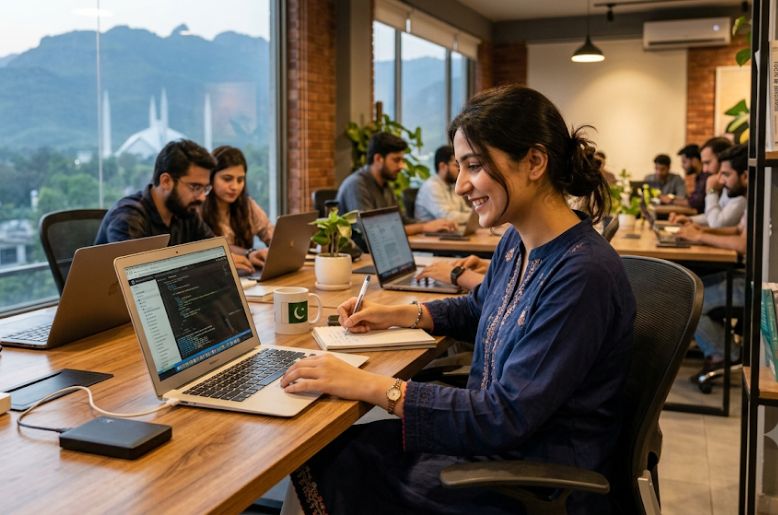
With the pressure of inflation, lack of jobs, and the rapidly expanding digital economy, more and more Pakistanis are shifting from traditional 9-to-5 work to freelancing.
In the last several years, freelancing has gone from a sideline to a career choice for thousands of young professionals, students and even seasoned workers looking for better pay and a more flexible work schedule.
With the advent of online platforms like Upwork, Fiverr and Freelancer, Pakistanis now have the opportunity to provide their services to clients from all over the world including graphic designing, software development, content writing, digital marketing and video editing.
The youth bulge and growing Internet usage have been key contributors to this transformation in the industry, according to experts.
The population of Pakistan is one of the youngest in the world with millions entering the job market annually.
But the formal sector has not been able to generate sufficient quality employment opportunities, with a large number of the educated young population working in the informal sector or being jobless.
A freelance student working from Islamabad said that with freelancing, those who are skilled can earn foreign currency without leaving home. It provides financial independence for many young people that traditional jobs might not be able to provide.
Read more: Standing Committee urges government to ease smartphone taxes for digital growth
There is more to freelancing than just the money.
The freelancing career has become especially appealing for students, parents and those who reside outside major cities thanks to flexible working hours, project selection and a lack of commuting.
As the digital wave brews over the landscape of higher education, university students are acquiring digital tools in online classes before they even graduate, and aiming to establish careers as freelancers while they are studying.
Numerous schools have also begun teaching students how to program, create content, optimise their content for search engines (SEO), and use AI tools to enhance their job prospects in the international digital economy.
This trend has been further fueled by economic uncertainty.
Freelancers who earn in USD or other foreign currencies have more financial stability than those who rely solely on local wages, as the purchasing power is eroded by inflation.
Along with this, Pakistan is also becoming one of the major contributors to the international freelancing industry.
The country is consistently in the top five markets for freelance professionals, especially in the areas of software development, IT services and creative digital work, as indicated by several industry reports.
As a trendy profession, freelancing has its own set of problems. Some of the ongoing challenges include irregular income, lack of employee benefits (including health insurance and pension), payment gateway restrictions and heavy international competition.
It is also extremely important for freelancers to keep their reviews positive and stay up to date with the latest technologies.
More support from the government could be the key to unlocking the potential of the sector, experts say.
They suggest increasing the capacity of digital skills training, upgrading internet infrastructure, streamlining tax structure and making secure international payment systems accessible.
With the digital economy growing rapidly around the world, many experts predict freelancing will soon be a more significant source of jobs and foreign currency for Pakistan.
Freelancing is not just an alternative job, but the future of work for a generation that is looking for flexibility, independence and opportunities around the world.
Also read: Pakistan’s ‘Skills of Tomorrow’ programme offers free AI, freelancing training