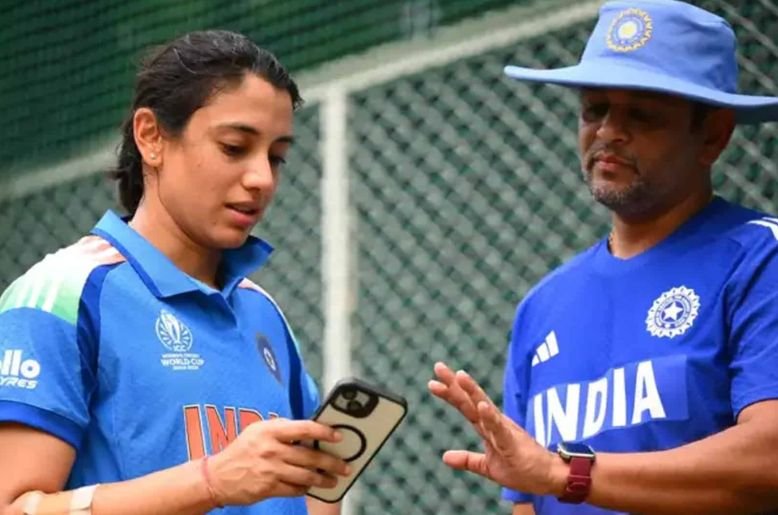
The coach of the Indian women’s cricket team has revealed that the decision not to receive the trophy from Asian Cricket Council President Mohsin Naqvi was made on the instructions of the Board of Control for Cricket in India.
A new controversy in the world of sports has intensified at this time after the coach of the Indian women’s cricket team admitted important facts during a press conference.
When he was asked when the team would receive the Women’s Asia Cup trophy, he expressed his lack of knowledge and said that he did not know when the trophy would be handed over.
The coach made it clear that the players did not take any step of their own accord. Rather, the women’s team decided not to receive the trophy under clear instructions from the Indian cricket board. In accordance with the board’s strict orders, the team followed the decision completely.
A controversial tradition following in the footsteps of the men
It is noteworthy that the Indian women’s team also followed the old pattern of its men’s team and created a controversy after the Asia Cup final. The team outright refused to receive the trophy from Asian Cricket Council President Mohsin Naqvi.
Political tensions between Pakistan and India and their impact on sports, particularly cricket, are nothing new. In recent years, disputes over award ceremonies, handshakes and decisions made at the board level during various tournaments and events have caused the sporting arena to fall victim to diplomacy.
Such boycotts or symbolic actions on the platform of the Asian Cricket Council have also been seen in the past, where political pressure directly affects the behaviour of players.
It is clear that the Indian women’s team’s reluctance to receive the trophy from the Asian Cricket Council President was not merely the reaction of an individual player. Rather, deep political motives and board policy were working behind it.
When political tensions are forcibly brought into sporting institutions, it not only damages sportsmanship but also strains regional cricket relations.
The Indian coach’s statement is clear evidence that players do not have the authority to make decisions. Instead, officials sitting in offices are turning sports into a means of division rather than bringing people together. Such attitudes are also harmful to the organisational environment of the Asian Cricket Council.