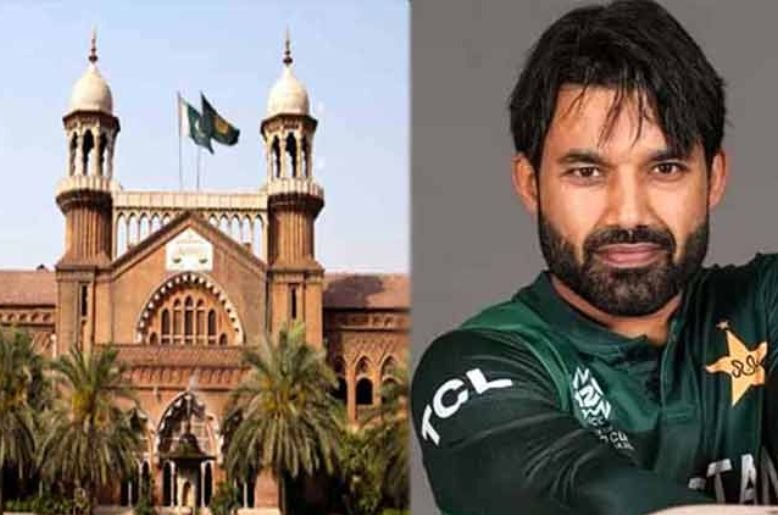
The Lahore High Court (LHC) has dismissed a petition filed by cricketer Mohammad Rizwan challenging an inquiry and call-up notice issued by the National Cyber Crime Investigation Agency (NCCIA). A five-page written judgment issued by LHC Chief Justice Aalia Neelum directed Rizwan to join the NCCIA inquiry and cooperate fully. At the same time, the court instructed the agency to conduct the inquiry strictly in accordance with the law and ensure that Rizwan is not subjected to harassment or unnecessary inconvenience.
According to the judgment, the NCCIA said its inquiry concerns allegations of electronic fraud. The state counsel informed the court that the allegations fall under Section 14, relating to illegal financial gain, of the Prevention of Electronic Crimes Act (PECA) 2016. The agency maintained that information obtained through cyber patrolling had indicated a link between Rizwan and the matter.
The court observed that, at this preliminary stage, it was appropriate to allow the relevant agency to proceed with its inquiry. It held that the court could not intervene before the inquiry was completed and the need for any further action had been determined.
Rizwan’s counsel had argued that the matter had not been reported to the International Cricket Council’s (ICC) Anti-Corruption Unit and that the unit was the appropriate forum for dealing with corruption-related matters in cricket.
However, the court referred to Clause 1.11 of the ICC Anti-Corruption Code, observing that the code establishes professional standards of conduct rather than criminal law. The court held that the ICC code does not prevent or override proceedings under applicable national laws.
The judgment further noted that the ICC code itself requires individuals covered by it to cooperate with relevant criminal or regulatory authorities. Therefore, the existence of the ICC’s disciplinary framework could not prevent a competent state agency from conducting a legal inquiry.
The court also clarified that a call-up notice does not, by itself, amount to a criminal charge. Rather, it is a procedural step used to obtain information and record a person’s position during an inquiry or investigation.
The judgment noted that Rizwan had already appeared before the NCCIA in response to the notice and subsequently submitted his written response.
According to the court, the NCCIA issued a summons to Rizwan on September 8, directing him to appear on September 10 to explain his position and respond to the allegations. Rizwan appeared before the agency on September 10 and submitted a written response on September 14.
The court concluded that the NCCIA inquiry did not exceed the agency’s jurisdiction and found no indication at this stage that it was being conducted in bad faith. The judgment said the inquiry was aimed at investigating and addressing allegations of corruption in sports.