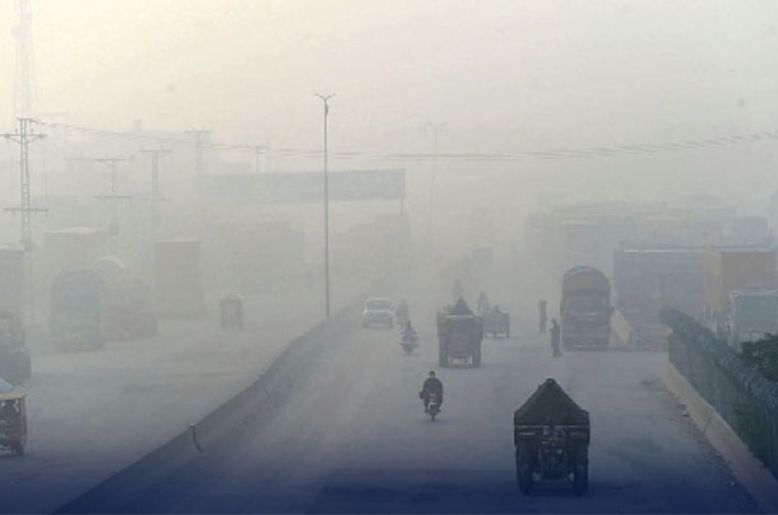
Lahore has topped the list of the world’s most polluted cities, with its Air Quality Index (AQI) reaching 194, according to global air-quality monitors. Air pollution levels in Lahore have risen significantly, placing the city at the top of the global list of the most polluted cities.
Pollution levels were recorded at 210 in Allama Iqbal Town, 207 on Barki Road, 187 in Model Town, 187 on Bedian Road, and 186 in Defence. Lahore’s AQI is reportedly 19 times higher than the World Health Organization’s recommended safety guideline, while global monitoring agencies have reported a rise in air pollution in the city this week.
Medical experts have advised citizens to keep doors and windows closed as much as possible and urged motorcyclists to wear protective masks when travelling outdoors. Smog is a form of air pollution created by a combination of smoke, fog and other pollutants. The term “smog” is a portmanteau of the words “smoke” and “fog.”
Smog can contain pollutants such as nitrogen oxides, sulfur oxides, ozone, carbon monoxide and particulate matter. These pollutants can reduce visibility and pose serious risks to human health. Smog forms when pollutants and smog-forming gases are released into the atmosphere and react with sunlight and heat. It is commonly associated with heavy traffic, industrial emissions, high temperatures, strong sunlight and stagnant air.
During winter, low wind speeds can cause smoke, fog and other pollutants to remain close to the ground. As emissions accumulate, they can contribute to the formation of dense smog. Smog can have serious effects on human health and can also harm animals, plants and the wider environment. Prolonged exposure to high levels of air pollution can increase the risk of respiratory and cardiovascular diseases.
Exposure to smog can cause eye irritation, coughing, sore throat, chest discomfort and breathing difficulties. It can also aggravate existing respiratory conditions and increase the risk of infections and other lung-related illnesses.
Even short-term exposure to high levels of air pollution can trigger asthma symptoms in susceptible individuals. Children, older adults and people with pre-existing respiratory or heart conditions are particularly vulnerable to the harmful effects of smog. Reducing exposure to polluted air, following local health advisories and using appropriate protection when outdoor air quality is poor can help reduce health risks.