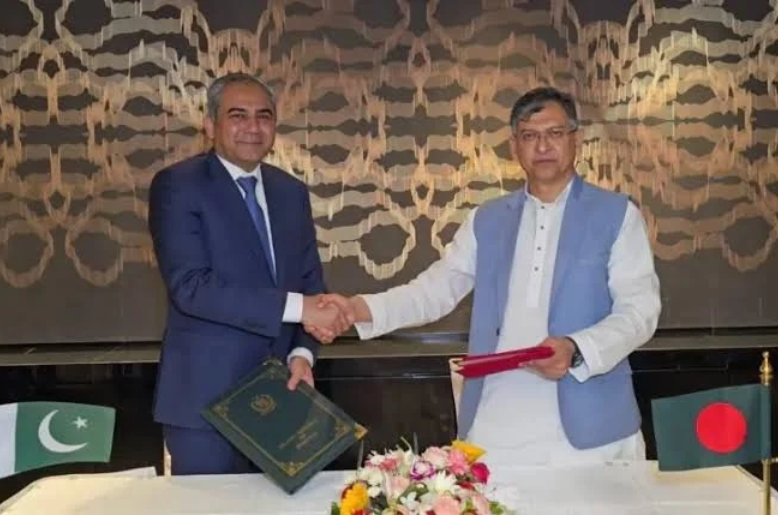
Bangladesh is entering a new phase in its foreign policy. The country is broadening its relations beyond its long-standing focus on India. The shift gained attention after the political change in Dhaka in August 2024. A student-led uprising ended Sheikh Hasina’s government. An interim administration led by Muhammad Yunus then took charge. The new approach has included greater engagement with several countries. Pakistan has become one of the countries receiving renewed attention from Dhaka.
Bangladesh looks beyond India
For decades, India played a major role in Bangladesh’s foreign relations. The relationship included cooperation in trade, security, training and regional connectivity. The latest developments suggest that Dhaka is seeking more options. This does not necessarily mean Bangladesh is ending its relationship with India. Instead, Bangladesh appears to be expanding its diplomatic and economic choices. Pakistan, China, Turkey, the United States and other partners remain part of this wider picture.
The approach reflects the idea of maintaining relations with several major powers. Such a policy can give Bangladesh more options in trade, investment and security cooperation.
Pakistan ties gain renewed attention
Relations between Bangladesh and Pakistan have also received renewed attention. In late 2025, Pakistan’s then chairman of the Joint Chiefs of Staff Committee, General Sahir Shamshad Mirza, visited Dhaka. He met Muhammad Yunus and other senior Bangladeshi officials. The discussions covered trade, investment and defence cooperation. The meeting marked an important contact between the two countries after years of limited engagement. Transport links have also become part of the changing relationship. Direct shipping and air links between Karachi and Dhaka resumed in early 2026. The routes had been halted for about 14 years.
Pakistan has also proposed using Karachi Port as a transit point. The proposal could support Bangladesh-China trade through another regional route.
China, Turkey and Western countries remain important
Bangladesh’s wider foreign policy is not limited to Pakistan. China remains an important economic and strategic partner. Turkey has also emerged as another country in Bangladesh’s broader diplomatic engagement. The United States and other Western countries also remain part of Dhaka’s international relations. This means Bangladesh is not simply replacing one major partner with another. Instead, the country is seeking broader engagement across several regions.
This approach can be described as diversification or multi-alignment. It involves maintaining different relationships based on national interests.
Domestic politics could shape the next phase
Bangladesh’s political changes have played an important role in its foreign policy direction. In February 2026, voters elected the Bangladesh Nationalist Party to government. The new administration has continued the broader diplomatic diversification started during the interim period, according to the reference analysis. The future direction will depend on Bangladesh’s elected government and its domestic priorities. Relations with India will also remain significant because of geography, trade and shared regional interests.
At the same time, stronger links with Pakistan and other countries could give Dhaka additional diplomatic and economic options.
What the policy shift means
Reflects a wider effort to expand Dhaka’s international partnerships. The change does not necessarily represent a break with India. Instead, it points towards a foreign policy involving several partners. Bangladesh now has stronger opportunities to engage with Pakistan, China, Turkey, the United States and other countries. The key question is how Dhaka will balance these relationships in the coming years. Its choices could affect trade, regional connectivity, defence cooperation and South Asian diplomacy.
For now, it describes a move towards greater diplomatic diversification. The direction will depend on Bangladesh’s national interests and future political decisions.
The latest developments highlight Bangladesh-Pakistan cooperation in healthcare and medical tourism.