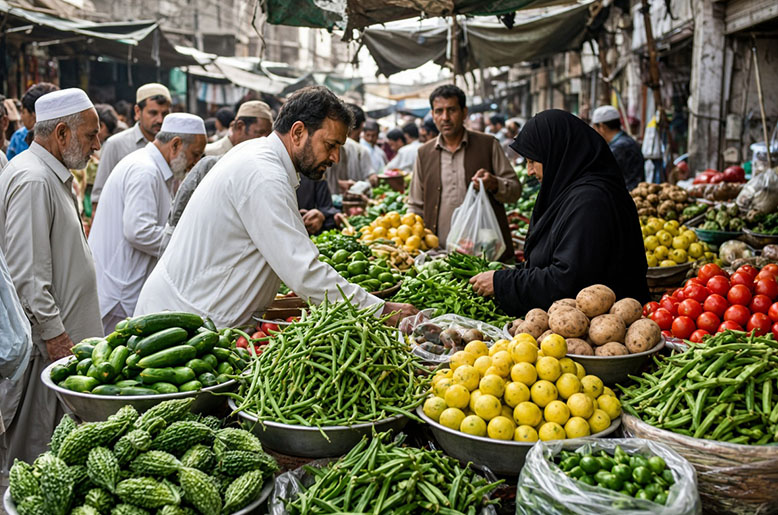
The cost of everyday items continued to rise in Pakistan last week, with short-term inflation reaching 11.53 per cent compared with a year earlier.
The latest figures from the Pakistan Bureau of Statistics show that prices also edged up 0.21 per cent during the week ended October 1.
Food remained a key source of pressure. Chicken prices jumped 7.25 per cent in just one week, while garlic became 1.85 per cent more expensive. Gram pulse, eggs and rice also recorded increases.
LPG prices went up 1.17 per cent, while onions, wheat flour and washing soap also cost more than they did a week earlier.
There was some relief in the prices of several other essentials. Diesel fell 3.43 per cent over the week, the biggest decline among the items tracked in the index. Banana prices dropped 1.52 per cent and sugar became 1.05 per cent cheaper.
Petrol prices also slipped 0.65 per cent during the week. Potatoes, tomatoes and different types of pulses also recorded small declines.
The year-on-year numbers, however, show how much some household costs have changed over the past year.
Onions were more than twice as expensive as they were a year ago, with prices up 114.20 per cent. LPG recorded a 66.59 per cent increase, while electricity charges for the first quarter were 58.59 per cent higher.
Fuel has also become significantly more expensive. Diesel prices were up 44.50 per cent from a year earlier, while petrol rose 44.05 per cent.
Wheat flour prices increased 32.65 per cent over the same period. Prices of mutton, chicken and beef were also higher, rising 15.07 per cent, 13.60 per cent and 12.90 per cent, respectively.
Some food items, meanwhile, have become cheaper than last year. Tomato prices fell 45.52 per cent, followed by potatoes at 39.54 per cent. Sugar prices were down 21.95 per cent, while eggs fell 17.47 per cent.
The Sensitive Price Indicator measures weekly price movements for 51 essential goods and services. The data is collected from 50 markets across 17 cities, giving a regular snapshot of changes in the prices consumers face.
Read next: Pakistan inflation expected to ease despite higher fuel prices