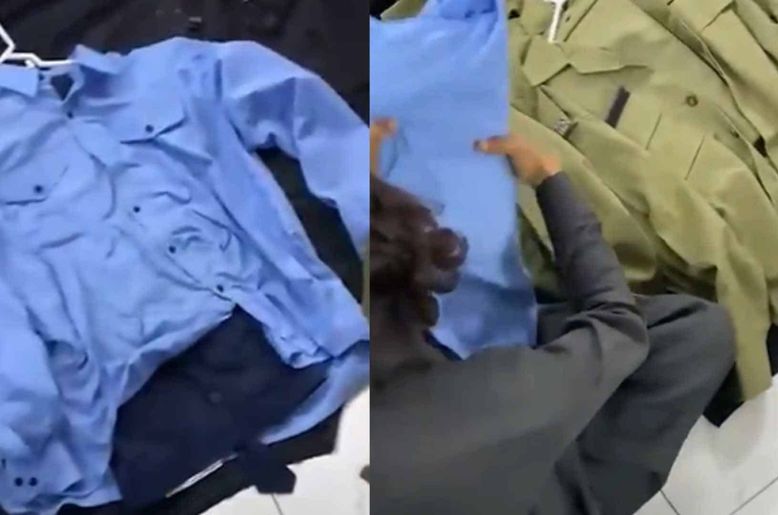
A video showing what appears to be the preparation of Punjab Police and Islamabad Police uniforms is circulating on social media. According to claims shared on social media, the uniforms were allegedly prepared on the instructions of Asif Bangash, general secretary of the Pakistan Tehreek-e-Insaf (PTI) Insaf Youth Wing Peshawar.
However, these claims have not been independently verified. There is also no confirmed information about the people seen in the video or the purpose for which the uniforms were allegedly being prepared.
Questions raised by social media reports
The video has raised questions about why uniforms resembling those of the Punjab Police and Islamabad Police were allegedly being prepared and what they may have been intended for.
The purpose of the uniforms remains unclear. Their possible use can only be established after proper verification and investigation.
Is PTI using govt resources?
According to reports, PTI workers used a government ambulance to travel to the long march. The incident has raised questions about the use of government resources for political activities.
Previously, the Islamabad High Court (IHC) had directed the chief ministers of all provinces to ensure that government resources and official machinery were not used for the protest.
PTI had announced a nationwide protest on September 27. The protest in Islamabad was planned to demand the release of party founder Imran Khan and call for the supremacy of the Constitution.
A citizen, Waqas Ahmed, had challenged the planned protest in the IHC. He argued that the protest could affect daily life, traffic and business activities in the federal capital.
A larger IHC bench heard the petition. The bench was headed by IHC Chief Justice Sardar Muhammad Sarfraz Dogar. Justice Muhammad Azam Khan and Justice Muhammad Asif were also part of the bench.
In its short order, the court said that no political party or its leadership had the legal right to occupy public roads, highways, interchanges, toll plazas or buildings in Islamabad if this blocked access to educational institutions and other public facilities.
