(Naveed Raza)
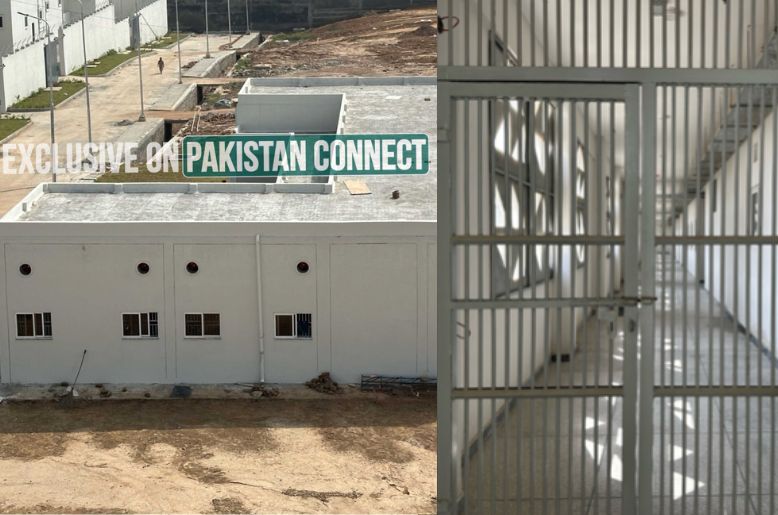
Prime Minister (PM) Shehbaz Sharif is expected to inaugurate the newly built Islamabad Model Jail in Sector H-16 between October 8 and 10, while the Islamabad Capital Territory (ICT) administration has reportedly taken over the facility, marking a significant development in the federal capital’s custodial and law-enforcement infrastructure.
The takeover comes at a particularly sensitive time, with the PTI preparing for a planned long march and Islamabad authorities making arrangements to deal with a potentially large influx of protesters. The operationalisation of the H-16 facility provides the ICT administration and law-enforcement agencies with a dedicated detention complex within the federal capital, reducing reliance on prisons in neighbouring Punjab.
The location of the jail is strategically important. Sector H-16 is situated close to major transport arteries, including the M-1/M-2 motorway network and the GT Road. This gives law-enforcement agencies relatively direct access to the facility from Islamabad’s major entry points, particularly routes used by convoys arriving from Khyber Pakhtunkhwa and northern Punjab.

In the event of a large political gathering, protesters arrested at entry points or during clashes can potentially be shifted towards H-16 without moving large numbers of detainees through the densely populated central areas of Islamabad. This could reduce transportation requirements, police deployment and disruption to normal traffic during prolonged protest operations.
The facility is particularly significant because it could reduce pressure on Adiala Jail in Rawalpindi, which has remained under considerable strain because of overcrowding and the custody of high-profile prisoners, including PTI founder Imran Khan. Adiala is already a high-security facility and houses prominent political and criminal prisoners. Shifting Islamabad-related detainees, particularly under-trial prisoners and large numbers of protesters, to a dedicated facility could allow authorities to keep different categories of prisoners separate and reduce pressure on the existing prison administration.

According to the operational assessment, prepared barracks could accommodate approximately 1,500 to 2,000 detainees. Such capacity would be significant during a major political mobilisation, when arrests could potentially run into hundreds or thousands. Authorities would have greater flexibility to register, identify, medically examine and temporarily accommodate detainees at a single location rather than relying entirely on police lock-ups or facilities outside Islamabad.
The reported availability of dedicated courtroom spaces and medical infrastructure could further streamline the detention process. At present, transporting large numbers of detainees between police stations, hospitals, courts and prisons requires substantial police deployment and creates additional security risks. If the facilities at H-16 are fully operational, a substantial portion of this process could be managed within or around the prison complex, reducing repeated prisoner movements between Islamabad and Rawalpindi.

The reported completion of double-storey VVIP or high-security annexes is another important component of the facility. Separate high-security accommodation would allow authorities to isolate politically prominent or otherwise sensitive detainees from ordinary protesters and under-trial prisoners. Such segregation could be particularly relevant during a mass political mobilisation, enabling authorities to manage different categories of detainees separately and restrict unnecessary interaction between political leadership and large groups of workers.
The location of H-16 provides an additional logistical advantage. During a major protest, prisoner transportation through central Islamabad, including areas around the Blue Area, Constitution Avenue and Srinagar Highway, can require extensive security arrangements and disrupt civilian traffic. A facility closer to the capital’s northern and western approaches provides law-enforcement agencies with alternative routes for moving detainees.
For protesters arriving from Khyber Pakhtunkhwa, the M-1 corridor provides a direct approach towards the capital, while the GT Road is an important route for people travelling from northern Punjab and adjoining areas. The proximity of the jail to these routes could therefore facilitate faster movement of detainees from Islamabad’s entry points to the custodial facility.
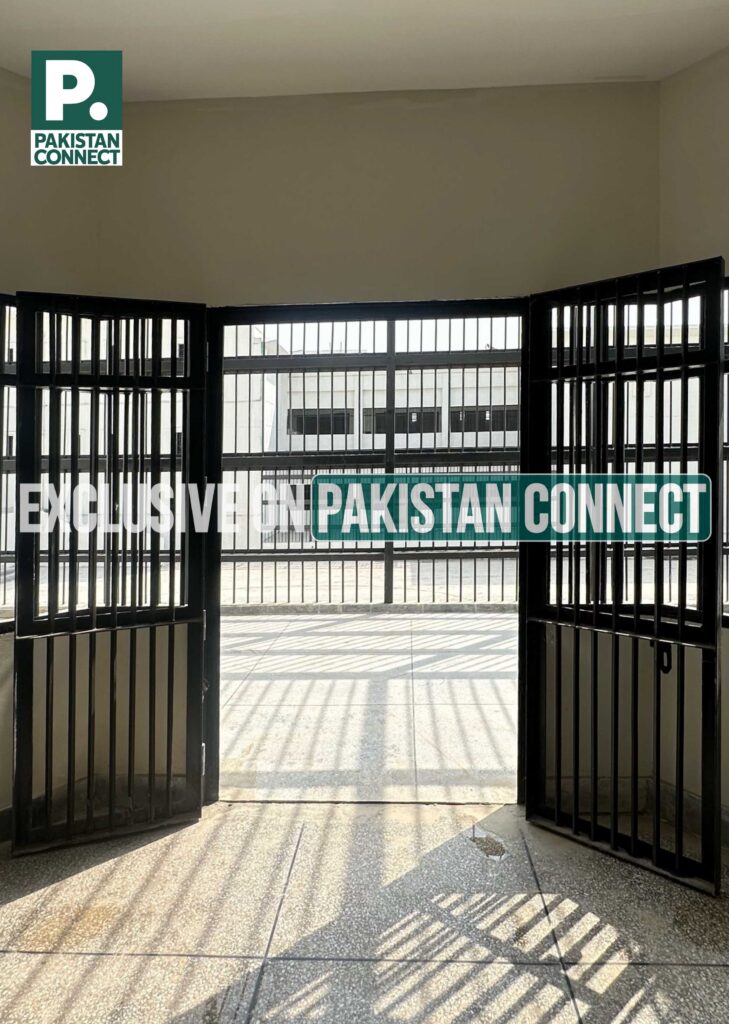
The reported handover to the ICT administration also represents an administrative shift. Islamabad has historically relied on a combination of police lock-ups, temporary detention arrangements and prison infrastructure outside the federal capital. With the H-16 facility becoming operational, the ICT administration would have a purpose-built complex under its own operational framework, potentially allowing a clearer distinction between police custody, judicial custody and prison administration.
The timing of the takeover is particularly noteworthy. If the facility is formally inaugurated by Prime Minister Shehbaz Sharif between October 8 and 10, its opening would coincide with preparations for the PTI’s proposed long march and heightened political activity in and around Islamabad.

For the PTI, the operationalisation of H-16 could change the detention dynamics of a large mobilisation. In the past, mass arrests could create an immediate logistical challenge because authorities had to identify available detention space and arrange transportation to existing facilities. A dedicated facility with a reported capacity of up to 1,500–2,000 detainees would provide considerably greater detention capacity within the federal capital.
It could also enable law-enforcement agencies to manage arrests closer to Islamabad’s entry corridors rather than bringing every detainee deep into the city before transferring them elsewhere. However, the actual use of the facility during the PTI march would depend on the number of arrests, judicial orders, security assessments and the administration’s protest-management policy.
The H-16 jail should therefore be viewed as more than simply a new prison building. Its location, reported capacity, internal facilities and handover to the ICT administration potentially make it an important component of Islamabad’s future custodial, judicial and law-enforcement architecture.
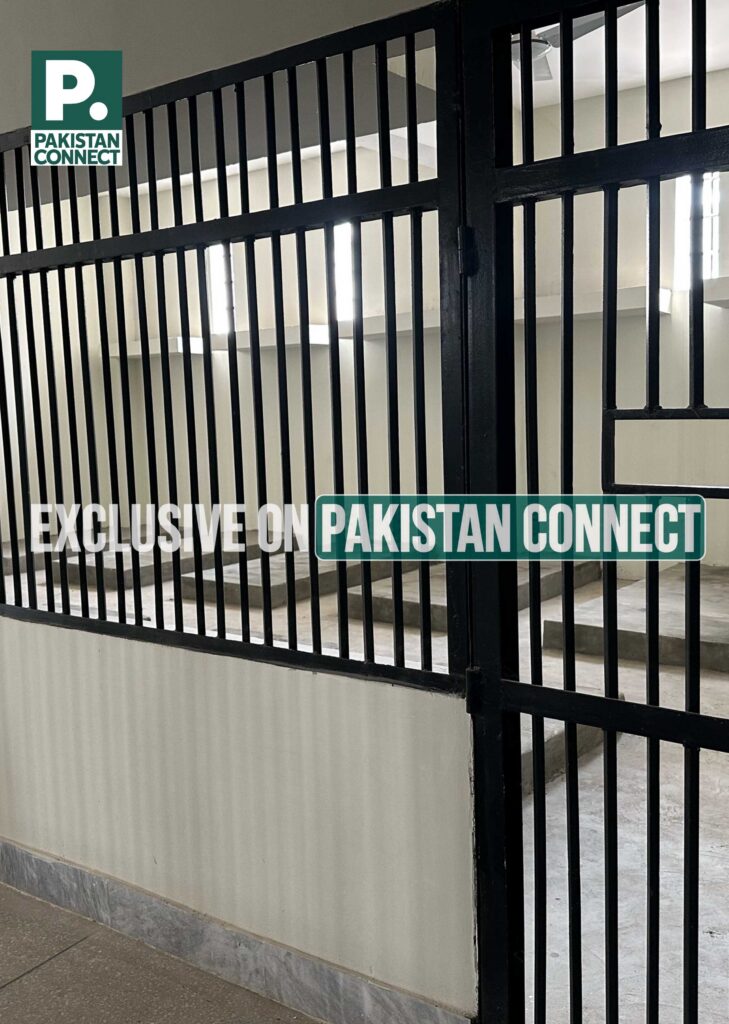
The immediate test could come with the PTI’s planned mobilisation. If the march results in large-scale arrests, the new facility could become the principal detention centre for protesters in Islamabad. If the mobilisation remains peaceful and arrests are limited, the facility could initially focus on routine prisoners and gradually assume custodial responsibilities currently handled through temporary or external arrangements.
The expected October 8–10 inauguration by Prime Minister Shehbaz Sharif, therefore, carries significance beyond the formal opening of a government facility. It would provide the ICT administration with a dedicated and strategically located detention complex at a time when Islamabad is preparing for potentially major political activity and would substantially strengthen the authorities’ logistical capacity to manage large-scale arrests and future law-and-order situations.
Total cost of project Rs.7.2 bioinformatic. The project started over 24 years ago.
