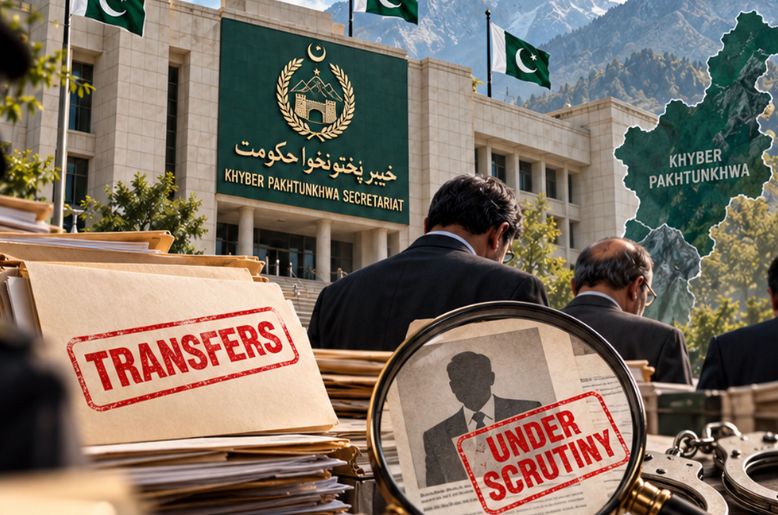
The imposition of an emergency and governor’s rule in Khyber Pakhtunkhwa, followed by major changes in the provincial bureaucracy, has intensified debate over decisions made during the previous provincial administration, the use of government resources and the performance of public departments.
With the appointment of a new chief secretary, instructions for several officers to report to the Establishment Division, and reshuffles within the police, questions have gained prominence over how official powers and public resources were used during the previous government’s tenure.
Under the administrative changes introduced by the federal government, the responsibilities of several officers have been reassigned. Meanwhile, at the first meeting of the advisory council chaired by Governor Faisal Karim Kundi, participants emphasised zero tolerance for corruption, the restoration of law and order, and improvements in the performance of government departments.
Following these developments, demands may emerge for a review of the records of officers who held key positions during the previous provincial government, along with administrative decisions taken by various departments, development projects, government contracts and the utilisation of public funds. If the government decides to launch formal investigations, relevant records, audit reports, contract details and government payments could be examined to identify any irregularities.
Political circles are also raising questions about whether the government machinery was used at the direction of the political leadership and whether any officers or officials acted on the basis of political affiliations rather than fulfilling their legal duties. However, the validity of such allegations can only be established through evidence, documentary records and transparent investigations.
There is a strong possibility that evidence of corruption in projects or government payments, misuse of authority, or losses to the national exchequer could emerge. If wrongdoing is established, legal action may be taken against those responsible, and the process of recovering proven financial losses could also begin.
The administrative changes following the imposition of governor’s rule have sparked a fresh debate over accountability, transparency and government performance in the province. The key question now is whether the new administration will limit itself to transferring officers or initiate formal investigations and audits to review decisions and public expenditure from the previous government’s tenure.