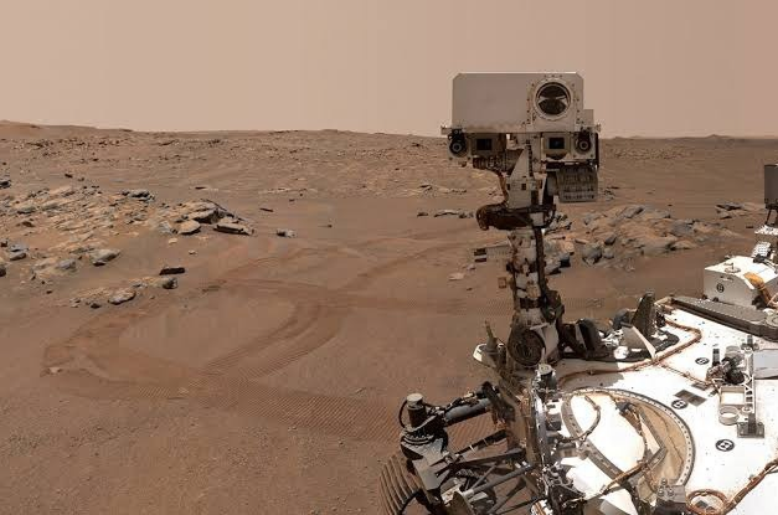
NASA’s Perseverance rover has set a new record for driving on another planet. The rover has travelled 28.10 miles (45.22 kilometres) across Mars since landing in February 2021. It has surpassed the previous record held by NASA’s Opportunity rover. NASA’s Jet Propulsion Laboratory confirmed the achievement on October 11, 2026. Opportunity travelled 28.06 miles (45.16 kilometres) during its mission. It operated on Mars from 2004 until 2018. Perseverance reached the new milestone in about five and a half years. Opportunity took nearly 15 years to cover its distance. The achievement highlights improvements in robotic navigation and space exploration technology.
How Perseverance Drives Across Mars
Perseverance uses an autonomous driving system called AutoNav. This technology helps the rover navigate the Martian surface with less human guidance. The system captures images of nearby terrain and creates maps to identify obstacles. It can detect rocks, craters, and other hazards. The rover then selects a safer route towards its destination. Engineers on Earth still plan the mission and monitor the rover.
However, Perseverance can make many driving decisions independently. This ability helps it cover greater distances and reach important scientific locations. Earlier Mars rovers had more limited autonomous navigation systems. Perseverance can assess its surroundings while moving. This allows the rover to travel more efficiently across difficult terrain.
Why the Record Matters
The record allows scientists to study more areas of Mars. Each new location can provide clues about the planet’s geological history and ancient environment. Perseverance is exploring Jezero Crater, which scientists believe once contained a lake and river delta. These ancient environments may help researchers understand whether Mars supported microbial life billions of years ago.
The rover has collected rock samples from different locations. Scientists are studying these samples for evidence of past environmental conditions. Some materials may also contain signs of ancient biological activity, although researchers have not confirmed evidence of past life. Longer journeys help Perseverance reach different geological formations. These investigations can improve scientists’ understanding of the Red Planet and guide future exploration missions.
Perseverance Mission Continues
NASA plans to continue using Perseverance to investigate Mars. The rover will examine more terrain and collect additional scientific data during its mission. Its autonomous navigation system remains important for covering difficult landscapes. The technology also demonstrates how robotic vehicles can operate more independently on distant worlds. NASA’s Perseverance rover breaks record for off-planet driving on Mars, marking an important achievement in planetary exploration. The milestone shows how improved navigation technology helps rovers travel farther and investigate more locations.
The mission continues to provide valuable information about Mars. Its findings may help scientists better understand the planet’s past and prepare for future human exploration.
NASA unveils breathtaking Earth images captured during Artemis II.