
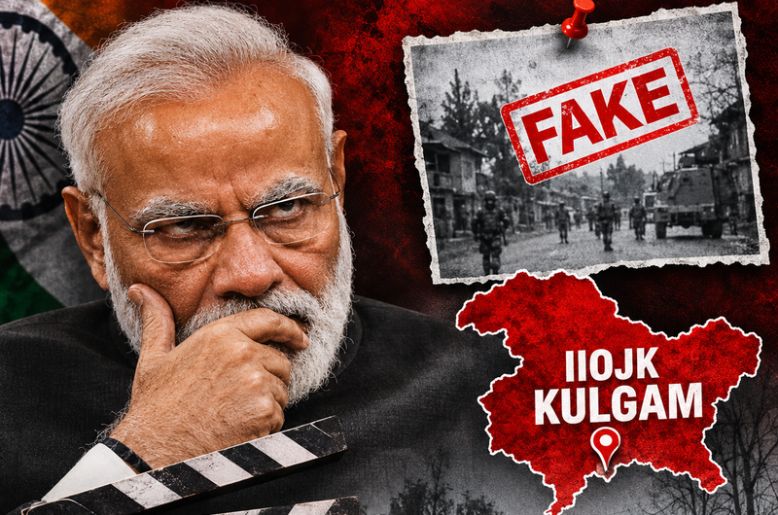
Indian media reports claiming that three Central Reserve Police Force (CRPF) personnel were injured in a militant attack in Kulgam district on Wednesday have come under sucritiny, as no official evidence, video, or independent verification has been provided.
According to the Indian reports, motorcycle-borne militants allegedly fired automatic weapons at around 2:15 pm towards a CRPF checkpoint manned by personnel of the force’s 46th Battalion in the Nowpora Akhran area of Mir Bazar.
Three personnel were claimed to have been injured and shifted to a nearby hospital. However, no hospital record, no official CRPF statement, and no footage from the heavily-guarded checkpoint has been released so far.
The entire report rests on anonymous sources, with Indian outlets repeatedly using the phrase “sources said” without naming any official.
Observers say the timing of the alleged attack is significant. It comes just days after Indian security forces put up posters in Srinagar’s Lal Chowk area featuring four local Kashmiris, including Mohammad Lateef Bhat from Kulgam, and announced a reward for information about them.
This has become a familiar pattern in Occupied Kashmir, an unverified attack is reported, followed by large-scale cordon-and-search operations, raids, and arrests of Kashmiri youth.
Obsession with fake news
Mainstream Indian television news channels have come under international criticism for broadcasting unverified military claims, recycled conflict footage and AI-generated deepfakes during periods of heightened tensions between India and Pakistan.
Several prominent networks, including Aaj Tak, Zee News, Times Now and NDTV, faced scrutiny for airing misleading visuals and presenting unrelated footage as evidence of military operations during cross-border tensions, including Operation Sindoor.
According to international media reports and fact-checking organisations, some Indian television broadcasts used footage from conflicts in Gaza and Lebanon, old videos of Israel’s Iron Dome missile defence system and video game simulations, presenting them as scenes of Indian military strikes or missile interceptions involving Pakistan.
The channels also faced criticism for broadcasting sensational military reports, including unverified claims about the capture of major Pakistani cities such as Lahore and Karachi, the downing of fighter jets and attacks on nuclear installations.
The spread of misleading content extended beyond recycled footage. Media reports and independent fact-checkers also documented the use of AI-generated videos, synthetic audio and digitally manipulated images of political figures, contributing to online disinformation and war-related hysteria.