
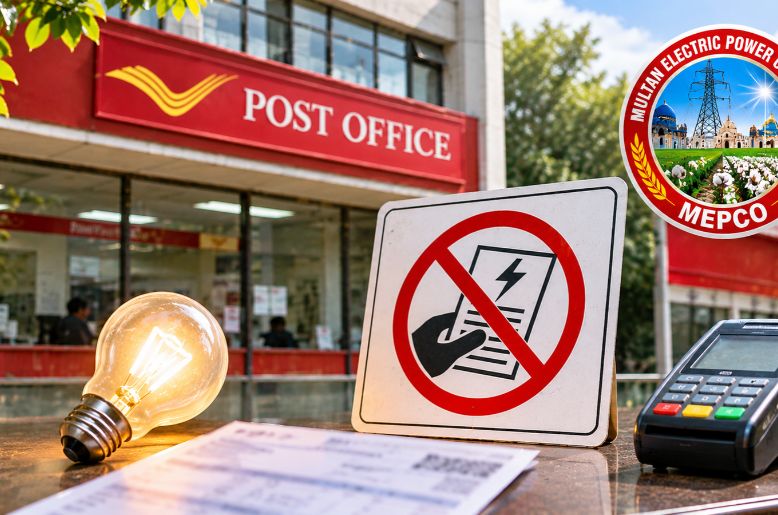
The Multan Electric Power Company (MEPCO) has decided to discontinue the collection of electricity bills and outstanding payments through Pakistan Post Offices from 1 January 2027.
According to MEPCO officials, consumers across the company’s service areas in South Punjab will be able to pay their electricity bills at post offices until 31 December 2026.
The facility will be withdrawn from the beginning of the new year, after which consumers will have to use alternative payment channels to clear their bills.
MEPCO officials said the company was taking steps to formally notify the Pakistan Post Office Department about the decision.
These options will allow customers to settle their electricity bills without visiting a post office.
MEPCO has set 31 December 2026 as the final date for collecting electricity bills through Pakistan Post Offices.
From 1 January 2027, the facility will no longer be available across the relevant MEPCO service areas.
Consumers have been advised to make alternative payment arrangements before the deadline to avoid delays or difficulties in paying their monthly electricity bills.
Following the withdrawal of the postal payment facility, consumers will be able to pay their electricity bills through designated banks and digital payment services.
The available alternatives include:
· Easypaisa: Electricity bills can be paid through the mobile application.
· JazzCash: Consumers can use the app or available payment services.
· Mobile banking: Bills can be paid through participating banks’ mobile applications.
· Designated banks: Consumers can visit authorised bank branches to make payments.
Consumers are encouraged to familiarise themselves with digital payment services or identify their nearest designated bank before the postal payment facility ends.
The company has advised customers not to wait until the final days of December to switch to alternative payment methods.
The decision will affect electricity consumers who currently rely on Pakistan Post Offices to pay their monthly bills, particularly those who prefer making payments in person.