The Pakistan Association of Automotive Parts and Accessories Manufacturers (PAAPAM) has urged the State Bank of Pakistan (SBP) to lift the Rs3 million cap on car financing, warning that the restriction is dampening consumer demand and holding back the growth of the local auto industry.
Industry representatives say the current financing limit makes it difficult for many middle-income buyers to purchase locally made vehicles, especially as car prices have risen over the past few years. According to PAAPAM, easing loan limits would make car ownership more accessible, revive demand and support higher sales across the sector.
The association believes stronger auto financing would also benefit parts manufacturers, who rely heavily on consistent vehicle production volumes. A pickup in sales, they argue, would allow factories to operate closer to capacity and invest further in modern production techniques.
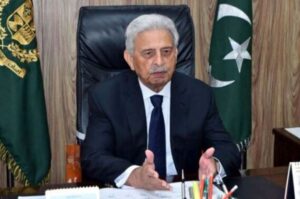
The demand comes as Federal Minister for Commerce Jam Kamal Khan recently visited PAAPAM’s automotive cluster in Bin Qasim, where he toured several production facilities manufacturing locally made auto parts. During the visit, the minister praised the quality of components being produced in Pakistan, saying many now meet global standards.
He also visited the manufacturing facilities of Pak Suzuki Motor Company and expressed satisfaction with the scale and capability of local operations. Jam Kamal Khan said it was encouraging to see advanced technology being used and noted the sector’s growing contribution to industrial development.
The minister said sales of locally manufactured vehicles are expected to rise in the coming period and credited PAAPAM for its positive role in GDP growth and job creation. He added that limiting the import of used cars would give domestic manufacturers more room to expand and invest, allowing the local industry to grow on a stronger footing.
Growth potential and economic impact
Jam Kamal Khan said Pakistan’s auto production has the potential to reach one million units, a level that could open up new investment opportunities and create thousands of additional jobs. He supported calls to improve auto financing facilities, saying easier access to loans would help more people buy locally made cars and support overall sales.
Pakistan’s auto manufacturing sector currently accounts for nearly 2 percent of GDP. It provides around 2.5 million direct jobs and supports close to five million households, making it a key pillar of the industrial economy.
In the fiscal year 2025, the auto industry contributed about Rs700 billion to the national exchequer, around 6 percent of total federal government revenue. The sector has also become central to the government’s ongoing tax reforms and tariff restructuring, shaped in line with commitments under Pakistan’s agreement with the International Monetary Fund. These changes come at a time when the economy is under pressure from fiscal constraints and inflation.
Roots of localisation
Industry leaders often point to history to support their case. When Pakistan’s first automobile assembly plant was set up in Karachi in the early 1980s, it committed to gradually localising production, beginning with completely knocked down kits. The goal was to build a strong domestic parts manufacturing base over time.
PAAPAM says that promise has largely been delivered, but future growth now depends on policies that support demand. Removing the car financing cap, the association argues, would be a practical step towards keeping the local auto industry moving forward.
Read next: Best used cars under Rs20 lakh in Pakistan