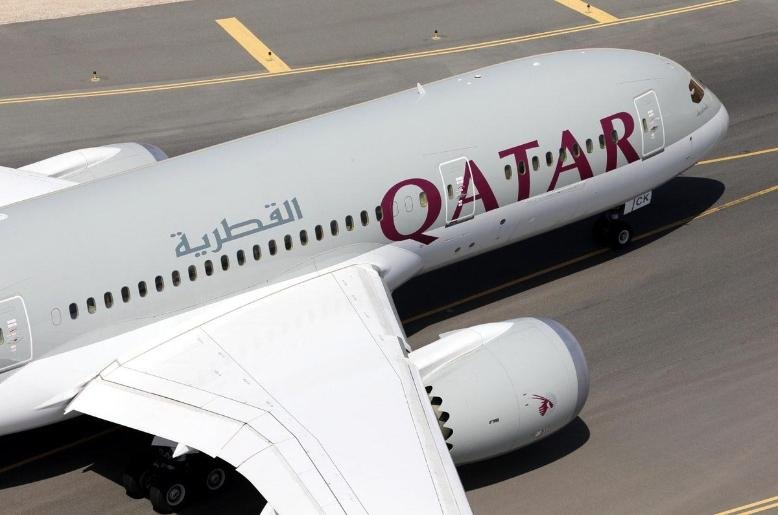
Qatar Airways has announced to operate a limited number of flights to and from Doha after receiving temporary approval for restricted air corridors.
The airline said its operations had been temporarily suspended due to the closure of Qatari airspace. However, after special authorisation from the Qatar Civil Aviation Authority, the carrier will run select flights in the coming days to assist passengers affected by the disruption.
According to the airline, these flights will help stranded travellers reach their destinations and reunite with their families. The airline stated that the limited services do not signal a full resumption of scheduled commercial operations, which will only restart once authorities confirm that Qatari airspace has fully reopened.
Passengers have been advised to check the latest updates through the airline’s website or mobile application and to contact their travel agents for bookings.
The airline also urged travellers not to go to the airport unless they have a valid and confirmed ticket, as the number of operating flights remains restricted.
Qatar Airways apologised for the disruption and thanked passengers for their patience during the situation, which it described as being beyond its control.
Meanwhile, passengers holding confirmed bookings between February 28 and March 22, 2026, have been offered flexible options, including two free date changes within 14 days of the original travel date or a full refund of the unused ticket value.
Airlines announce hike in ticket prices
Earlier today, several international airlines, including Qantas, Scandinavian Airlines, and Air New Zealand, have announced massive increases in airfares following a sharp rise in global fuel prices.
According to airline officials, jet fuel prices that previously ranged between $85 and $90 per barrel have jumped to $150–$200, forcing carriers to reconsider their pricing strategies.
Air New Zealand said the uncertainty created by the conflict has also prompted the airline to suspend its financial outlook for 2026.
The escalation has disrupted shipping through the strategically vital Strait of Hormuz, one of the world’s most important oil export corridors. As a result, oil prices have surged globally, impacting travel demand and pushing ticket prices higher on many routes.
A spokesperson for Scandinavian Airlines said the company had introduced a temporary fare adjustment due to the sharp rise in fuel costs, saying that increases of this scale required immediate action to maintain stable operations.
The airline had previously revised its fuel hedging strategy due to market uncertainty and currently has no hedged fuel consumption for the coming 12 months.
Meanwhile, several other carriers such as Lufthansa and Ryanair have partially protected themselves through fuel hedging, securing a portion of their fuel supplies at fixed prices.
Finnair, which had hedged more than 80 percent of its first-quarter fuel needs, warned that if the conflict continues, fuel availability could also become a concern.
“A prolonged crisis could affect not only the price of fuel but also its availability, at least temporarily,” a Finnair spokesperson said, while adding that no such shortage had occurred yet.
Ticket prices rise in Pakistan
Airline sources also confirmed that fares in Pakistan have increased due to the spike in jet fuel costs.
Domestic tickets have reportedly risen by Rs2,800 to Rs5,000 on routes such as Karachi–Lahore and Karachi–Islamabad.
International travel has seen an even steeper hike, with fares increasing by Rs10,000 to Rs28,000. Flights to Middle Eastern and Central Asian destinations have become about Rs15,000 more expensive.
Meanwhile, tickets from Pakistan to Toronto and Manchester have surged by around Rs28,000, pushing the one-way fare beyond Rs250,000.
The increase follows a major jump in aviation fuel prices, which recently rose by Rs154 per litre, taking the rate to Rs342 per litre.