
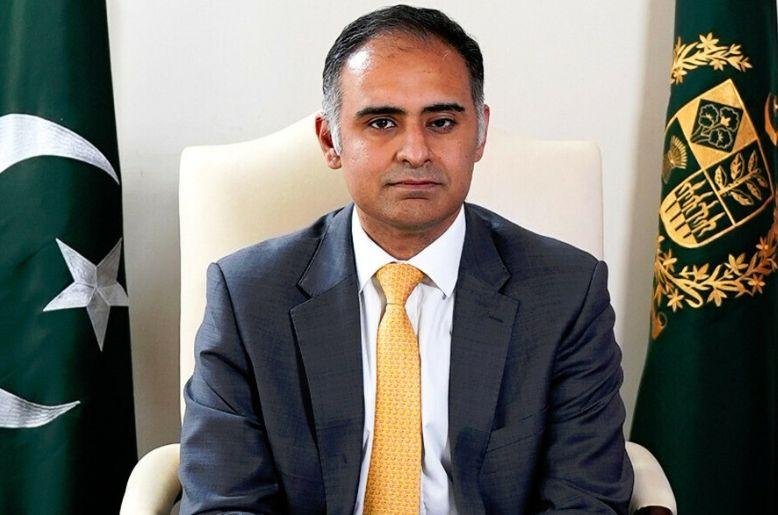
During the Karachi Chamber of Commerce and Industry (KCCI) session on Saturday, Minister of State for Finance Bilal Azhar Kayani reaffirmed the government’s commitment to inclusive, consultative, and growth-oriented economic policymaking in anticipation of the federal budget expected in June.
He conducted a comprehensive interactive session with members of the business community, exporters, and media representatives at the KCCI.
The minister expressed his appreciation for the invitation and extended his thanks to prominent business leaders Javed Bilwani, Zubair Motiwala, and the KCCI leadership for facilitating this engagement.
He indicated that the government, under the guidance of Prime Minister Shehbaz Sharif and Finance Minister Muhammad Aurangzeb, is actively involving stakeholders across the nation to integrate feedback from exporters, traders, and industry representatives into the federal budget formulation process.
He noted that these consultations are being carried out under the prime minister’s direct instructions to ensure a “whole-of-economy” approach to policymaking.
As part of this outreach initiative, the minister confirmed that there will be forthcoming meetings with the Federation of Pakistan Chambers of Commerce and Industry (FPCCI), the Overseas Investors Chamber of Commerce and Industry (OICCI), as well as representatives from small traders and business associations.
Pakistan achieves stronger foreign exchange reserves
In highlighting recent economic developments, the minister stated that Pakistan has experienced measurable macroeconomic stabilisation since February 2024, pointing to improvements in inflation management, tax collection performance, and external account stability.
He further added that the successful completion of key review stages under the International Monetary Fund program has led to stronger foreign exchange reserves and enhanced economic confidence.
He finally emphasised Pakistan’s extensive diplomatic involvement in fostering regional stability, recognizing the efforts of both civilian and military leaders in upholding peace while addressing the economic repercussions of regional conflicts.
Read more: IMF lowers Pakistan’s economic growth to 3.5% amid Middle East tensions