
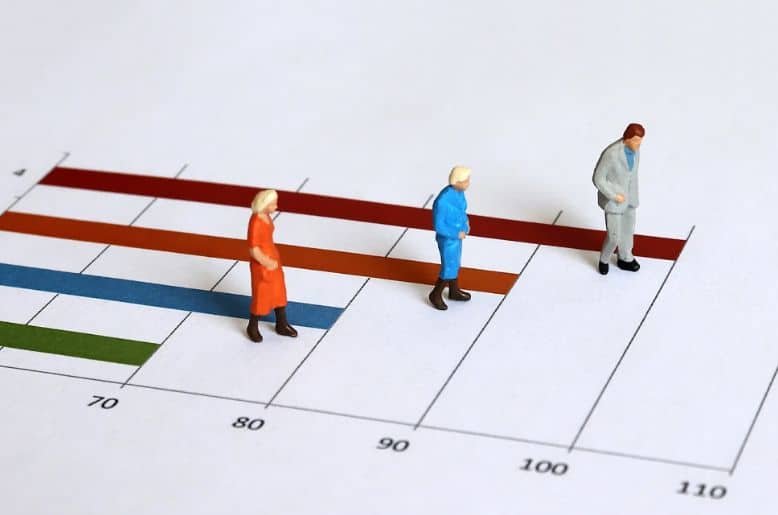
Life expectancy across the world continues to reflect more than just healthcare outcomes, with experts pointing to a combination of environmental and social factors shaping how long people live.
Researchers highlight that average lifespan is closely linked to access to nutritious food, clean drinking water and healthy lifestyle choices. However, one of the most critical yet often overlooked factors remains air quality, as individuals are exposed to it continuously throughout their lives.
Life expectancy gap widens between Europe and developing nations
Developed countries, particularly in Europe, tend to have significantly higher life expectancy compared to poorer nations.
Many African countries, for instance, remain at the lower end of global rankings. This gap exists because wealthier nations benefit from stronger healthcare systems, better living conditions, and greater access to resources such as sanitation, housing, and education.
Life expectancy in Pakistan
Pakistan, however, falls on the lower side of this spectrum, ranking around 150th globally. According to national demographic data, the average life expectancy in the country is approximately 65 years, placing it behind several of its South Asian neighbours in terms of overall health outcomes.
A large portion of the population works in labour-intensive sectors, often under unsafe conditions and with little protection due to limited job opportunities. For example, mine workers frequently lack proper safety equipment, leading to long-term physical deterioration.
In addition to physical health challenges, mental health issues have also risen in recent years, driven by factors such as social isolation, poor dietary habits, and increasing stress levels. At the same time, the country’s struggling healthcare system lacks both the capacity and resources needed to effectively respond to these growing concerns.
New figures show dip in life expectancy across Pakistan
According to the latest demographic data, the average life expectancy in Pakistan has declined from 65.4 years to 65 years.
According to a report by the country’s media newspaper, the Pakistan Demographic Survey 2020 includes data on the infant mortality rate, overall and general growth rates, birth and death rates, and the natural rate of increase. This survey is the 20th in a series that began in 1984, with the previous survey conducted 13 years ago.
Statistician Dr Naeem Zafar stated that the results of this survey were compared with key indicators from the Pakistan Demographic and Health Survey 2017–18 and the Pakistan Social and Living Standards Measurement Survey 2018–19, and the findings are largely consistent.
The latest data shows that although overall life expectancy has declined, the average life expectancy for men has slightly increased from 64.3 to 64.5 years. In contrast, the average life expectancy for women has decreased from 66.5 to 65.5 years, although it remains higher than that of men.
Life expectancy for children aged one to four years has increased to 71.3 years, with 70.6 years for boys and 72 years for girls.
The infant mortality rate has declined to 56 deaths per 1,000 live births, compared to 62 in the Pakistan Demographic and Health Survey 2017–18 and 60 in the Pakistan Social and Living Standards Measurement Survey 2018–19.
The overall growth rate was recorded at 124, with the highest growth rate observed in the 25–29 age group (215), followed by the 20–24 age group (176), the 30–34 age group (164), and the 35–39 age group (94). The growth rate in urban areas was recorded at 102, compared to 138 in rural areas.
Toxic air in key cities linked to major drop in life expectancy
A new report by the Energy Policy Institute at the University of Chicago (EPIC) has revealed that rising air pollution levels in Pakistan, particularly in Lahore, Sheikhupura, Kasur, and Peshawar, could reduce life expectancy by at least seven years.
The study, presented in the Air Quality Life Index (AQLI), underscores the urgent need for measures to improve air quality. The Air Quality Life Index is a comprehensive tool that measures the impact of particulate matter fine dust pollution on life expectancy.
In Pakistan, particulate matter is the second-largest public health risk after heart disease, reducing life expectancy by an average of 3.9 years. The report highlights that around 240 million people in Pakistan live in areas where annual average particulate pollution levels exceed the guidelines set by the World Health Organisation (WHO).
Alarmingly, 98.3 per cent of Pakistanis are exposed to pollution levels that exceed the country’s own air quality standard of 15 micrograms per cubic meter. According to the study, life expectancy could increase by an average of 3.9 years if the WHO’s recommended annual limit of 5 micrograms per cubic meter were met.
Data from the AQLI shows a concerning 49.9 per cent increase in average annual particulate pollution in Pakistan between 1998 and 2021, contributing to a 1.5-year decline in life expectancy. Regions such as Punjab, Islamabad and Khyber Pakhtunkhwa are among the most affected. About 65.5 million people, roughly 69.5 per cent of the population, are projected to lose between 3.7 and 4.6 years of life expectancy under current conditions. If pollution levels persist, average lifespans could decline by a further 2.7 to 3.6 years.
However, the report also offers some hope. It suggests that meeting the WHO air quality standards could significantly improve life expectancy. Residents of Karachi could gain an additional 2.7 years of life, while those in Lahore and Islamabad could see increases of 7.5 and 4.5 years, respectively.
Read more: Pakistan successfully launches Electro-Optical Satellite EO-3 into space