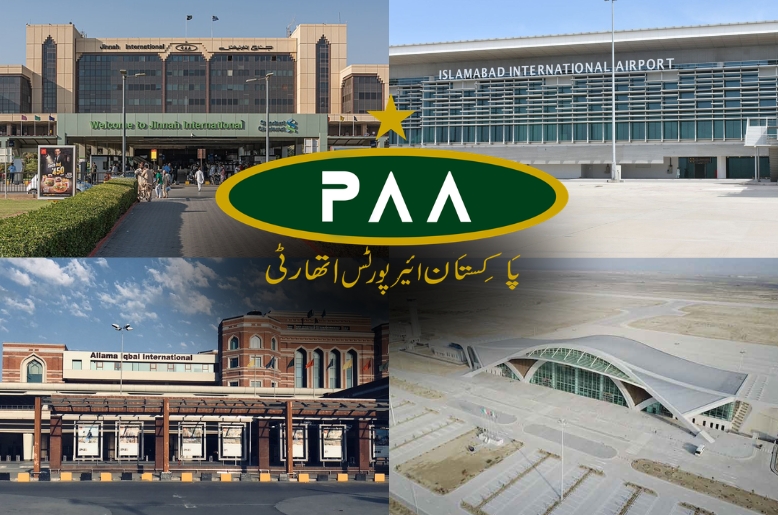
The Pakistan Airports Authority (PAA) is the government body that runs Pakistan’s commercial airports. It handles airport operations, passenger facilities, and infrastructure across the country. PAA was formed in August 2024 when the government split the old Civil Aviation Authority into three separate bodies. This guide explains what PAA does, how it works, and what travelers need to know.
What is the Pakistan Airports Authority?
Pakistan Airports Authority is a public sector body under the Ministry of Aviation. It was created under the Pakistan Airports Authority Act, 2023, and became active on 9 August 2024.
Before this date, one single authority handled both airport operations and aviation rules. The government split this authority to make each function more efficient and accountable.
PAA now runs the airports. A separate body handles safety rules, and another investigates air accidents. This split follows a model used in many other countries, where airport operators and aviation regulators work as two different organizations.
Quick facts
| Information | Details |
| Full Name | Pakistan Airports Authority (PAA) |
| Established | 9 August 2024, under the PAA Act 2023 |
| Parent Ministry | Ministry of Aviation, Government of Pakistan |
| Current Headquarters | Terminal 1 Building, Jinnah International Airport, Karachi |
| Official Role | Airport operations, development, and air navigation services |
| Sister Bodies | Pakistan Civil Aviation Authority (PCAA) and Bureau of Air Safety Investigation (BASI) |
PAA is also building a new 25-story headquarters in the Blue Area of Islamabad. This new building will bring the authority’s main offices closer to the federal capital.
Pakistan Airports Authority vs PCAA: What is the difference?
Many people confuse PAA with PCAA. Here is the simple difference.
Pakistan Airports Authority runs the airports. It manages terminals, runways, ground services, and passenger facilities at every commercial airport in the country.
The Pakistan Civil Aviation Authority sets the rules. It handles flight standards, pilot licensing, airspace management, and airworthiness certification for aircraft.
Think of it this way. PAA keeps the airports running smoothly. PCAA makes sure flights and pilots follow safety standards. A third body, the Bureau of Air Safety Investigation, steps in only when an accident or serious incident happens.
What does Pakistan Airports Authority do?
PAA carries a wide range of responsibilities. Its main jobs include:
- Managing and operating all commercial airports in Pakistan
- Planning and funding airport development projects
- Providing passenger facilities like lounges, seating, and information desks
- Maintaining runways, terminals, and airport infrastructure
- Delivering air navigation services to guide aircraft safely
- Handling commercial airport operations such as retail spaces and parking
- Coordinating with airlines on ground handling and slot allocation
These duties make PAA the backbone of Pakistan’s air travel experience. Every time a traveler checks in, walks through a terminal, or boards a flight, PAA’s work is behind the scenes.
Which airports does the Pakistan Airports Authority manage?
PAA operates most of the major airports across Pakistan. This list includes:
- Jinnah International Airport, Karachi
- Islamabad International Airport
- Allama Iqbal International Airport, Lahore
- Bacha Khan International Airport, Peshawar
- Quetta International Airport
- Multan International Airport
- Faisalabad International Airport
- Gwadar International Airport
- Skardu International Airport
- Sukkur Airport
- Gilgit Airport
If you are flying anywhere in Pakistan, chances are PAA manages the airport you will land at. Karachi’s airport in particular has seen fresh route activity lately. Fly Jinnah recently kicked off direct flights between Karachi and Dammam, giving travelers a new option straight out of the city.
Latest updates from Pakistan Airports Authority
PAA has stayed active with airport upgrades and traveler-focused projects. Recent developments include new terminal facilities, digital passenger services, and modernization work at several airports. PAA is also set to build a new energy-efficient headquarters in the Blue Area of Islamabad, with a ground floor plus 25 stories, six basement parking levels, and a central atrium running from the ground floor to the roof.
Travelers should always check PAA’s official website or app before flying. Airport rules, gate information, and travel advisories can change quickly.
Jobs and careers at Pakistan Airports Authority
PAA regularly hires staff for airport operations, technical roles, and administration. Job seekers can find open positions on the official PAA website under the careers or job opportunities section. Applications usually require basic eligibility documents, a valid CNIC, and relevant qualifications for the post. PAA also announces recruitment drives through national newspapers and its official social media pages.
Why Pakistan Airports Authority matters for travelers
For everyday travelers, PAA plays a direct role in comfort and convenience. Faster check-in counters, cleaner terminals, better signage, and working facilities all trace back to PAA’s operations budget and planning. When PAA improves an airport, passengers feel it immediately, from shorter queues to smoother boarding. PAA has also rolled out several new facilities for travellers in recent months, aimed at making the airport experience less stressful from arrival to departure.
International travelers also benefit from PAA’s coordination with airlines and ground handling teams. This coordination reduces delays and keeps baggage handling on schedule. As Pakistan’s aviation sector grows, PAA’s role in airport development will only become more important.
PAA also works closely with airlines to add new routes and expand connectivity. More direct flights mean shorter travel times and fewer layovers for passengers. This push for growth also brings foreign carriers and low-cost airlines into Pakistan’s airports, which gives travelers more choice and better fares over time.
How PAA handles airport safety and standards
Airport safety sits at the center of everything PAA does. The authority follows international guidelines for runway maintenance, fire safety, and emergency response at every airport it manages. Staff training programs run on a regular basis to keep ground teams ready for any situation.
PAA also invests in modern equipment for baggage screening and passenger security checks, which helps keep wait times short without cutting corners on safety.
Weather monitoring is another key part of PAA’s daily work. Sudden fog, storms, or dust can affect flight schedules, so PAA’s air navigation teams track conditions closely and share updates with airlines. This close coordination helps reduce unexpected delays and keeps operations steady during Pakistan’s changing weather seasons.
Frequently asked questions
Q. What is the Pakistan Airports Authority?
It is the government body that manages, operates, and develops commercial airports across Pakistan.
Q. Is PAA the same as PCAA?
No. PAA runs the airports, while PCAA regulates flight safety and aviation rules.
Q. When was the Pakistan Airports Authority established?
PAA was established on 9 August 2024 under the Pakistan Airports Authority Act, 2023.
Q. Which airports does PAA manage?
PAA manages major airports including Karachi, Islamabad, Lahore, Peshawar, and several others across the country.
Q. How can I apply for PAA jobs?
Check the careers section on the official PAA website for current vacancies and application steps.