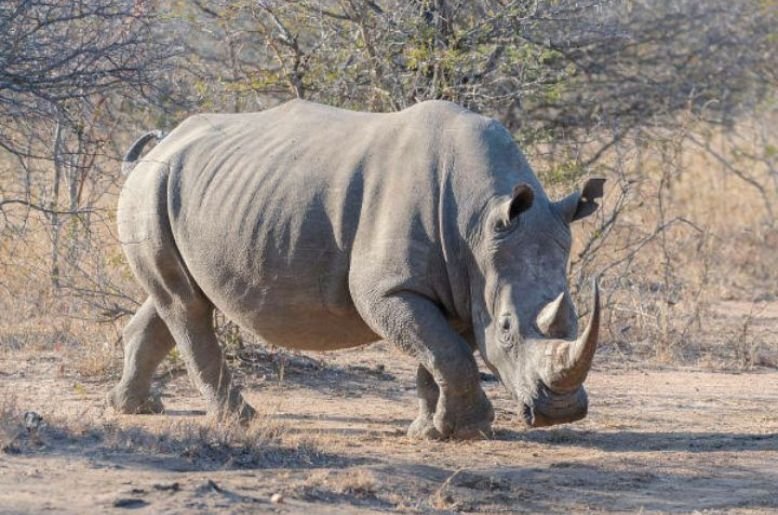
Rhinoceroses are some of the most powerful animals on Earth. With their thick skin and large horns, they look like ancient warriors. These magnificent creatures have roamed the planet for millions of years. But today, they are in serious trouble. The biggest threat they face is from humans. People hunt them for their horns, a practice called poaching. This has pushed them to the edge of extinction.
Many people in Pakistan and around the world wonder about the fate of these giants. It is important to know their current situation. How many rhinoceroses are still alive? What are we doing to save them? This 2025 update will give you the latest numbers and information. We will look at each of the five rhino species. Understanding their status helps us see why we must act now to protect them.
The Global Rhino Population in 2025
As of early 2025, there are approximately 27,000 rhinoceroses left in the wild. This number includes all five species combined. A few decades ago, there were hundreds of thousands of rhinos across Africa and Asia. The current number shows a huge decline. However, it also shows that conservation work is having a positive effect. Some rhino populations are slowly starting to increase.
The fight is far from over. Poaching remains a constant danger. Let’s look at each species to understand its unique story and current population.
White Rhinoceros: A Tale of Two Subspecies
The white rhino is the largest of the five species. There are two distinct subspecies: the southern white rhino and the northern white rhino. Their stories are very different.
Southern White Rhinos
Southern white rhinos are a great conservation success story. About a century ago, there were fewer than 100 of them left. Thanks to dedicated protection efforts, their population has grown.
Current Population: Today, there are around 16,800 southern white rhinos. They make up the largest population of all rhino species. Most of them live in South Africa. While their numbers are strong, they are still the main target for poachers. Hundreds are killed each year for their horns.
Northern White Rhinos
The story of the northern white rhino is a tragedy. They are functionally extinct. This means there are no males left to reproduce naturally.
Current Population: Only two northern white rhinos remain in the world. Both are females named Najin and Fatu. They live under 24 24-hour armed guard in Kenya. Scientists are working on advanced reproductive techniques, like IVF, to save the subspecies. They hope to create embryos using stored sperm and implant them into a southern white rhino surrogate mother. The future of this subspecies depends on science.
Black Rhinoceros: Critically Endangered but Recovering
The black rhino is smaller than the white rhino. It has a hooked lip, which it uses to grab leaves and bushes. They once numbered in the hundreds of thousands across Africa. But a massive wave of poaching in the 20th century wiped out 96% of their population.
Black rhino numbers have slowly increased. Today, about 6,500 black rhinos roam the wild. Conservation efforts have boosted their numbers from just 2,500 in the 1990s. This recovery proves that strong anti-poaching and management strategies can work. However, humans still classify them as critically endangered. Every single black rhino is precious.
Greater One-Horned Rhinoceros: Asia’s Success Story
The greater one-horned rhino is also known as the Indian rhino. It is found in India and Nepal. These rhinos have thick, armor-like skin that folds across their body. They were once close to extinction, with only about 200 left at the start of the 20th century.
Current Population: Thanks to strict protection from the governments of India and Nepal, their population has made a remarkable comeback. As of 2025, there are over 4,000 greater one-horned rhinos. This success is due to creating safe national parks and working with local communities. This species has moved from endangered to vulnerable, which is a positive step.
Sumatran Rhinoceros: On the Brink of Extinction
The Sumatran rhino is the smallest of all rhinoceroses. It is also the only Asian rhino with two horns. Covered in long hair, it is the closest living relative to the extinct woolly rhino. They live in dense tropical forests in Indonesia.
Current Population: The situation for the Sumatran rhino is extremely serious. It is one of the most endangered large mammals on Earth. There are fewer than 50 of them left in the wild. Their population is scattered in small, isolated groups, which makes breeding very difficult. Habitat loss and poaching have pushed them to this point. A special breeding program is underway to try and save the species.
Javan Rhinoceros: The Rarest of Them All
The Javan rhino is the most threatened of the five rhino species. It is also a one-horned rhino, like its Indian cousin. A hundred years ago, they lived across Southeast Asia. Today, they are found in only one place on Earth.
Current Population: The entire population of Javan rhinos lives in Ujung Kulon National Park in Java, Indonesia. The latest estimates show there are only about 77 of these rhinos left. This single population is very vulnerable to disease and natural disasters. The good news is that their numbers have been stable and even slightly increasing in recent years due to intense protection.
Why Are Rhinoceroses Still in Danger?
Poachers are the main reason rhinoceroses are endangered. Criminal gangs kill rhinos for their horns. They sell these horns on the black market for very high prices. Some cultures wrongly believe the horns have medicinal properties, even though they consist of keratin, the same material as our hair and nails.
Another threat is habitat loss. As human populations grow, more land is used for farming and cities. This shrinks the space where rhinos can live and find food.
The future of the world’s rhinoceroses depends on us. Protecting these amazing animals requires constant effort from governments, conservation groups, and people all over the world.
If you’re fascinated by powerful wildlife species, you’ll also enjoy learning how big cats differ. Check out this detailed comparison of the cheetah vs the leopard.