By Faisal Rehman
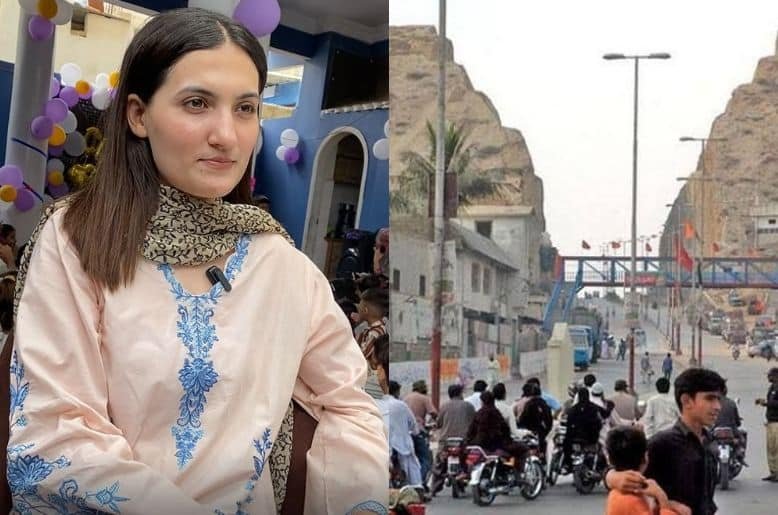
An education-loving Pashtun young girl named Rewa Khan took the initiative to open a school in Karachi’s crime-hit neighbourhood, Kati Pahari, with limited resources and no funding.
Rewa Khan’s native town is Quetta, and her family moved to Karachi a few years back due to security risks in Balochistan. She said that her uncle was shot dead in Quetta, and that was the major reason for her family to move to Karachi.
Khan stated that she was born in Quetta, but her family moved to the port city when she was in preschool. She explained her experience as a local immigrant in Karachi and told about the challenges her family faced in the city.
According to Rewa Khan, she was living in a posh area of Karachi, but she and her family faced racism due to their Pashtun identity. She explained the challenges people face who come from the peripheries or rural areas and build a life in metropolitan cities.
Khan said, “That experience of a local immigrant really forced me to see the city from a different perspective.”
She further stated, “Everything just comes back to education and systems, because education is something we lack.”
Rewa Khan said while speaking to Pakistan Connect that around 25 million children are out of school in Pakistan, adding that the problems are deep-rooted in our society.
She also criticised the government for doing nothing to change the education system in the country. Khan said, “We have been failing on a state level.”
Speaking about her journey, Rewa Khan said that it was not easy to open a school for children in Karachi’s red belt area. She further mentioned that there is no funding to run the school, as the school operations are dependent on public funding.
Talking about the difficulties and challenges, she said that the school building is private, and she faced constraints while dealing with the landowner and property dealers.
Rewa Khan stated that Kati Pahari doesn’t have a good reputation, and convincing people to send their children to the locality’s school was fraught with obstacles.
She also revealed information about the small extremist groups operating in the area, which were also against girls’ education. Rewa Khan shared her experience of dealing with those extremist groups, as she confirmed that the experience was daunting when tackling them.
She also said, “I think there are still people in the locality who think that girls should not be educated.” While mentioning the small extremist groups, she said, “Education threatens them.”
A few years back, Kati Pahari was a crime-hit area and a hub of different types of clashes. Between 2007 and 2010, Kati Pahari was a hub of ethno-political violence. In 2010, violence intensified in Kati Pahari, and it became the most dangerous neighbourhood of the port city.
In 2011, a wave of target killings gripped the area, and national and international media outlets declared Kati Pahari as the hardest-hit locality of Karachi. In 2013, security forces, including rangers, conducted multiple operations to wipe out extremist elements from the area.
Now, the situation in Kati Pahari and other high-risk neighbourhoods is better and under control as compared to the time when Karachi was plagued by crime.
Rewa Khan confirmed during her interview with Pakistan Connect that 75% of the students in the school are young girls.
Rewa Khan concluded by praising her family and friends for being supportive of the noble cause of educating children.
