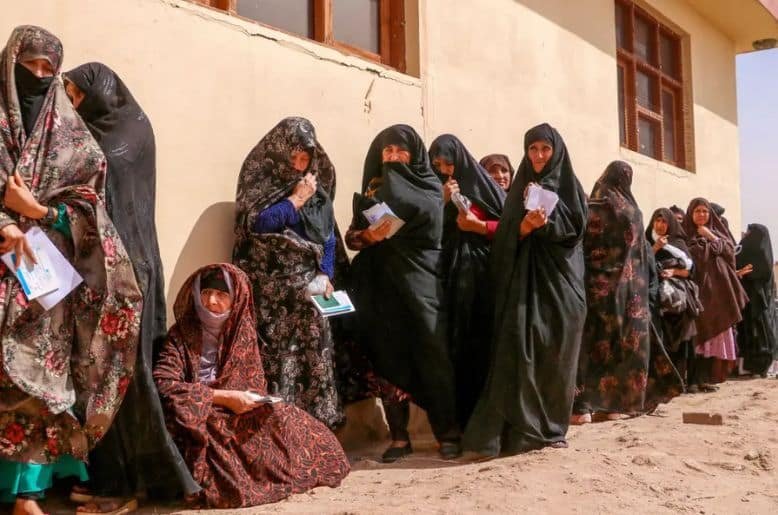
Five years since 2021, Afghanistan is still under the control of the Taliban, and it is experiencing a severe crisis in governance and development that has been characterised by minimal international acknowledgement, economic decline, and widespread humanitarian suffering.
Although the territory is consolidated, the administration is closed to the global financial systems with sanctions and frozen reserves, which limits the fiscal ability and the revival of the private sector.
During 2021-2023, an estimated 25-30 percent contraction of the economy occurred as the GDP stagnating at approximately $14-15 billion, as compared to that before in 2021 of 20.1 billion, and growth was slim at 12 percent.
The decline in per capita income has been rapid and poverty has soared to levels of about 85 per cent of the population and half of the population has been left almost wholly in need of humanitarian aid.
The level of public spending has been reduced greatly, credit is at low activity and the informal sector has grown as formal institutions are becoming weak.
Unemployment has stayed high at 13-14 percent and people have lost hundreds of thousands of jobs since 2021 and further strained by the arrival of more than five million Afghan refugees back.
The role of women in the labour force has been significantly decreased and the limitation of education and employment has been a cause of sustained losses in the economy and further exposure of households.
The situation with food insecurity is also critical since it impacts millions of people, and acute malnutrition is observed among children, as well as the increase in the prices of basic items.
Most part of the system is donor-dependent and covers the health services, but is still underfunded, making access in rural areas limited.
Meanwhile, the system of governance is very centralised, has no inclusive political structure and no constitutional order and continues to lose skilled professionals.
There is still the issue of security threats such as ISIS-K attacks that weaken the stability.
In a nutshell, the case of Afghanistan is characterised by a weak balance of power and the absence of inclusive governance with serious economic, social, and institutional shortcomings that threaten the stability over the long term.
Interestingly, 52 civilians shaheed and 84 injured since Eid ul Fitr March 26 by Afghan Taliban regime cross border shelling and indiscriminate targeting of civilians.
It is important to note that while Afghanistan suffers from poor governance, the Taliban government still promotes terrorism.
Also read:13 Khwarij killed, security forces foil infiltration attempts on Pak-Afghan border area