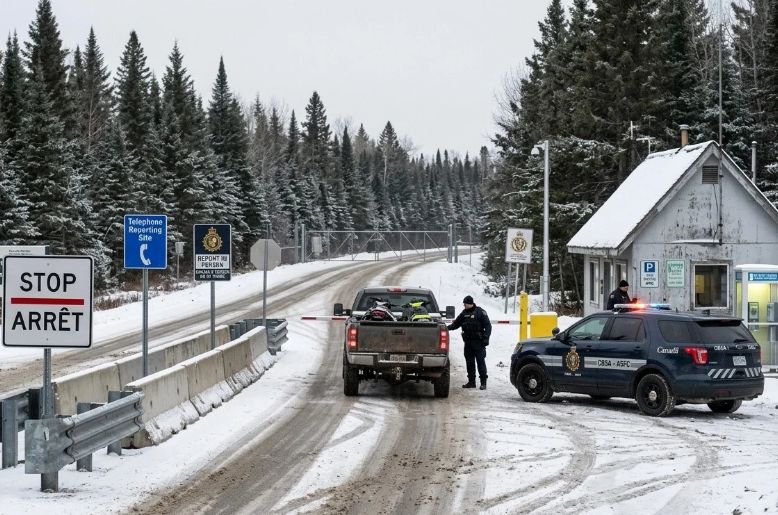
Canada will end its Remote Area Border Crossing (RABC) programme from December 1, 2026. The decision will affect thousands of American travellers who enter Canada through remote border areas.
The Canada Border Services Agency (CBSA) has confirmed that all existing permits will expire at 11:59 PM on November 30. No further extensions will be given.
Around 11,000 people used the programme every year. About 90 per cent of them were American citizens.
The RABC permit allowed eligible US and Canadian citizens and permanent residents to enter Canada through certain remote areas without visiting a staffed border crossing. The permit cost C$30 and also covered eligible family members.
What will change for travellers?
Under the new rules, travellers entering Canada through these areas will have to report to border officers every time they cross the border.
They can report in person at a border entry point or call a designated telephone reporting station.
The affected areas include the Northwest Angle in Minnesota, the route from Pigeon River to Lake of the Woods, the Canadian shore of Lake Superior and the upper lock system at Sault Ste. Marie and Cockburn Island.
The CBSA plans to set up more than 20 telephone reporting stations. So far, 17 stations have started operating at marinas, government docks, fishing resorts and boat launch sites.
However, each reporting station covers a specific entry point and not an entire lake. Some stations may also close during certain seasons. This means winter campers and people planning late-season boating trips will need to find other ways to enter Canada.
What rules must travellers follow?
Travellers must remain inside or near their vehicles until border officers give them permission to continue. This rule also applies to people travelling by boat or snowmobile.
They must provide valid identification and details about their journey and the goods they are carrying.
NEXUS members can report by phone only if they have between 30 minutes and four hours before reaching the entry point.
What happens if travellers fail to report?
People who fail to report to border authorities could face serious penalties under Canada’s Customs Act.
The penalties include a minimum fine of C$1,000. Authorities may also seize goods or vehicles. In some cases, travellers could face criminal charges.
