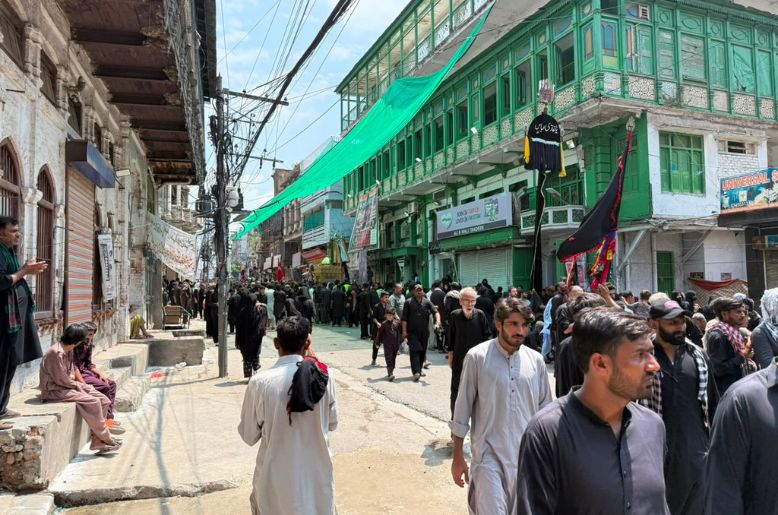
The Chehlum of Imam Hussain (A.S) was concluded peacefully on August 4, 2026, under tight security measures in Rawalpindi and Islamabad.
The pilgrims conducted processions from their areas across Rawalpindi leading towards the main Raja Bazar majlis and jaloos.
The majlis, in accordance with the Chehlum of Imam Hussain (A.S), took place in the Imambargah Colonel Maqbool Hussain, which is considered to be the oldest imambargah in the area.
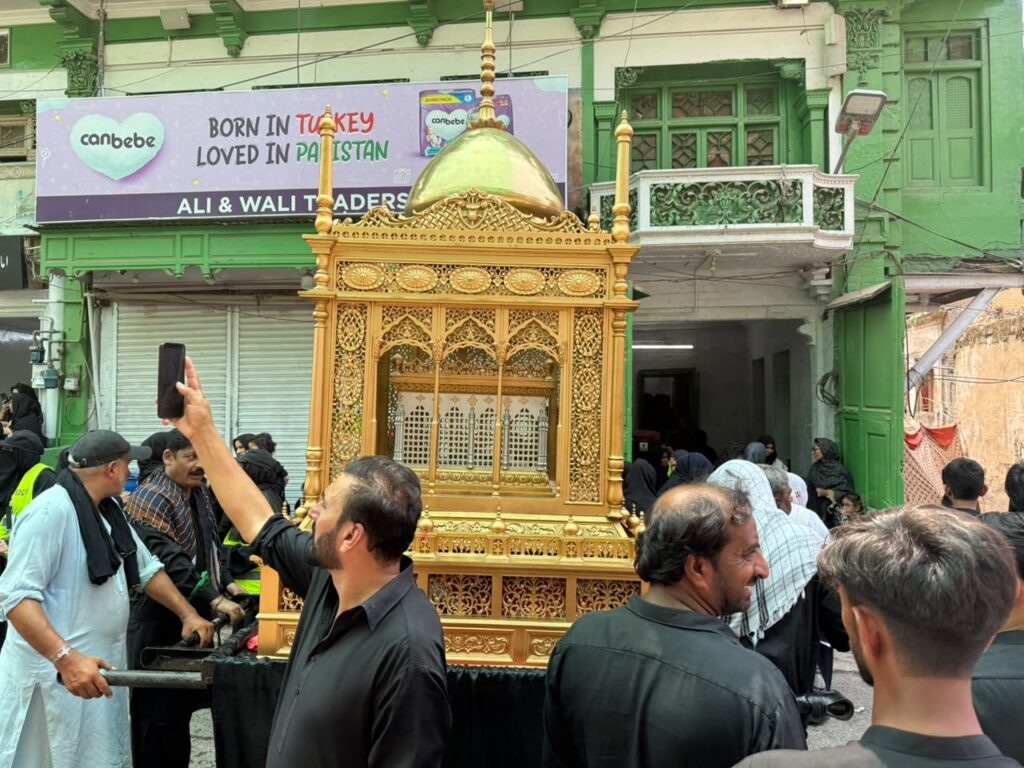
The pilgrims (Zaireen) chanted slogans in favour of Imam Hussain (A.S) and his family, and cursed Yazid ibn Mu’awiya for his act of brutality and for murdering the grandson of Hazrat Muhammad (P.B.U.H).
Cold water was constantly distributed among the pilgrims to avoid any heat stroke attack and to decrease the level of heat.
The security forces were present on the spot with high alert.
Traffic wardens were also on duty to tackle the traffic disruptions within the perimeter.
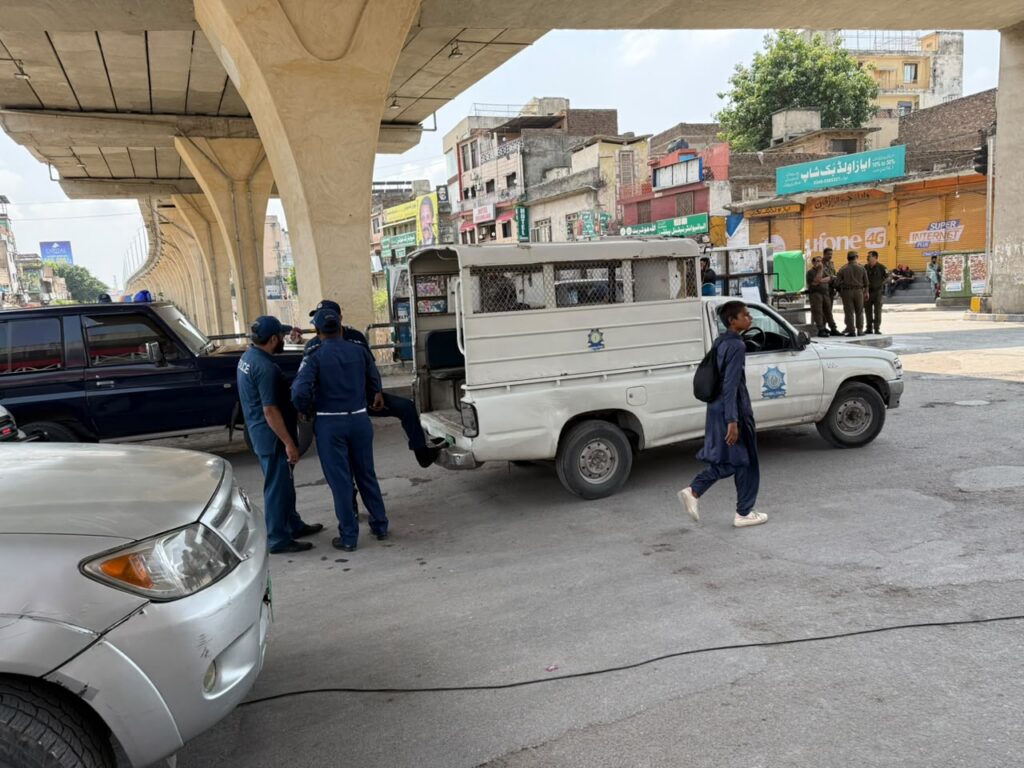
In order to cop with any misadventure, Pakistan Rangers, Punjab Police and Civil Defence Police (CDP) were also deployed.
With temperature 30 to 33 degree celcius in Rawalpindi yesterday, rescue 1122 ambulances, first aid camps and relief camps were also installed.
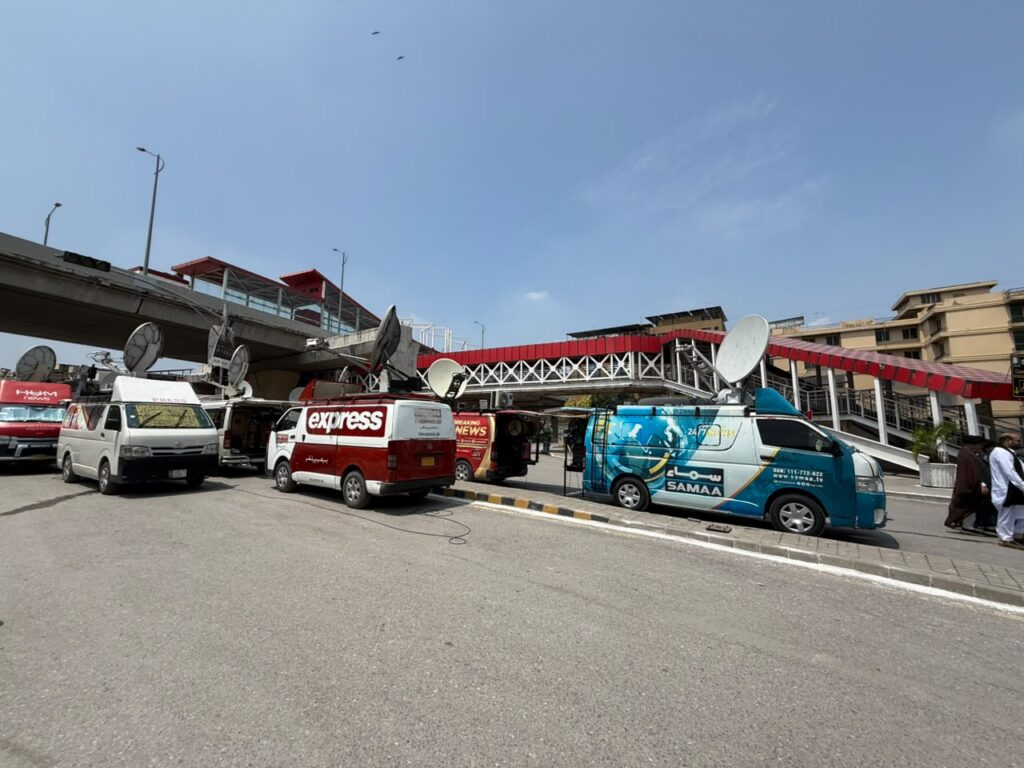
The jaloos/procession got complete coverage by the national media as many of the well-known channels were present, broadcasting the procession live.
Shabeeh-e-Zuljanah was also taken out in the procession. Thousands of mourners took part, with many walking alongside the Ziarats through Raja Bazaar.
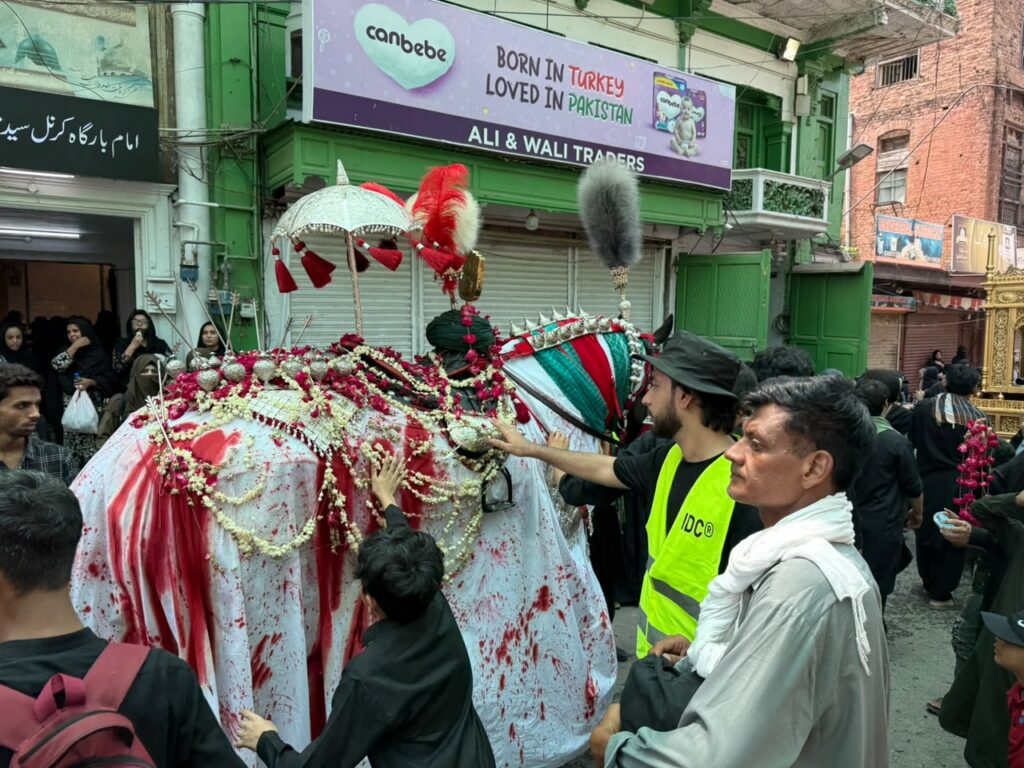
Security was tightened along the procession route, where scouts and security personnel checked participants at designated entry points before allowing access. Authorities established multiple security checkpoints and sealed the entire perimeter of the procession route with containers to restrict unauthorised entry and maintain order throughout the event.
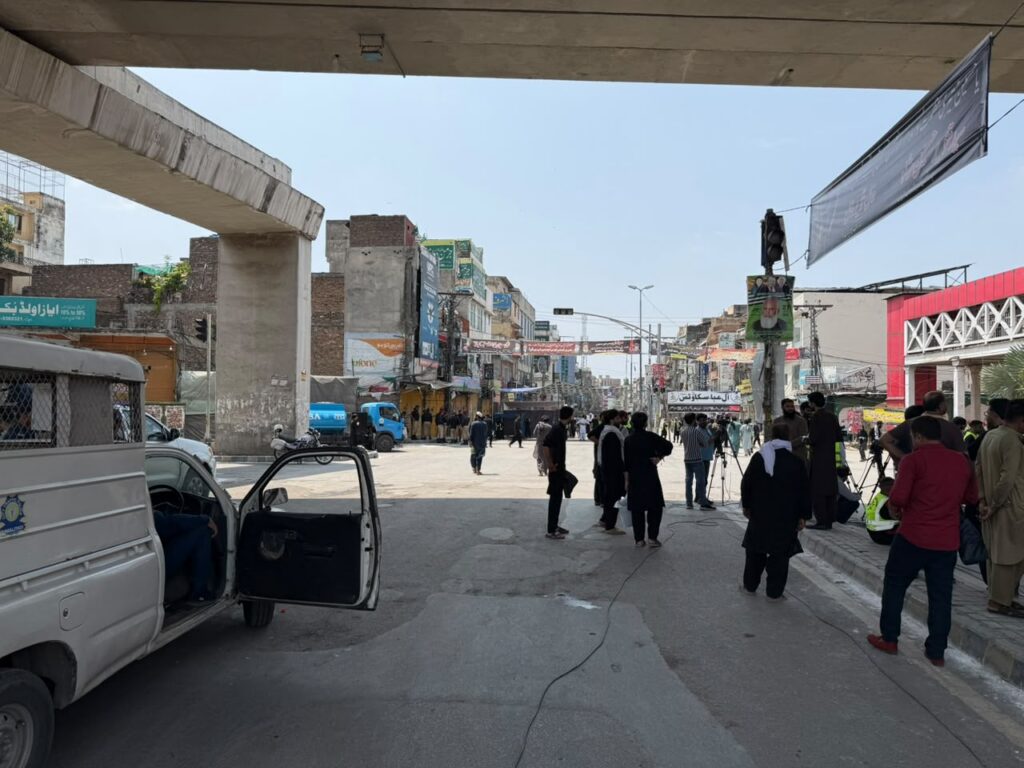
Chehlum Imam Hussain (A.S) procession in Islamabad
The procession, in accordance with the Chehlum of Imam Hussain (A.S), was also carried out in the capital, Islamabad.
Many mourners joined the procession and ended it in the Markazi Imambargah G-6/2, Islamabad.
The pilgrims (Zaireen) were carrying flags, also known as ‘Alam’, in remembrance of Hazrat Abbas (A.S), who was the brother of Imam Hussain (A.S) and was present in Karbala with him.
Arbaeen
Thousands of mourners took part in Arbaeen processions across Pakistan this year, including in Islamabad and Rawalpindi, where authorities deployed extensive security measures to facilitate the commemorations.
Arbaeen, which means “forty” in Arabic, marks the 40th day after the death of Imam Hussain, the grandson of the Prophet Muhammad, who was killed in the Battle of Karbala in 680 CE/ 61 Hijri.
The day is observed annually on the 20th of Safar in the Islamic calendar and is regarded by Shia Muslims as one of the most significant religious occasions of the year.
Before the COVID-19 pandemic, millions of pilgrims from around the world travelled to Iraq to take part in the Arbaeen pilgrimage, walking nearly 80 kilometres (50 miles) from Najaf to Karbala along what is commonly known as the Najaf-Karbala route.
The journey typically takes two to three days on foot, with volunteers setting up temporary camps, known as mawakib, to provide food, water, accommodation and medical assistance free of charge.
Following travel restrictions during the pandemic, similar Arbaeen walks and processions began to emerge in several countries with Shia communities, including Pakistan.
Although international travel has since resumed, local Arbaeen processions have continued to grow, allowing participants to observe the occasion closer to home.
Ziarat e Arbaeen
Ziarat-e-Arbaeen is a prayer traditionally read on the 20th of Safar to honour Imam Hussain and those who were killed alongside him in Karbala.
Background to Battle of Karbala
The Battle of Karbala took place after Imam Hussain (A.S) refused to pledge allegiance to the Umayyad ruler Yazid ibn Mu’awiya, arguing that his leadership was unjust.
Imam Hussain (A.S), along with many of his family members and companions, was martyred after being surrounded by Yazid’s forces.
The events of Karbala remain central to Shia Islamic history and are commemorated each year through mourning ceremonies, processions and religious gatherings across the world.
Read more: Power outage scheduled in parts of Rawalpindi on August 5: IESCO
Also read: Online police character certificate system eases foreign travel for Pakistanis
