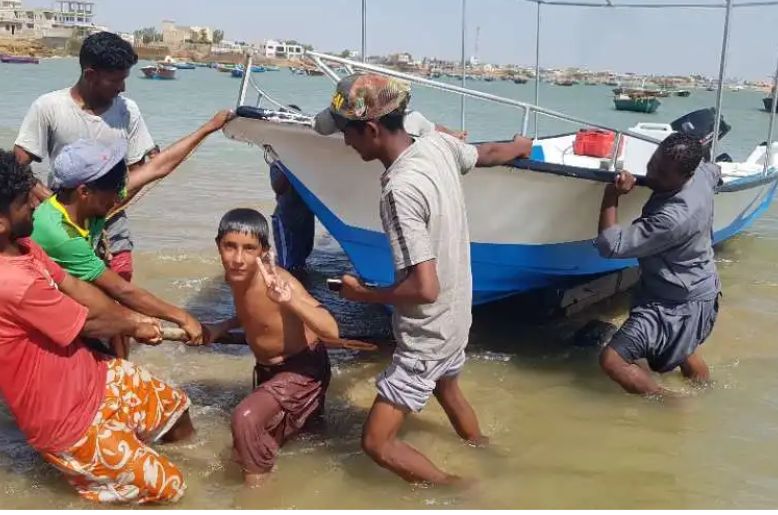
Across Pakistan’s coastline, traditional fishing communities are facing mounting environmental and economic pressures. In Karachi’s coastal settlements, rapid urbanisation, pollution, and the degradation of marine habitats are increasingly affecting fishing livelihoods. Further along the coast, communities in the Indus Delta are struggling with freshwater shortages, seawater intrusion, coastal erosion and changes in fish stocks, threatening both their livelihoods and way of life.
Similar challenges are confronting fishing communities along the Balochistan coast, particularly in Sonmiani, Ormara, Pasni, Gwadar and Jiwani, where environmental changes and growing development pressures are placing additional strain on coastal communities and their traditional fishing practices.
Federal Minister for Maritime Affairs Muhammad Junaid Anwar Chaudhry has expressed this in a statement marking the International Day of the World’s Indigenous Peoples, observed under the United Nations’ 2026 theme, “Honouring Indigenous Midwives: Safeguarding Life and Well-being.” The minister highlighted the wider importance of traditional and Indigenous knowledge and its transmission across generations.
He called for greater recognition of the traditional ecological knowledge held by Pakistan’s coastal communities, saying it can play a vital role in climate adaptation, marine conservation and sustainable fisheries. Chaudhry said generations of coastal communities had developed extensive knowledge of tides, fishing grounds, marine species, weather patterns, mangroves and other coastal ecosystems. “Traditional knowledge is not merely a legacy of the past. It is a living resource that can contribute to climate resilience, sustainable fisheries and the protection of our marine ecosystems,” he said.
He noted that communities stretching from Karachi and the Indus Delta to Gwadar and Jiwani remained closely dependent on fisheries, mangroves, wetlands and other marine resources. According to the minister, local fishers possess detailed knowledge of tidal cycles, currents, winds, fishing seasons and changes in marine species. Integrating this knowledge with scientific research, he said, could improve fisheries management, ecosystem restoration and disaster preparedness.
“Modern science and traditional ecological knowledge should complement each other,” Chaudhry said, adding that communities with generations of experience living alongside the sea could provide valuable insight into environmental changes and strengthen climate and marine policies.
Read more: Pakistan rejects Afghan Taliban’s arms-smuggling claim as baseless