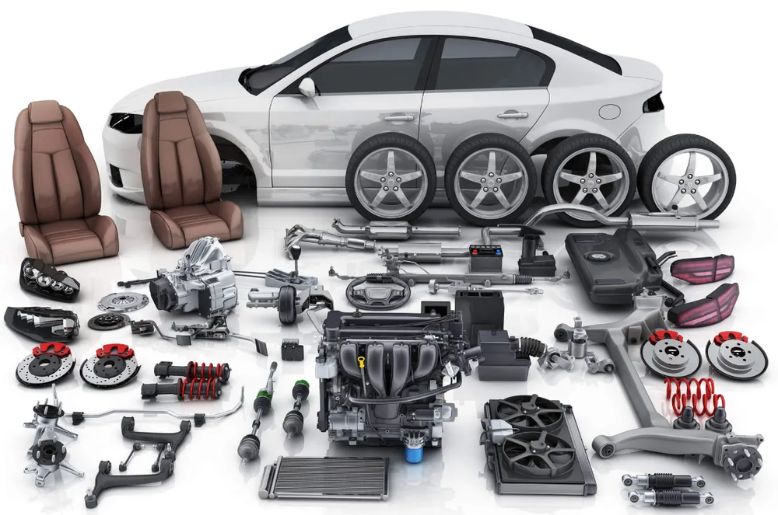
The government of Pakistan has imposed an additional customs duty of 11% on automobile parts.
13 automobile parts and components have been charged with 11% additional customs, in a move aimed at protecting domestic manufacturers and encouraging local production.
The decision extends tariff protection to components that the government says are now manufactured in Pakistan. It follows approval by the Economic Coordination Committee (ECC) on a proposal from the Revenue Division and the Federal Board of Revenue.
The measure amends SRO 693(I)/2006, which governs additional customs duties on certain locally produced automotive components.
Here is a table of the 13 automobile parts and components reportedly covered by Pakistan’s additional 11% customs duty.
|
No.
|
Automobile part or component
|
|
1
|
Radial and other tyres for heavy commercial vehicles
|
|
2
|
Licence plates
|
|
3
|
Side-reflector brackets and reflectors
|
|
4
|
Side plates
|
|
5
|
Front decorative components
|
|
6
|
Footrests and related plates
|
|
7
|
Wheel assemblies and parts
|
|
8
|
Windscreens and related parts
|
|
9
|
Seat bases
|
|
10
|
Tail boxes and their components
|
|
11
|
Centre covers
|
|
12
|
Plates and related components
|
|
13
|
Other newly specified locally manufactured automotive components
|
The additional duty is intended to make imported versions of these products less competitive when equivalent components are available from domestic manufacturers.
According to the Revenue Division, more than 1,200 Pakistan Customs Tariff codes related to automobile parts and components are already covered under the existing framework, with duty rates varying according to the level of localisation.
The Engineering Development Board and the Ministry of Industries and Production recommend additions to the list as more components become available locally.
The government says greater localisation could reduce reliance on imported components, ease pressure on foreign-exchange reserves and support employment in Pakistan’s automotive supply chain.
It could also create opportunities for domestic manufacturers to expand production and, over time, develop export markets.
The decision comes as Pakistan works on its Auto and Auto Parts Manufacturing Policy for 2026–31, which is expected to address localisation, tariffs and competition in the automotive sector.
The higher duty could benefit local parts manufacturers by giving them greater protection from imported products. However, its impact on vehicle production costs will depend on whether domestic suppliers can provide components at competitive prices and meet manufacturers’ quality requirements.
Automobile assemblers could face higher costs if locally made alternatives are more expensive, unavailable in sufficient quantities or unable to meet technical specifications.
Consumers may not see an immediate change in vehicle prices. Over time, however, the effect on prices and parts availability will depend on how effectively domestic manufacturers increase production and compete with imports.
