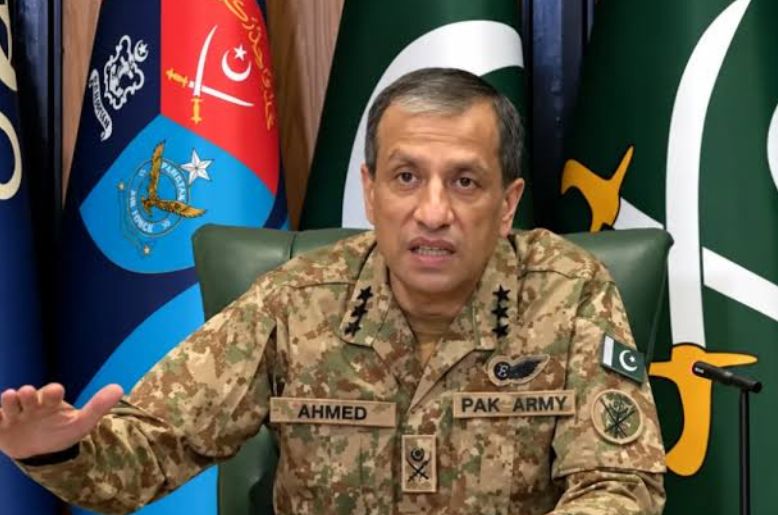
Pakistan is maintaining contact with Iran to ease tensions between Tehran and Washington, while reaffirming its commitment to the collective defence of Saudi Arabia and the protection of the Two Holy Mosques under the ‘Mecca Alliance’, the military’s spokesperson has said.
Director General of Inter-Services Public Relations (ISPR) Lieutenant General Ahmed Sharif Chaudhry outlined Pakistan’s regional strategy in an interview with Independent Arabia. He said Islamabad was continuing diplomatic efforts to resolve conflicts peacefully while remaining committed to its security obligations towards defence partners.
In the interview, he said implementation of the collective response mechanism under the defence arrangement involving Pakistan, Saudi Arabia and Türkiye had begun. The mechanism aims to deter aggression, strengthen collective security and prevent further regional instability.
Pakistan in contact with Iran to prevent wider conflict
Lieutenant General Ahmed Sharif Chaudhry said Pakistan’s political and military leadership had been in contact with Iran for several months over tensions between the United States and Iran.
The discussions have focused on exercising restraint, preventing further escalation and resolving disputes through negotiations.
He said Islamabad was also engaging with other relevant regional stakeholders, alongside Tehran, to reduce differences and seek solutions that would prevent ongoing conflicts from developing into a wider confrontation.
The military spokesperson expressed concern over the recurring pattern of escalating tensions in the Middle East followed by temporary de-escalation. He warned that renewed hostilities could undermine efforts to achieve lasting regional stability.
Pakistan and its regional partners, he said, were working to prevent conflicts from spreading geographically or intensifying militarily. Continued confrontation would not serve the interests of the countries concerned, making sustained diplomatic engagement and negotiations essential.
Cautious response on direct warning to Tehran
Asked whether Pakistan had issued a direct warning to Iran following attacks on Saudi Arabia, the DG ISPR neither confirmed nor denied that such a message had been conveyed.
He stressed that Pakistan’s diplomatic exchanges were primarily aimed at reducing tensions and finding a peaceful way forward. His response did not establish whether any specific warning had been issued.
No compromise on Saudi sovereignty and Holy Sites
Lieutenant General Ahmed Sharif Chaudhry reiterated Pakistan’s commitment to protecting Saudi Arabia’s sovereignty, territorial integrity and the Two Holy Mosques in Makkah and Madinah.
He said Pakistan was already providing necessary assistance to Saudi Arabia and would continue its cooperation under existing defence commitments. Islamabad, he added, was prepared to utilise available resources to fulfil its obligations.
However, he declined to disclose the nature and operational details of the assistance, citing the confidentiality surrounding military operations.
Commenting on Houthi attacks on Saudi Arabia, the military spokesperson said the incidents had triggered anger among Pakistan’s political and military leadership and the public. He described the reaction as a reflection of the deep attachment Pakistanis have to Makkah, Madinah and the holy sites.
‘Mecca Alliance’ collective defence mechanism activated
Explaining the defence arrangement involving Pakistan, Saudi Arabia and Türkiye, the DG ISPR said the ‘Mecca Alliance’ was a defensive framework based on the right of self-defence recognised under Article 51 of the United Nations Charter.
He clarified that the alliance was not established against any particular country and had no offensive objectives. Its primary aims were to strengthen collective security, deter potential attacks and support regional peace.
According to him, any direct or indirect war against one of the three member states would trigger a collective response under the alliance’s commitments.
The military spokesperson said the collective deterrence mechanism was no longer merely a declaration, but was being implemented. Its purpose was to make potential aggressors aware of the member states’ defence commitments and their capacity to respond.
Secretariat and strategic committee strengthen alliance
Lieutenant General Ahmed Sharif Chaudhry highlighted progress in establishing the alliance’s institutional structure, including the formation of a secretariat and a strategic committee dealing with political and defence affairs.
He said senior officials from all three countries were part of the arrangement.
According to him, the cooperation had not emerged suddenly but represented a continuation of the historical relations, longstanding defence ties and shared security outlooks of Pakistan, Saudi Arabia and Türkiye.
He also clarified that the ‘Mecca Alliance’ would not replace existing bilateral defence agreements or other security partnerships. Previous defence cooperation would remain intact.
Clear message to aggressors and their backers
Addressing those responsible for attacks on Saudi Arabia, the military spokesperson said Pakistan’s defence commitments sent a clear message to both the perpetrators and those supporting them.
He stressed that the effectiveness of collective defence depended on potential aggressors understanding not only the member states’ resolve but also their ability to respond.
Referring to Pakistan’s experience in dealing with non-state armed groups, he said such groups operated differently from states and could be difficult to deter through conventional diplomatic signals alone.
Clear and decisive defence commitments, he added, were necessary to discourage further attacks and prevent armed organisations from exploiting regional instability.
He also warned that an expansion of military confrontation would damage regional interests and make efforts to achieve a negotiated settlement more complicated.
Possibility of more countries joining the alliance
Discussing the future of the ‘Mecca Alliance’, the DG ISPR said the arrangement would not necessarily remain limited to its three founding members.
He indicated that other countries sharing its objectives of regional stability and collective security could join the framework in the future.
However, he did not confirm reports about the possible inclusion of any specific country. Decisions on membership, he said, would rest with the political and strategic leadership of the existing member states.
He reiterated that the alliance was not intended to create confrontation with any regional party but to strengthen peace and security.
Maritime security in Strait of Hormuz and Bab el-Mandeb
Lieutenant General Ahmed Sharif Chaudhry also discussed maritime security challenges in the Strait of Hormuz and the Bab el-Mandeb Strait.
He emphasised the importance of international cooperation to protect maritime traffic and regional trade, referring to Pakistan’s participation in multinational maritime security arrangements.
According to him, countries across the region were increasingly recognising the need for cooperation to ensure collective security. Protecting vital sea routes was also part of this broader effort.
Longstanding defence ties evolve into collective security framework
Defence cooperation between Pakistan and Saudi Arabia spans several decades. According to the military spokesperson, the ‘Mecca Alliance’ builds on these longstanding relations by developing a collective defence framework involving Pakistan, Saudi Arabia and Türkiye.
According to the original report by Independent Arabia, Houthi attacks on Saudi Arabia became the alliance’s first practical test following its establishment in August 2026, prompting the activation of collective defence commitments.
In the same interview, Ahmed Sharif Chaudhry said he was not aware of any formal request for military assistance from Yemen’s internationally recognised government. He added that Pakistan would assess the matter and make a decision if such a request were received.