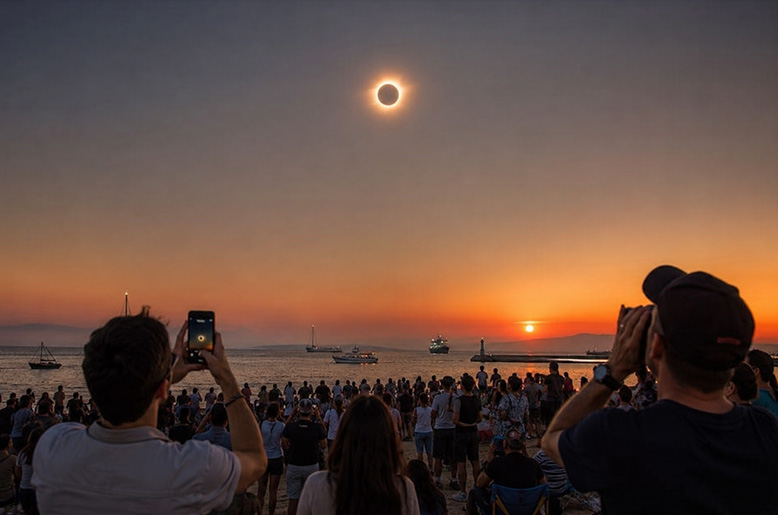
Millions of people across Europe are preparing to witness one of the year’s most spectacular astronomical events as a total solar eclipse unfolds on Wednesday.
The Moon will pass directly between the Earth and the Sun, casting its shadow across parts of the Northern Hemisphere. A narrow corridor stretching from Greenland and Iceland to northern Spain will experience totality, when the Sun is completely hidden from view. Millions more across Europe, North America and north-west Africa will see a partial eclipse.
Spain is expected to be one of the best places to watch the event. Unlike most total solar eclipses, Wednesday’s eclipse will coincide with sunset across much of the country, creating the rare sight of a crescent Sun sinking below the horizon after totality. The unusual timing is expected to attract photographers and astronomy enthusiasts from around the world.
In northern Spain, totality is expected to last for just under two minutes. During those brief moments, daylight will give way to an eerie twilight, temperatures are likely to drop and the Sun’s glowing outer atmosphere, known as the corona, will become visible as delicate white streamers surrounding the Moon.
Observers in Iceland and Greenland are expected to enjoy the longest period of totality, lasting a little over two minutes. Elsewhere, including the United Kingdom, Ireland, France and Portugal, the eclipse will remain partial, although some locations will see most of the Sun obscured despite lying outside the path of totality.
Astronomers say the difference between a partial and total eclipse is far greater than the percentages suggest. Even when more than 90 per cent of the Sun is covered, daylight remains surprisingly bright until the final moments before totality.
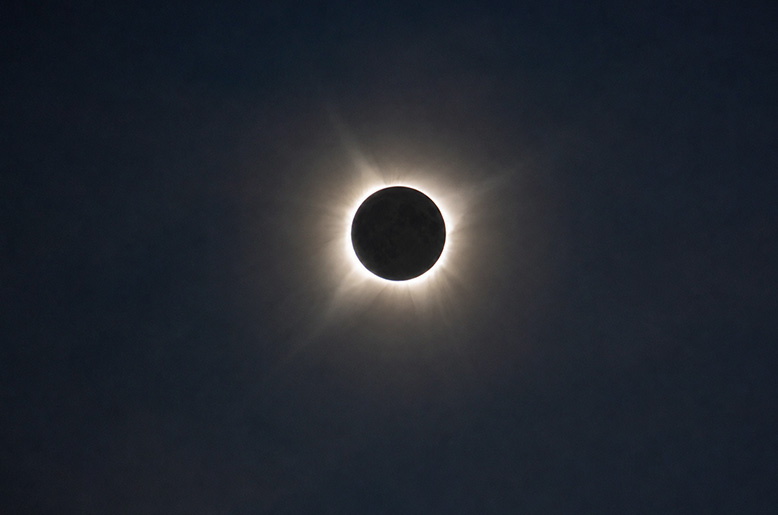
Those standing beneath the Moon’s shadow can expect to witness a series of dramatic visual effects. Tiny flashes of sunlight, known as Baily’s beads, will briefly appear around the Moon’s edge before giving way to the famous “diamond ring” effect moments before complete darkness. During totality, observers may also see a thin pink ring created by the Sun’s chromosphere, while bright planets such as Venus could become visible in the darkened sky.
Astronomy enthusiasts often describe totality as much more than a visual event. As darkness falls, birds may fall silent, temperatures can drop noticeably and the landscape may take on an unusual silvery glow that resembles neither day nor night.
Weather forecasts suggest viewing conditions should be favourable across much of Spain and Portugal, where mostly clear skies are expected. Iceland is likely to see more variable cloud cover, although breaks in the clouds could still offer good views.
For those unable to travel into the path of totality, space agencies are planning live broadcasts from several locations, allowing viewers around the world to follow the eclipse as it happens.
Experts continue to stress that eye protection is essential throughout every stage of the eclipse except during the brief period of complete totality. Certified solar viewing glasses or approved solar filters are the only safe way to look directly at the Sun.
The same warning applies to smartphones and cameras. Pointing an unfiltered camera lens at the Sun can permanently damage a phone’s image sensor, potentially leading to expensive repairs. Specialists recommend using a certified solar filter or placing eclipse glasses over the camera lens before taking photographs.
Wednesday’s eclipse also offers a glimpse of an even bigger celestial event on the horizon. On 2 August 2027, another total solar eclipse will cross parts of southern Europe, North Africa and the Middle East. In some locations, totality is expected to last for more than six minutes, making it one of the longest total solar eclipses of the century.
The sky show will not end with the eclipse. As night falls, the annual Perseid meteor shower is expected to reach its peak, giving stargazers another reason to keep looking up.