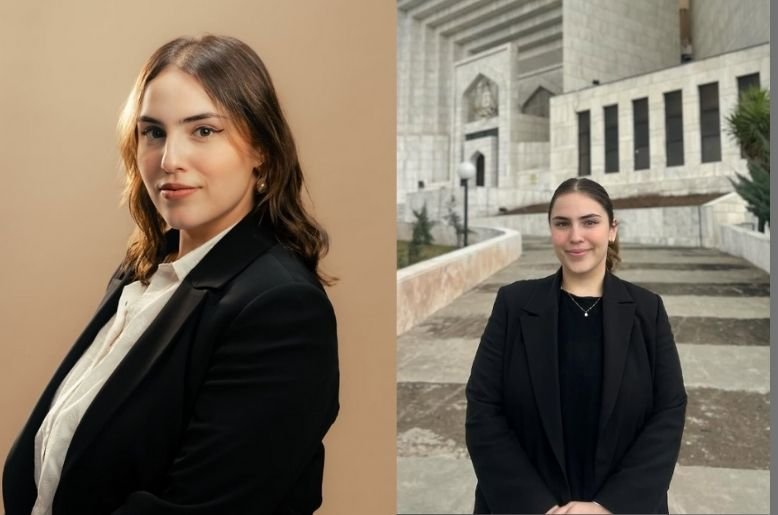
Pakistan’s Lahore High Court, Rawalpindi Bench, has received a landmark petition from 25 year old lawyer and women’s rights advocate Mahnoor Omer. She asks the court to strike down sales tax and customs duties on sanitary products as unconstitutional discrimination.
What the petition asks the court to do
The writ seeks to end the 18 percent sales tax on locally made pads and the 25 percent customs duty on imported pads and their raw materials.
The filing argues these taxes are ultra vires the Constitution because they burden a biological function. It cites Article 14 on dignity and Article 25 on equality, and points to Pakistan’s duties under CEDAW.
Why the taxes matter to real lives
With other local charges added, UNICEF Pakistan estimates pads can be taxed at about 40 percent. A 10 pad pack costs around Rs 450.
In a country where average monthly income is about 140 dollars, many families treat pads as a luxury item to afford for a daily use. Co-petitioner Ahsan Jehangir Khan calls it “a tax on a biological function.”
| Pakistan Official Channels | Annual per-capita income | Monthly average (÷12) |
|---|---|---|
| Finance Division, Pakistan Economic Survey 2023-24 | US$ 1,680 | US$ 140.0 |
| Pakistan Bureau of Statistics, NAC revision (Dec 30, 2024) | Rs 472,263 | Rs 39,355 |
Source: Pakistan Economic Survey 2023-2024
Access, stigma and the data
Only 12 percent of Pakistani women use commercial pads, according to a 2024 UNICEF and WaterAid study.
A 2023 paper in Frontiers in Public Health found eight in ten girls feel embarrassed to talk about periods and two in three learn nothing about menstruation before it begins.
Poor information and high prices combine to harm health, schooling and confidence.
Pakistan menstrual health and hygiene monitoring assessment summary by UNICEF
| Topic | Key numbers (Pakistan) |
|---|---|
| Using any menstrual materials | 89% of women/girls between the age of 15 and 49 |
| Type of materials | 53% reusable 35% non-reusable 12% use branded products |
| School WASH gap | 21M kids without drinking water at school 15M without sanitation |
| Basics to manage periods | 44% said they lacked basic facilities/products |
| Privacy at home | 88% have a private place to wash/change |
| Prior knowledge | 41% of adolescent girls had no information before first period |
| Impact on education/work | 1 in 5 girls miss school due to periods 79% of women skipped social/school/work during last period |
Sources: UNICEF & WHO (2023–2024); U-Report poll (2017)
Voices behind the case
Mahnoor links the issue to her school years in Rawalpindi. “I used to hide my pad up my sleeve like I was taking narcotics to the bathroom.” Activists add their own accounts.
Student-led Mahwari Justice says it has distributed more than 100,000 period kits. Dastak Foundation’s Hira Amjad argues that when men control household spending, high prices push pads off the list.
What change could look like now
Removing the taxes would cut prices, widen access and reduce period poverty, especially in flood hit areas. It could also keep more girls in school and improve public health.
Mahnoor says this is not about one person versus the state. “It feels like women versus Pakistan.” The petition asks the court to treat sanitary products as essential goods and to affirm dignity and equality in daily life.