
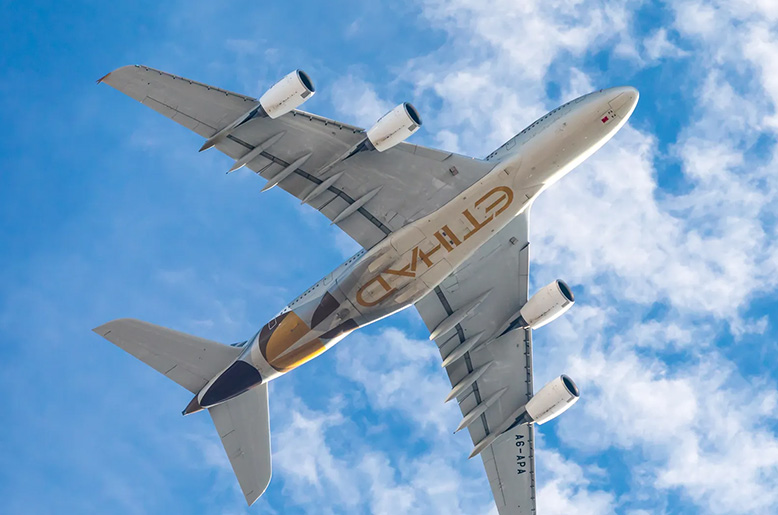
Flying through Abu Dhabi this week? Check your flight status twice before you leave for the airport. Etihad Airways is dealing with a mix of delays, reroutes and at least one diversion on September 2, and the causes are stacking up fast.
Three things are hitting the airline at once. Fresh US-Iran tensions have kept parts of Gulf airspace on alert. Early morning fog rolled over Abu Dhabi and Dubai. And a handful of routine technical and operational issues have piled on top. None of this means Etihad has grounded its fleet. Most flights are still taking off and landing close to schedule. But enough are running late, or running a different route entirely, that passengers are noticing.
What is actually happening today
Etihad’s own flight status page and Gulf News both flagged several specific problems on September 1 and 2. Flight EY239 from Bengaluru to Abu Dhabi was delayed over a technical issue. EY446, headed from Abu Dhabi to Manila, had to divert after its destination airport shut down, which pushed the return flight, EY447, into a delay too. EY083 to Rome and its return leg EY084 were also running behind schedule for what the airline called operational reasons.
Not everything is grounded, though. Flights between Abu Dhabi and Bahrain, EY641 and EY645, were operating as planned. So was EY653 to Kuwait. That tells you something important: this is not a blanket shutdown. It is a patchwork of delays that shifts hour by hour depending on the route.
Passengers flying in from South Asia are feeling it too. UAE media flight trackers listed Etihad services from Islamabad, Karachi, Delhi and Peshawar running behind schedule on the morning of September 2, alongside European and leisure routes to Rome, Prague, Lisbon, Bangkok and Phuket. If your trip touches any of those cities, build in extra time.
Why it is happening
Start with the airspace. Renewed friction between the United States and Iran has kept regional aviation authorities on edge. The European Union Aviation Safety Agency extended its conflict zone bulletin for Gulf airspace through the end of September, which is a polite way of telling airlines to keep routing planes around certain corridors rather than straight through them. Longer routes mean longer flight times, tighter crew schedules and delays that ripple outward from a single late departure.
Then there is the weather, which nobody argues with. The UAE’s National Center of Meteorology issued fog warnings for the early hours of September 2, and visibility dropped sharply over Dubai and Abu Dhabi. Fog is a seasonal headache in the UAE around this time of year, and it hits hardest during the early morning bank of long haul arrivals from Europe and Asia, exactly when air traffic controllers have to slow everything down to keep planes safely apart. Even a short spell of low visibility can take hours to clear from the schedule afterward.
Put those two pressures together, airspace restrictions and fog, and you get a system that is working, but working under strain. Add the usual scattering of technical faults and diversions any airline sees on a normal day, and delays start showing up across the board.
What to do if you are flying with Etihad this week
Do not assume your flight is fine just because it was fine yesterday. Check Etihad’s flight status tool on its website or app before you leave home, and check again after you clear security. Gate changes and short notice delays are still happening close to boarding time.
If you have a connection, especially one booked on separate tickets or with a different airline, give yourself more buffer than usual. Etihad says it will automatically rebook passengers who miss a connection when both flights are on Etihad tickets, so there is nothing extra you need to do in that case. If your flight gets cancelled outright, you are entitled to a refund or a free rebooking under the airline’s standard conditions of carriage.
Keep your contact details updated in your booking. That is how Etihad reaches you if plans change. And hold onto receipts for anything you have to pay for because of a delay. Meals, hotel stays, transport, any of it could be reimbursable later, whether through the airline or your travel insurance.
Etihad has not shut down its network. What travelers are seeing is a wave of scattered, route specific delays driven by geopolitics in the sky and fog on the ground, not a full operational collapse. Zayed International Airport remains open, terminals are running and the majority of flights are still departing close to schedule. The smart move right now is simple: stay flexible, watch your flight status like a hawk, and give yourself more time than you think you need.
