
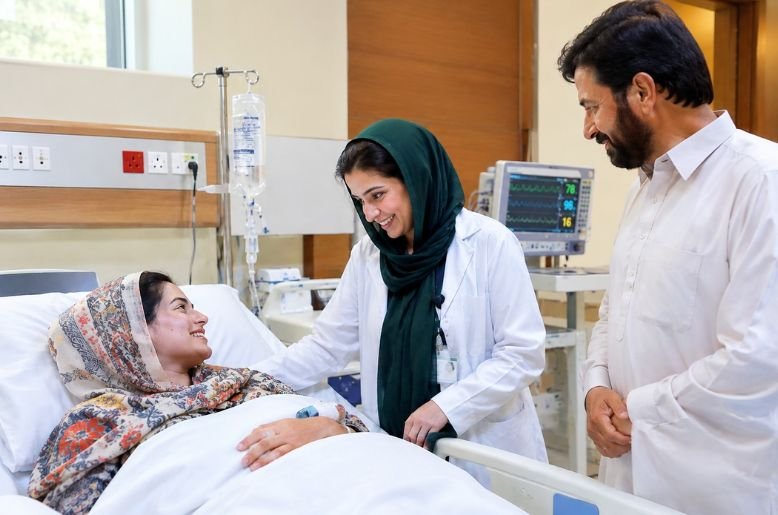
The Sehat Card Plus KP programme offers eligible families in Khyber Pakhtunkhwa access to cashless inpatient healthcare at empanelled public and private hospitals across Pakistan.
The programme is linked to NADRA records and currently covers more than 10.6 million KP families. Eligible beneficiaries can receive treatment for a wide range of medical conditions, subject to the programme’s treatment packages, coverage limits and exclusions.
What is Sehat Card Plus KP?
Sehat Card Plus KP is a government-funded health insurance programme of the Khyber Pakhtunkhwa government.
Under the programme, eligible KP residents can receive cashless inpatient treatment at hospitals that are officially empanelled with Sehat Card Plus.
The programme provides secondary and tertiary healthcare and covers major treatments including emergency care, kidney disease and dialysis, kidney transplant, cancer, hepatitis B and C, diabetes, and heart and vascular diseases.
Importantly, eligible KP residents can use the facility at empanelled hospitals across Pakistan, meaning treatment is not limited to hospitals located in Khyber Pakhtunkhwa.
Who is eligible for Sehat Card?
Families of Khyber Pakhtunkhwa registered with NADRA are eligible for the programme, provided the family head has a permanent KP address recorded on their CNIC.
There is no age restriction under the programme.
Adults can use their CNIC, while children under 18 can use their Form B.
Eligible residents do not need to complete a separate online registration. However, their family information and family tree must be correctly updated in NADRA records.
How to check Sehat Card eligibility
People can check their eligibility by sending their CNIC number via SMS to 9780.
If the system does not show a beneficiary record, the applicant may need to contact NADRA to update their information.
Can Sehat Card be used outside KP?
Yes.
Although eligibility is based on KP residency, beneficiaries can receive treatment at empanelled hospitals across Pakistan.
This means an eligible KP resident who is travelling or living temporarily outside the province can seek covered treatment at an approved hospital elsewhere in the country.
However, the hospital must be part of the Sehat Card Plus network.
How much coverage does Sehat Card provide?
The current Sehat Card Plus KP programme states a maximum annual coverage of up to Rs1 million per family.
The programme divides its treatment coverage into different packages.
| Coverage category | Current limit |
|---|---|
| Secondary care | Rs40,000 per family member |
| Tertiary care | Rs400,000 per family |
| Additional coverage | Rs400,000 per family |
| Maximum stated coverage | Up to Rs1 million per family per year |
The programme’s packages are renewed every year on July 1.
Who can receive additional Rs400,000 coverage?
The additional coverage is not automatically available for every medical condition.
According to the programme information, the additional coverage is available for specified high-cost cases, including:
- Dialysis
- Cancer
- Cardiac treatment
- ICU patients
The additional coverage is also subject to the programme’s conditions and fund availability.
What treatments are covered by Sehat Card?
Sehat Card Plus covers a wide range of inpatient medical and surgical treatments.
Kidney treatment
Covered kidney-related services include:
- Kidney disease treatment
- Dialysis
- Kidney transplant
Cancer treatment
Eligible cancer patients can receive covered treatment, including:
- Cancer surgery
- Chemotherapy
- Radiation treatment
Heart treatment
The programme covers eligible:
- Cardiac treatment
- Heart diseases
- Vascular diseases
Emergency treatment
Covered emergency services include:
- Accident treatment
- Emergency care
- ICU care
Other major treatments
The programme also lists several other specialties and treatments, including:
- Liver transplant
- Bone marrow transplant
- Cochlear implants
- Orthopedic treatment
- Gastroenterology
- Urology
- Gynecology
- Pediatrics
- General medical cases
- Surgical cases
- Eligible plastic and reconstructive surgery
Is maternity treatment covered?
Yes, maternity care is included in the programme.
The maternity package includes three antenatal visits and one post-natal visit, subject to the applicable programme rules.
However, beneficiaries should check the specific policy applicable to the hospital and treatment. Coverage can differ between public and private hospitals for certain procedures.
For example, the programme’s FAQ gives a case in which normal delivery is covered at private hospitals, while C-section coverage is subject to the specified policy for empanelled public-sector hospitals.
What does the surgical package include?
For eligible surgical procedures, the treatment package can include:
- Hospital admission
- Doctor consultation
- Nursing care
- Required investigations
- Surgical procedure
- Operation-theatre services
- Anaesthesia
- Consumables and disposables
- Inpatient medicines
- Oral medicines after discharge
- One free post-discharge follow-up
The exact treatment package depends on the medical condition and applicable programme rules.
What is included in secondary care?
The current secondary-care package provides Rs40,000 per family member.
For eligible non-surgical treatment, the package can include hospital admission, doctor consultation, nursing care, required investigations, administrative facilitation and inpatient medicines.
It can also include five days of post-discharge medicines and one free post-discharge follow-up visit.
What treatments are not covered?
Having a Sehat Card does not mean every healthcare service is free.
The programme lists several exclusions.
These include:
- Outpatient treatment
- Cosmetic procedures
- Cosmetic plastic surgery
- Hair transplant
- Routine dental treatment
- Routine eye and ear examinations
- Spectacles
- Contact lenses
- Hearing aids
- Routine medical check-ups
- Vaccinations
- Preventive care
- Treatment involving purely diagnostic admission
- Experimental or unproven treatments
- Treatment at non-empanelled facilities
- Unjustified hospital admissions
- Certain medical appliances and corrective devices
- Personal comfort items
- Certain donor expenses
- Spa, hydro-clinic, sanatorium and long-term-care services
- Certain treatments associated with epidemics or natural catastrophes
Is outpatient treatment free under Sehat Card?
No.
The programme specifically states that outpatient treatment is not covered under Sehat Card Plus.
Therefore, a beneficiary should not assume that routine doctor consultations, medicines or laboratory tests outside an eligible inpatient package will automatically be free.
How to get free treatment through Sehat Card
The process is straightforward:
Step 1: Visit an empanelled Sehat Card hospital.
Step 2: Go to the Sehat Card Plus counter.
Step 3: Present your original CNIC.
Step 4: For a child, present the child’s Form B.
Step 5: The Health Facilitation Officer checks the beneficiary’s eligibility and available coverage.
Step 6: Once approved, the patient is admitted for the eligible treatment.
Step 7: The covered treatment is provided on a cashless basis.
The cost of eligible treatment is deducted from the beneficiary’s available coverage.
Which hospitals accept Sehat Card?
Sehat Card Plus has a network of empanelled public and private hospitals.
The programme’s hospital network extends across Pakistan, allowing eligible KP beneficiaries to seek treatment outside the province as well.
However, patients should confirm that a hospital is currently empanelled before seeking treatment, as treatment at a non-empanelled facility is not covered.
The official Sehat Card Plus website provides a dedicated Empanelled Hospitals section for checking participating hospitals.
What documents are required?
For adults, the main document required for admission is the original CNIC.
For children under 18, the programme accepts Form B.
The official FAQ also provides procedures for situations involving:
- Lost CNICs
- Expired CNICs
- Widows
- Orphans
- Missing family members from NADRA records
- Blocked CNICs
- Incorrect family relationships in NADRA records
What if the CNIC is lost?
Emergency treatment should not necessarily be denied solely because the beneficiary has lost their CNIC.
The programme’s FAQ provides procedures for establishing identity through acceptable identification documents, including a CNIC, passport, driving licence or other valid identification in relevant circumstances.
Why can Sehat Card treatment be refused?
There can be several reasons why a beneficiary is unable to receive treatment through the programme.
These include:
- Incorrect or outdated CNIC information
- Exhausted coverage limit
- Treatment being excluded from the programme
- No permanent KP address on the relevant record
- Missing required identification
- Problems with NADRA family information
Beneficiaries should contact the Sehat Card Plus counter at the hospital or the programme helpline if they believe treatment has been wrongly refused.
Sehat Card Plus KP helpline and eligibility check
For assistance, beneficiaries can contact the Sehat Card Plus KP helpline at:
0800-89898
To check eligibility:
Send CNIC number to 9780 by SMS.
Frequently asked questions
Can KP residents get Sehat Card treatment in other provinces?
Yes. Eligible KP residents can receive treatment at empanelled Sehat Card hospitals across Pakistan, subject to the programme’s rules and available coverage.
What is the maximum Sehat Card coverage?
The current programme information states coverage of up to Rs1 million per family per year, with treatment-specific packages and conditions.
Is every treatment free under Sehat Card?
No. Sehat Card Plus primarily provides eligible inpatient healthcare. Several services, including routine outpatient treatment, cosmetic procedures and routine check-ups, are excluded.

