
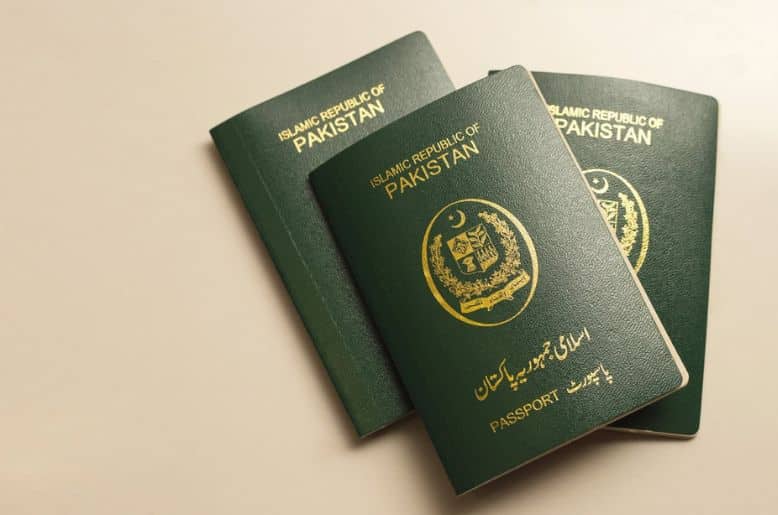
Pakistan has taken another step towards digitising passport services, with significant progress reported in the development of a digital payment system for passport fees aimed at enhancing convenience and reducing reliance on manual processes.
According to reports, Director General of Immigration and Passports Muhammad Ali Randhawa held a key meeting with Muhammad Munir Afsar, Chairman of the National Database and Registration Authority (NADRA), where both sides agreed to strengthen institutional collaboration.
During the meeting, officials approved plans to introduce QR code-based payment options through popular digital platforms, including JazzCash, EasyPaisa, and 1LINK. The initiative will enable citizens to pay passport fees more easily through digital channels.
Officials said the move is part of the government’s broader digital transformation agenda aimed at expanding online services and improving public facilitation across government departments.
The meeting also featured detailed discussions on administrative affairs and ongoing digital reform projects at NADRA headquarters, with particular focus on enhancing operational efficiency and service delivery.
Separately, the DG Immigration and Passports reviewed measures to streamline the department’s data entry process, making it faster and more effective, while also assessing progress on various development initiatives within the organisation.
Pakistani diplomatic passport holders can now travel to Italy without visa
In a separate development earlier, Pakistan and Italy signed a new agreement allowing holders of diplomatic passports to travel between the two countries without obtaining a visa.
The accord was signed in Rome by Pakistan’s Ambassador to Italy, Ali Javed, and Italy’s Foreign Affairs Secretary General, Riccardo Guariglia, during a ceremony held at the Italian Ministry of Foreign Affairs.
Prior to the signing, the two officials held discussions on bilateral relations and reviewed cooperation across various sectors, as well as collaboration at international forums, including the United Nations and the European Union.
Both sides expressed satisfaction over the growing strength of Pakistan-Italy relations and described the visa-free arrangement as a step that will facilitate easier movement of diplomatic delegations and further enhance bilateral engagement.
Officials said the agreement reflects the mutual trust and longstanding friendship between the two countries and will serve as an important addition to existing cooperation mechanisms.
Pakistan and Italy currently share 15 government-to-government agreements covering sectors such as tourism, culture, science and technology, sports, higher defence studies, and anti-narcotics cooperation.
Among the key frameworks underpinning bilateral ties are the Defence Cooperation Agreement signed in 2009, the Strategic Engagement Plan launched in 2013, and the Joint Economic Commission established in 2005. Other notable agreements include the Investment Protection Treaty of 1997, the Dual Citizenship Agreement of 1983, and the Extradition Treaty of 1972.
Also read: Italy announces special scholarships for Pakistani students, apply here
