
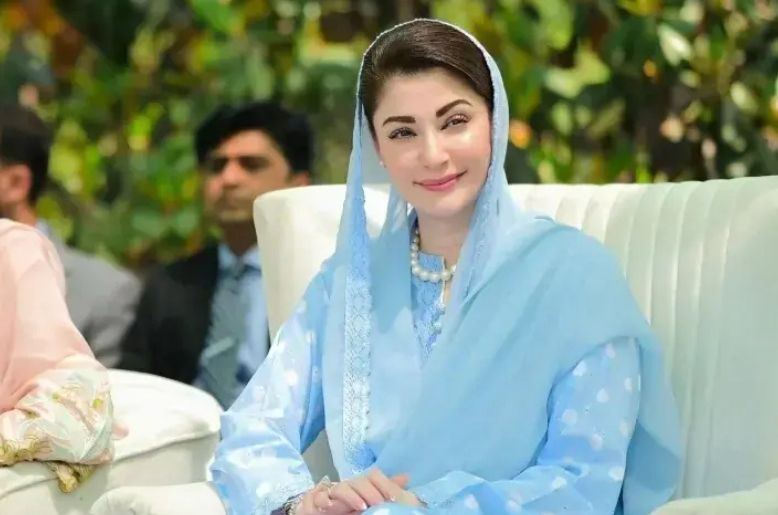
Punjab Chief Minister Maryam Nawaz Sharif has said her government is introducing innovative reforms to bring the province in line with the digital age, modernise industries and create a business-friendly environment to attract investment.
Addressing the launch ceremony of the Punjab Industrial and Economic Transformation (PIET) initiative, the chief minister said strong industries around the world were undergoing revolutionary changes through modern technology, stressing that Punjab played a significant role in Pakistan’s economy and national GDP.
She said equipping young people with modern technological skills and quality education was the government’s responsibility. The provincial government was working to train Punjab’s 36 million-strong workforce, with 400,000 skilled workers already trained and another 600,000 to be prepared.
Maryam Nawaz said the government had brought all skills development sectors under one roof to improve coordination and training opportunities.
Highlighting measures to facilitate businesses, she said around Rs200 billion in loans had been disbursed under the Asaan Karobar Scheme, while more than 200,000 people had obtained NOCs and other permits through the e-Biz platform.
She added that all government departments had been directed to eliminate red tape before the launch of the new initiative.
The chief minister said the government was focusing on expanding the tax net rather than imposing new taxes, adding that Punjab’s revenue was expected to increase from Rs200 billion to Rs1 trillion.
She also vowed strict action against corruption, saying that government employees found taking bribes were being dismissed. “If even a single rupee of corruption is proven, I will resign,” she said.
On industrial development, Maryam Nawaz said environmental protection was essential but shutting down factories was not the solution. She stressed that inspections should continue without unnecessarily disrupting industrial operations, as factory closures affected workers’ daily wages.
“My heart does not want to see anyone’s business shut down, but there will be no compromise on standards,” she said, adding that providing clean surroundings and safe food to the public remained a government priority.
She further said Punjab’s pharmaceutical industry was growing rapidly, with more than 1,200 startups operating in the province. The government was also establishing industrial clusters by bringing together 50 common facility centres.
The chief minister noted that special economic zones and industrial estates had increasingly become real estate ventures instead of serving industrial purposes. She announced that land for industrial purposes would now be offered on monthly leases ranging from Rs80,000 to Rs200,000.
She also urged banks to simplify their procedures for providing business financing, saying entrepreneurs should not face unnecessary questioning and bureaucratic hurdles.
Pointing to the lack of certification and testing facilities, she said international buyers, including FIFA, were not purchasing locally manufactured sports goods because of certification issues. She added that manufacturers had to travel to China to test the glazing and materials of locally produced cutlery, as well as the noise levels of Pakistani-made fans.
Speaking about the agriculture sector, Maryam Nawaz said the provincial government had allocated a substantial budget for agriculture and livestock. Farmers were being provided with subsidised tractors and super seeders, while modern agricultural machinery was being introduced to increase productivity.
She said only 3,000 tractors had been provided over the past 20 years, while the government aimed to distribute 45,000 tractors during the current year.
The chief minister also stressed that political uncertainty, unrest, protests and vandalism were harmful to businesses and industrial growth. She said ministers had been directed to minimise their security arrangements and protocol.
She added that the government was allocating designated spaces for street vendors to keep roads clear while ensuring that the public had access to quality food.
Maryam Nawaz said Pakistan could not progress without adapting to changing global requirements, adding that investment, modern technology, environmental protection and a skilled workforce were essential for sustainable economic growth.

