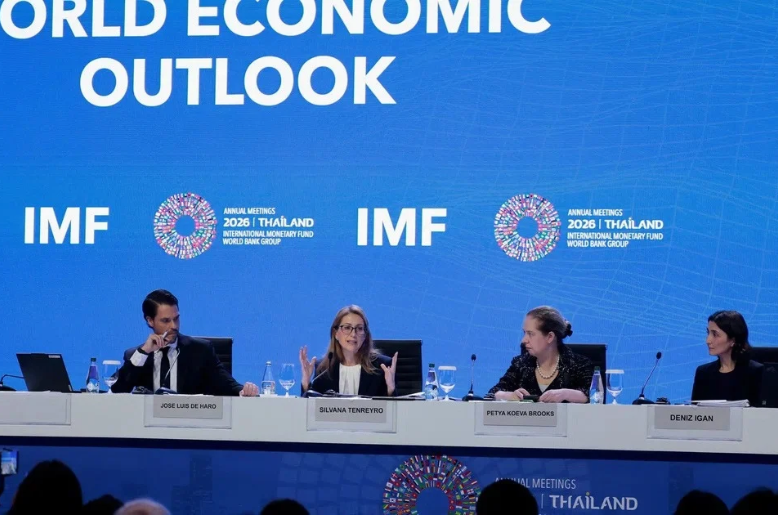
The International Monetary Fund (IMF) has warned of growing risks to global financial stability. Its latest Global Financial Stability Report highlights a possible AI market correction, rising government bond yields, and increasing cyber threats. These risks could disrupt markets and weaken investor confidence if existing financial vulnerabilities increase. The warning comes as artificial intelligence continues to attract major investments worldwide. AI development has supported economic activity despite geopolitical tensions and rising energy costs. However, the IMF says investors should not assume that current market conditions will remain stable.
AI Investment Boom Raises Market Concerns
The IMF warned that weaker AI investment or lower-than-expected profits could trigger a market correction. Many companies have invested heavily in AI technology, data centres, and semiconductor production. However, the financial returns from these investments remain uncertain. If AI companies fail to meet investor expectations, their share prices could fall sharply. Such losses could also affect other parts of the financial market.
The report highlights the growing importance of AI-related companies in global markets. A sharp decline in their valuations could spread beyond the technology sector. Investors may reduce spending and sell assets to limit their losses. The IMF Warns of AI Market Correction, Cyber Threats to Financial System as connected financial risks continue to grow. The fund cautions that these risks could become more serious when combined with existing market weaknesses.
Cyber Threats Could Disrupt Financial Services
Cybersecurity is another major concern for the IMF. Financial institutions increasingly depend on digital systems, cloud services, and shared technology providers. Artificial intelligence can help security teams identify threats and improve protection. However, criminals can also use AI to find software weaknesses and develop more effective attacks. A serious cyber incident could interrupt banking services, payment systems, or other essential financial operations. It could also expose sensitive information and damage public confidence.
The IMF warns that advanced cyberattacks could affect several institutions simultaneously. This risk increases when banks and financial markets depend on the same digital infrastructure. Rapid advances in AI could also reduce the time available to detect and stop attacks. Financial institutions therefore need stronger security systems, effective monitoring, and reliable recovery plans.
Rising Bond Yields Add to Financial Risks
The IMF also identified rising government bond yields as a threat to financial stability. Higher yields increase borrowing costs for governments and businesses. They can also place pressure on banks, investors, and other financial institutions. Persistent inflation and rising public debt could push borrowing costs higher. Increased energy prices may also force central banks to maintain tighter monetary policies.
If bond yields rise sharply, investors could face losses on existing bonds. Governments may also find it more expensive to finance their spending. These pressures could weaken confidence and increase instability across financial markets.
IMF Calls for Stronger Financial Risk Management
The IMF has urged policymakers and financial institutions to remain alert to these risks. Stronger cybersecurity measures can help reduce the damage caused by digital attacks. Financial institutions also need to monitor their exposure to AI-related investments. Careful risk management can help them prepare for sudden changes in market conditions. The fund’s warning does not mean that a market crash is certain. Instead, it highlights potential triggers that could create wider problems if financial vulnerabilities remain unaddressed.
The IMF Warns of AI Market Correction, Cyber Threats to Financial System at a time when global markets face several connected challenges. AI investment continues to support economic activity, but uncertain returns create potential risks. Cyberattacks and rising borrowing costs add further pressure. Policymakers must balance the economic benefits of new technology with financial stability concerns. Stronger safeguards could help limit the effects of future market shocks and cyber incidents.