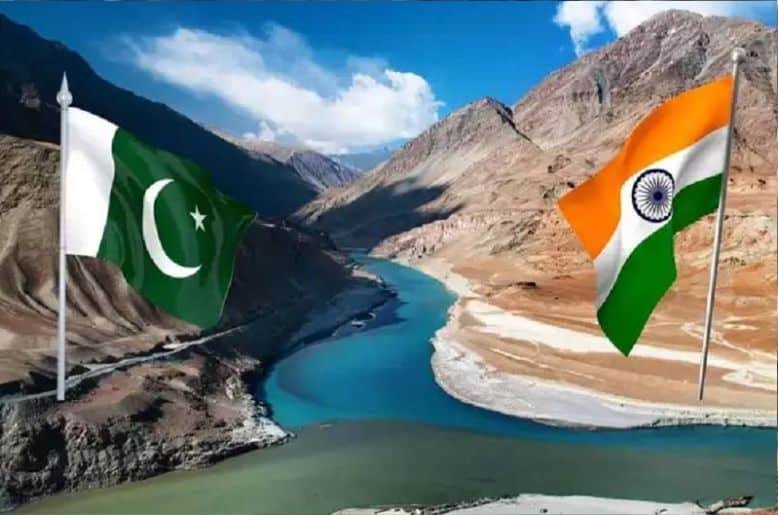
The Court of Arbitration’s supplemental award in the Indus Waters Treaty proceedings reinforces Pakistan’s stance that pondage and hydroelectric designs on the Western Rivers must strictly comply with Treaty limits.
It further affirms that such limits must be based on verifiable hydrological and operational data, not assumptions or post-facto justifications.
The Government of Pakistan notes with utmost satisfaction the Court of Arbitration’s Supplemental Award Concerning Maximum Pondage, handed down on 15 May 2026, in the Indus Waters Treaty proceedings arising from the Ratle Hydroelectric Plant and the Kishenganga Hydroelectric…
— Government of Pakistan (@GovtofPakistan) May 17, 2026
In the dispute related to the Indus Waters Treaty, the decision of the International Court of Arbitration has declared Pakistan’s position as principled, legal, and in accordance with international law, while Pakistan has welcomed this decision and termed it a victory for international law and impartial justice.
According to the court’s decision, the Indus Waters Treaty is an international agreement established under the guarantee of the World Bank, which cannot be suspended unilaterally by any party.
The decision clearly stated that Pakistan’s position is in accordance with the correct legal interpretation of the treaty and international law, while India’s various claims were declared legally weak.
The court emphasized that India is not authorized to store water at its own discretion during any hydroelectric project on the western rivers.
India is obligated to share complete operational data related to water resources with Pakistan to ensure transparency and monitoring of the treaty.
The decision further stated that India must share all technical and hydrological information related to the Kishanganga and Ratle hydroelectric projects with Pakistan. India’s stance of suspending or rendering the treaty ineffective was declared illegal and unethical.
The court also accepted Pakistan’s position regarding environmental flows and imposed clear responsibilities on India. It was also stated that attempts to use water as a political pressure tool are unacceptable and such policies are rejected.
The decision further held that violation of the Indus Waters Treaty falls under serious violations of international legal obligations.
Despite India’s non-cooperation in the court proceedings, the court continued its process and issued a decision on important legal points.
This decision is an important development in the region regarding water disputes, in which the principles of treaty obligations and transparency have been clarified.
Pakistan has termed this decision as supporting its position, stating that it further strengthens confidence in the international justice system.
Also read: Indus Waters Treaty: Pakistan scores important legal win against India