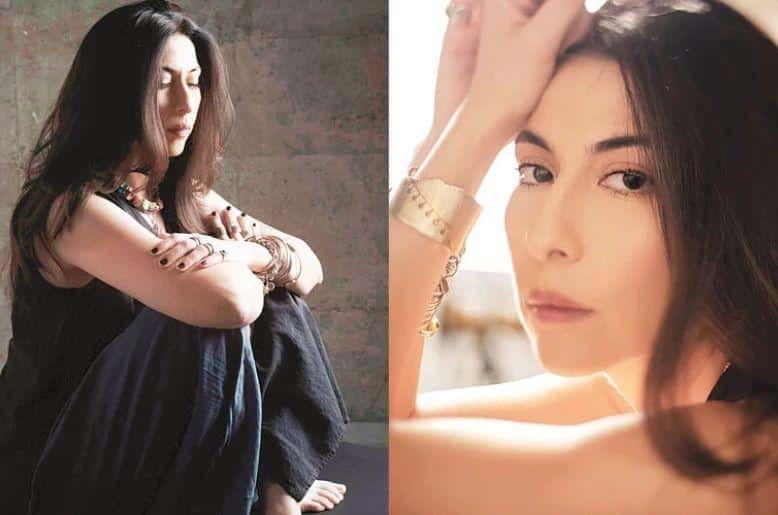
Pakistan’s entertainment industry has seen many controversies over the years. But none of them changed the conversation quite like the case of Meesha Shafi.
In April 2018, Meesha Shafi did something very few people in Pakistan had ever done before. She spoke up. She was named a powerful celebrity. And broke the silence. And nothing in Pakistani showbiz was ever the same again.
This is the full story of Meesha Shafi. Her talent, her courage, her career, and the legal battle that is still making headlines in 2026.
Who is Meesha Shafi?
Meesha Shafi is a Pakistani born Canadian singer, actress, and model. She was born on 1 December 1981 in Lahore, Pakistan. Her mother, Saba Hameed, is a legendary Pakistani actress. Her father is Syed Pervaiz Shafi. She has two siblings, rapper Faris Shafi and Ali Abbas.
Art and creativity run deep in her family. Her maternal grandfather, Hameed Akhtar, was a celebrated Urdu novelist, newspaper columnist, and president of the Progressive Writers Movement. He even received the Pride of Performance award in 2010.
She graduated in Fine Arts from the National College of Arts in 2007.
In 2008, she married Mahmood Rahman. The couple has two children, a daughter named Janevi and a son named Kazimir. In 2016, Meesha became a Canadian citizen.
A star born into the arts
Growing up in a home filled with literature, acting, and music, Meesha Shafi had creativity in her blood from day one.
She entered the modelling industry at the age of 17, when she starred opposite Jawad Ahmed in the music video for the song Bin Teray Kya Hai Jeena. That early appearance hinted at the star she would become.
She has acclaim as a person who blends both East and West effortlessly. Her style has been described as avant-garde both on the catwalk and in print.
In 2009, Shafi became the brand ambassador for L’Oreal Paris Pakistan. She held this title for three consecutive years. Her face appeared on billboards and in magazines across Pakistan. She was already a household name before she even released a single song.
The voice that surprised Pakistan
Most people knew Meesha Shafi as a model and actress. Then in 2010, she revealed another side of herself that shocked everyone. She debuted her solo career as a singer on the revolutionary musical platform, Coke Studio.
Shafi sang along with the internationally acclaimed folk singer Arif Lohar on Coke Studio Pakistan Season 3, with the song Alif Allah Jugni. The single gathered over 20 million views on YouTube, making it the most viewed Coke Studio song ever until it was overtaken by Tajdaar-e-Haram, and was used in several films like Cocktail, Diary of a Butterfly, and Jugni.
That one performance changed her career forever. Overnight, Meesha Shafi was not just a model. She was one of the most exciting new voices in Pakistani music.
Music career and coke studio appearances
After her incredible Coke Studio debut, Meesha Shafi kept building her musical legacy with one powerful performance after another.
She returned to Coke Studio Season 5 in 2012 when she sang Ishq Aap Bhi Awalla with the Chakwalees and sang a ghazal by Faiz Ahmad Faiz, Dasht-e-Tanhai.
In 2014, Meesha Shafi returned to the Coke Studio floor for a third time to perform Sun Ve Balori with composer and tabla guru Ustad Tafu and producers Strings.
Her Coke Studio appearances are remembered for their raw energy and emotional power. She brought a unique fusion of rock, folk, and classical music to every performance. No two songs sounded the same. That versatility is her greatest strength.
Acting career across three film industries
Meesha Shafi is not just a great singer. She is also a talented actress who has worked in Hollywood, Bollywood, and Lollywood.
The biggest feather in her cinematic cap came when she starred in the Hollywood movie The Reluctant Fundamentalist. The movie premiered at the Toronto Film Festival and opened at the Venice Film Festival.
This was a massive achievement. Very few Pakistani artists have ever been personally selected by an internationally acclaimed Hollywood director for a major film role.
From there, Shafi went on to act in Bhaag Milkha Bhaag directed by Rakeysh OmPrakash Mehra and starred on screen with big names like Farhan Akhtar and Sonam Kapoor. The Bollywood movie swept the award circuit completely.
She achieved further critical success for her role as Laxmi, an operative of the Indian spy agency Research and Analysis Wing, in Bilal Lashari’s action thriller film Waar, which ranks among the highest grossing Pakistani films of all time.
Shafi won her first award as Best Supporting Actor for Waar in 2014 with other awards and nominations that followed.
She has also sat on the Academy Award Committee as a jury member, helping to shortlist Pakistani films for the Oscars. This level of recognition places her in a very small and elite group of Pakistani artists.
The metoo moment that changed Pakistan
Now we come to the chapter that divided Pakistan and started a national conversation.
In April 2018, Meesha Shafi posted a tweet that shocked the entire country. She accused fellow singer and actor Ali Zafar of subjecting her to harassment of a physical nature on more than one occasion. She said she was breaking the culture of silence in Pakistan’s entertainment industry.
Ali Zafar denied the allegations completely. He called them false and defamatory.
What followed was one of the most polarizing and emotional public debates in Pakistan’s entertainment history. Some people supported Meesha. Others defended Ali Zafar. Social media became a battleground. And the courts became the arena where this fight would eventually be decided.
Meesha insisted that she had evidence of harassment and wanted to produce it before the court. She stated that harassment cases mostly lack tangible evidence much to a predator’s convenience. Many women shared their experiences and to the best of her knowledge, a victim’s experience is their evidence.
She also said she tried very hard to forget it. However, the feeling after an incident where one has been physically violated is hard to forget.
This raw and emotional testimony resonated deeply with many Pakistani women who had their own untold stories.
The legal battle: Years in court
The legal fight between Meesha Shafi and Ali Zafar has been long, complicated, and emotionally exhausting for everyone involved.
Meesha first filed a case with the Punjab Ombudsperson. It was rejected on technical grounds because she did not have an employer-employee relationship with Ali Zafar. She then appealed to the Punjab Governor. That was also dismissed. She then took the case to the Lahore High Court, which also rejected her harassment complaint.
Meanwhile, Ali Zafar filed a defamation suit against Meesha Shafi demanding PKR 1 billion in damages. He claimed her tweets were false, slanderous, and defamatory, and caused tremendous injury to his reputation, goodwill, and livelihood.
If you love reading about talented and fearless Pakistani female artists, you will also enjoy reading about How Fariha Pervez Became the Queen of Pakistani Ghazal and Folk Music. She is another incredible woman who conquered the music world with her soulful voice and decades of hard work.
Meesha Shafi then filed a counter civil defamation case against Ali Zafar worth PKR 2 billion, after he made statements on television alleging she had fabricated the allegations for personal gain.
The Lahore High Court upheld a sessions court order restraining Meesha Shafi from making statements on social media against Ali Zafar in the ongoing defamation case. Rejecting her petition seeking removal of the restriction, the court ruled that the ban on public statements will remain in force until the final verdict.
Where does the case stand in 2026?
This case is now in its final stage. And the verdict could come very soon.
Proceedings in the defamation case filed by Ali Zafar against Meesha Shafi have been completed in a sessions court. Both sides have concluded their arguments regarding the defamation of claims. The court noted that if any clarification is required on specific points, legal counsel may assist on March 30. Additional Sessions Judge Asif Hayat stated that the court will announce a date for the verdict after March 30.
During the final arguments, counsel for Meesha Shafi, Saqib Gillani, concluded his final arguments and urged the court to dismiss the defamation of claim costs. The defence argued that no substantial evidence had been presented in support of the suit and maintained that the case had resulted only in wasting judicial time.
The counsel further submitted that the families of Ali Zafar and Meesha Shafi shared longstanding relations, while Meesha Shafi had reported two separate incidents of alleged harassment. According to the defence, lawyers for Ali Zafar cross-examined Meesha Shafi for several hours, but she remained firm on her statement.
Pakistan is watching closely. Whatever the verdict, this case will set a major precedent for how sexual harassment allegations are handled in the entertainment industry going forward.
Why this case matters for Pakistan
The Meesha Shafi and Ali Zafar case are bigger than two celebrities. It is a mirror held up to Pakistani society.
It exposed a critical loophole in Pakistan’s harassment laws. A woman cannot file a harassment case unless she has an employer-employee relationship with the accused. This is deeply problematic. Harassment does not only happen at workplaces. It happens at music sessions, on film sets, and at private gatherings.
Meesha Shafi’s case pushed Pakistani legal experts and lawmakers to think harder about these gaps. Her courage in speaking up, despite massive social media abuse, personal attacks, and a billion-rupee lawsuit against her, showed young women across Pakistan that speaking the truth has value even when the system makes it difficult.
Many women later came forward with their own similar experiences. The case sparked real conversations about consent, power, and accountability in Pakistan’s deeply patriarchal entertainment world.
The Artist who never stopped
Through all the legal drama, media scrutiny, and social media storms, Meesha Shafi never stopped being an artist.
Her captivating onstage charisma has taken her around the world to tour live with her band. The Meesha Shafi Project has performed extensively, traveling to countries like India, Norway, UAE, and China.
Shafi has by now become a symbol of the modern-day youth of Pakistan, particularly for her strong feminist views and vocal stance on issues that highlight and empower women.
She has also recently signed an international film project starring alongside Hasan Minhaj, proving that her global career continues to grow regardless of the ongoing legal battle at home.
Meesha Shafi today
Meesha Shafi continues to be one of the most relevant and discussed figures in Pakistani entertainment. She is 44 years old and still very much at the height of her career.
She stays active on social media within the limits placed by the court’s gag order. And continues to work on music and film projects internationally. And she continues to be a voice for women’s rights and artistic freedom in Pakistan.
Whatever happens in court, her legacy as a singer, actress, and fearless public figure is already cemented. She changed the conversation. She started to move. And she paid a very high personal and professional price for doing so.
That takes extraordinary courage.
Frequently asked questions
Q1. What is Meesha Shafi famous for?
She is famous for her powerful singing on Coke Studio, her acting in films like Waar and The Reluctant Fundamentalist, and for publicly accusing Ali Zafar of sexual harassment in 2018.
Q2. What is the status of the Meesha Shafi and Ali Zafar case?
As of March 2026, both sides have concluded their final arguments in the defamation suit. The court is expected to announce a verdict date after March 30, 2026.
Q3. How much is Ali Zafar’s defamation suit against Meesha Shafi worth?
Ali Zafar filed a defamation suit demanding PKR 1 billion in damages from Meesha Shafi.
Q4. Is Meesha Shafi Pakistani or Canadian?
She was born in Lahore, Pakistan, and became a Canadian citizen in 2016. She holds dual identity as a Pakistani born Canadian artist.
Q5. Who are Meesha Shafi’s parents?
Her mother is veteran Pakistani actress Saba Hameed, and her father is Syed Pervaiz Shafi.