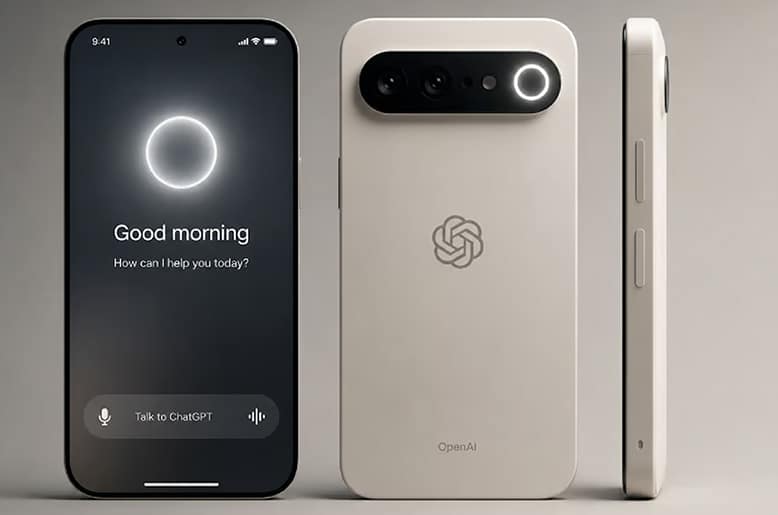
OpenAI is reportedly developing a smartphone that could compete directly with Apple’s iPhone, marking a major shift in its hardware ambitions and signalling a stronger push into consumer devices.
The device is being described as an “AI agent phone”, built around a continuous, context-aware interface rather than the traditional app-based system used in modern smartphones. Instead of users opening individual apps for different tasks, the phone would aim to understand real-time activity, including location, communication and behaviour, and respond through a unified AI system.
According to analyst Ming-Chi Kuo, who shared details after supply chain checks, smartphones are uniquely positioned for this kind of technology because they already collect the most complete set of personal context data. He suggested that OpenAI believes the future of mobile computing lies in AI agents that can perform tasks directly, rather than requiring users to navigate multiple apps.
The device is expected to use a customised version of MediaTek’s Dimensity 9600 processor, built on TSMC’s advanced manufacturing node. Earlier reports suggested Qualcomm could also be involved, but MediaTek now appears to be the primary, and possibly sole, chip supplier. Manufacturing is expected to be handled by Luxshare Precision Industry, while Sunny Optical is said to have secured orders for camera-related components.
On the hardware side, the phone is expected to include an upgraded image signal processor designed to improve HDR and real-world visual processing. It is also said to feature dual AI processors, allowing it to handle different functions at the same time, such as vision and language tasks. Faster memory, improved storage, and stronger security systems to isolate processes are also part of the expected design.
The project represents a notable shift from OpenAI’s earlier hardware strategy developed with former Apple design chief Jony Ive, whose startup was acquired by OpenAI in 2025. That earlier vision focused on non-phone devices, with both OpenAI chief executive Sam Altman and Ive previously stating they wanted to avoid building a traditional smartphone. However, the roadmap has since expanded to include a smart speaker with a camera, expected in 2027, alongside other experimental devices such as smart glasses and wearables.
OpenAI has also been hiring aggressively from Apple, bringing in more than 40 former hardware employees, including senior designers. This has reportedly led Apple to introduce large retention bonuses to keep key members of its iPhone design team.
Originally, mass production of the smartphone was expected around 2028, but estimates have now been brought forward to the first half of 2027. The change is linked to OpenAI’s broader commercial plans, including a potential public listing and growing competition in the AI hardware space. Analysts believe shipments could reach around 30 million units across 2027 and 2028 if development stays on track.
If launched successfully, the device would place OpenAI in direct competition with Apple across multiple product categories, as both companies move towards AI-driven hardware ecosystems.