
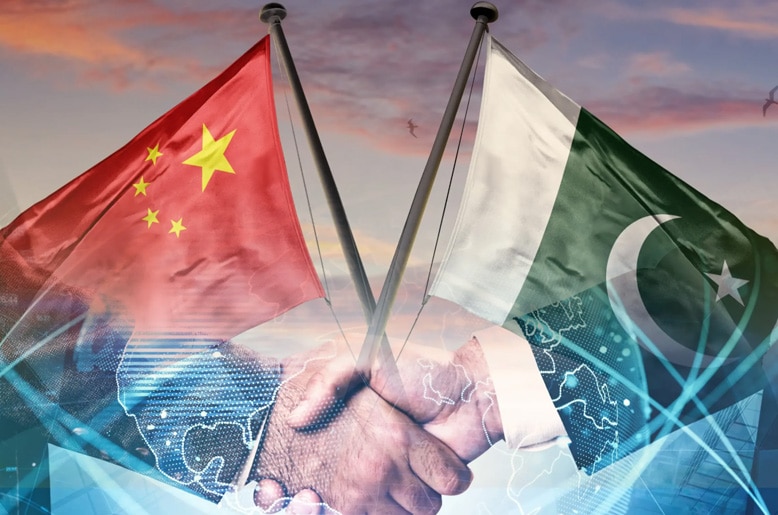
Pakistan is preparing to ask China for broader tariff concessions on nearly 700 products as part of talks for the next phase of the China Pakistan Free Trade Agreement, officials said, aiming to bring its exporters on equal footing with competitors from other regions.
An advance team led by Commerce Minister Jam Kamal and Commerce Secretary Jawad Paul has reached Beijing to fine tune proposals ahead of Prime Minister Shehbaz Sharif’s visit. Senior officials from different ministries are also in China to support the negotiations.
Trade gap remains a key concern
Despite existing trade arrangements, Pakistan continues to face a wide gap in trade with China. Exports to China stood at about $2.37 billion in FY2024–25, with most of it falling under the current free trade framework. In contrast, imports from China remain close to $20 billion each year.
Over the past five years, Chinese exports to Pakistan have crossed $100 billion, while Pakistan’s exports have stayed near $10 billion. Officials say this imbalance reflects Pakistan’s reliance on low value goods such as copper and cotton, which are later imported back as finished products at higher prices.
There is growing focus on shifting towards value added exports, particularly in textiles, minerals and meat. Officials believe meat exports alone could bring in up to $5 billion if market access improves.
Push for equal market access
Pakistan is seeking treatment similar to what China has offered to other regions. Beijing recently allowed zero tariff access to dozens of African countries, while ASEAN members already enjoy favourable trade terms.
Officials say Pakistan’s earlier gains under the trade agreement have weakened over time as China signed new deals with other partners. Islamabad now wants similar benefits to help its exporters compete.
Negotiations under the proposed third phase include requests for tariff cuts on 700 product lines, along with steps to ease trade. More than a dozen agreements on safety standards and technical rules have already been signed to support smoother exports.
A proposal is also under discussion to create a “Green Channel” at the Khunjerab border crossing to speed up movement of goods.
Focus on rice and long term supply deals
Pakistan is expected to push for specific support for rice exports. This includes removal of the current 1 percent import duty and allocation of a dedicated quota, similar to earlier arrangements.
Officials also want Chinese state owned firms, including COFCO, to enter long term purchase agreements with Pakistani suppliers. Such deals could provide steady demand and help exporters plan ahead.
Wider economic impact
Bilateral trade between the two countries stood at around $19.4 billion in 2024–25. Pakistan’s trade deficit with China makes up a large share of its overall external gap, adding pressure on foreign exchange reserves.
Officials say improved access to the Chinese market, along with investment and joint ventures in export sectors, is key to correcting this imbalance. Visa facilitation for Pakistani businesspeople is also being sought to help them explore opportunities more effectively.
Prime Minister Shehbaz Sharif is expected to raise these issues during his meetings in Beijing. Policymakers believe that without fresh concessions, Pakistan may continue to struggle to benefit fully from its trade agreement with China.
